Post by : Amit
Photo : X / The Bengaluru Dialogues
Reinforcing India’s Green Transit Push
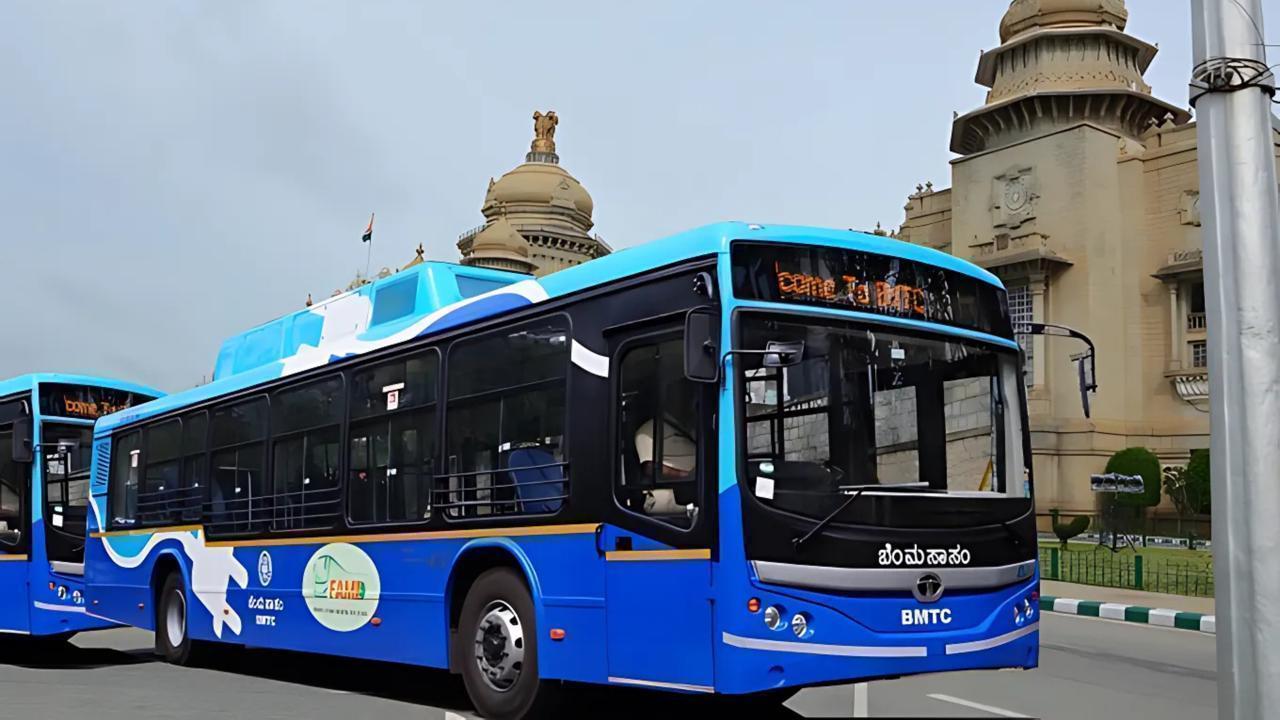
Tata Motors has strengthened its role in India’s electric bus ecosystem by delivering a fresh batch of Tata Starbus EVs to the Bengaluru Metropolitan Transport Corporation (BMTC). This move underscores Tata Motors' continued commitment to electrifying public transport in Indian cities, especially as urban centres like Bengaluru grapple with rising pollution, congestion, and the demand for energy-efficient transit.
The deployment is part of a larger contract that Tata Motors secured under the government-backed FAME II scheme, furthering Bengaluru’s vision of clean and connected public transportation. With this latest fleet, BMTC edges closer to its target of having a fully electric bus fleet by the end of the decade.
A Strategic Partnership for Cleaner Cities
The handover ceremony of the Tata Starbus EVs to BMTC was attended by top officials from Tata Motors and Karnataka’s state government, marking a significant milestone in the city's electric vehicle adoption journey. The initiative not only adds more zero-emission buses to Bengaluru’s roads but also reinforces the collaboration between OEMs, transport corporations, and policymakers striving for a greener tomorrow.
Tata Motors is also providing full maintenance support for these buses through its ‘Tata Motors Mobility Solutions Limited’ (TMMSL) division. The company will oversee operations, servicing, and performance analytics to ensure smooth functioning throughout the fleet's lifecycle—making it a comprehensive deployment and not just a handover of vehicles.
Tata Starbus EV: Built for Indian Roads
The Starbus EV platform from Tata Motors has emerged as one of the most trusted electric bus solutions in India, designed specifically for Indian urban conditions. These low-floor, air-conditioned buses are equipped with cutting-edge lithium-ion batteries, regenerative braking systems, and intelligent energy management solutions.
Key features include ultra-modern interiors, ergonomic seating, digital display systems, CCTV cameras, automatic doors, and telematics systems for real-time vehicle monitoring. With a driving range of over 150 kilometres on a single charge, these buses are ideal for intra-city operations in high-density routes like those in Bengaluru.
What sets the Tata Starbus EV apart is its adaptability to varied terrains, superior ride comfort, and low noise footprint—critical advantages in India’s rapidly urbanizing environments.
Bengaluru’s Push for Electrified Public Transport
Bengaluru, often labelled India’s Silicon Valley, has taken a proactive stance in embracing clean mobility solutions. Under the leadership of BMTC, the city is rapidly integrating electric buses across major transit corridors to reduce dependency on fossil fuels and lower carbon emissions.
According to BMTC officials, over 1,000 electric buses are planned for deployment in phases, and Tata Motors’ latest delivery plays a central role in achieving this target. Several routes, especially those connecting metro stations, business districts, and residential hubs, are now being earmarked for electric-only services.
This electrification effort is aligned with Karnataka’s Electric Vehicle & Energy Storage Policy 2017, which envisions the state as a hub for EV manufacturing and green mobility innovation. BMTC has already set up EV charging stations across strategic bus depots and terminals to support this transformation.
National Momentum Under FAME II
The Faster Adoption and Manufacturing of Electric Vehicles in India (FAME II) scheme continues to be a key enabler of such developments. Under this centrally sponsored program, state transport undertakings (STUs) receive subsidies for procurement of electric buses, enabling large-scale deployment at a manageable cost.
Tata Motors has emerged as a leading beneficiary of this scheme, having bagged multiple contracts across cities like Delhi, Mumbai, Pune, Lucknow, and now Bengaluru. With each deployment, the company is not only enhancing urban mobility but also building an expansive ecosystem of aftersales support, data-driven diagnostics, and driver training programs.
In Bengaluru’s case, the government’s investment through FAME II is yielding tangible results—not just in reduced emissions, but also in higher passenger satisfaction and operational efficiency for BMTC.
Driving the Future: Tata Motors’ National Electric Mobility Strategy
With this latest deployment, Tata Motors has further cemented its position as a frontrunner in India's electric commercial vehicle market. The company’s growing EV portfolio includes not only electric buses but also light commercial vehicles, vans, and freight carriers tailored for last-mile delivery.
What makes Tata’s approach unique is its integrated model—design, manufacturing, servicing, and fleet management are bundled under one roof, creating a one-stop solution for STUs. This has proven particularly attractive to transport bodies looking for a hassle-free EV transition.
In a statement, Tata Motors reiterated its commitment to supporting the Government of India’s net-zero vision. By 2040, the automaker aims to achieve carbon neutrality across its operations and product lines, with electric mobility playing a central role in that strategy.
A Blueprint for Urban EV Transition
The addition of Tata Starbus EVs to Bengaluru’s public transport system is more than a fleet upgrade—it is a blueprint for how Indian cities can transition to sustainable mobility through thoughtful public-private partnerships. With proven technology, scalable operations, and national policy backing, electric buses are no longer a pilot concept—they’re becoming mainstream.
As BMTC continues to expand its electric fleet, citizens of Bengaluru stand to benefit from quieter rides, cleaner air, and more reliable bus services. Meanwhile, Tata Motors is not just selling vehicles—it’s helping reshape how India thinks about urban transport, sustainability, and technological self-reliance.
In a country where public transport serves as the lifeline of cities, electrifying the backbone means powering the future. And with each Starbus EV that hits the road, Bengaluru moves a step closer to that future.
Tata Moters, India, Ev



Advances in Aerospace Technology and Commercial Aviation Recovery
Insights into breakthrough aerospace technologies and commercial aviation’s recovery amid 2025 chall

Defense Modernization and Strategic Spending Trends
Explore key trends in global defense modernization and strategic military spending shaping 2025 secu

Tens of Thousands Protest in Serbia on Anniversary of Deadly Roof Collapse
Tens of thousands in Novi Sad mark a year since a deadly station roof collapse that killed 16, prote

Canada PM Carney Apologizes to Trump Over Controversial Reagan Anti-Tariff Ad
Canadian PM Mark Carney apologized to President Trump over an Ontario anti-tariff ad quoting Reagan,

The ad that stirred a hornets nest, and made Canadian PM Carney say sorry to Trump
Canadian PM Mark Carney apologizes to US President Trump after a tariff-related ad causes diplomatic

Bengaluru-Mumbai Superfast Train Approved After 30-Year Wait
Railways approves new superfast train connecting Bengaluru and Mumbai, ending a 30-year demand, easi




