Post by : Saif
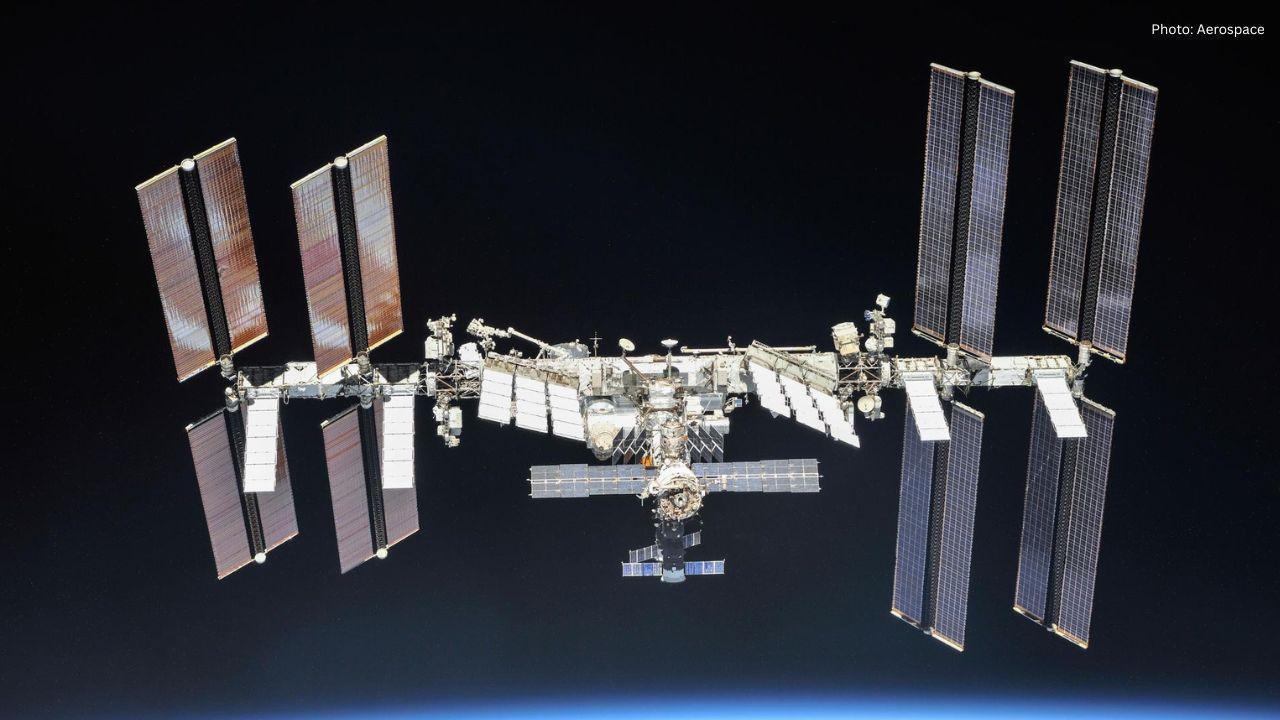
For more than two decades, the International Space Station has been one of humanity’s greatest achievements in space. Orbiting Earth at high speed, it has allowed astronauts to live and work in space while carrying out important science experiments. It has also stood as a sign of cooperation, bringing together countries that once competed fiercely in space. However, the ISS is now reaching the end of its working life, and its planned retirement around 2030 has raised serious questions about the future of America’s presence in low Earth orbit.
The ISS was first assembled in space in 1998, and many of its systems are now old. Keeping it running safely costs billions of dollars every year. Small leaks, aging parts, and rising maintenance needs have made it clear that the station cannot stay in orbit forever. NASA and its international partners agree that the ISS must eventually be brought down in a controlled way. When that happens, the United States risks losing its permanent foothold in space unless a replacement is ready in time.
This is where private companies enter the picture. NASA has decided that instead of building and owning the next space station alone, it will rely on commercial partners. These companies will build stations, and NASA will become a customer, paying for astronaut missions and research time. One of the newest and boldest companies in this race is Vast, a US-based space startup with big ambitions and a small but important first project called Haven-1.
Vast plans Haven-1 as a compact commercial space station that could launch as early as 2026. Compared to the ISS, Haven-1 is much smaller and simpler. It is designed to host a small crew for short missions, focusing on research, testing, and training. The station is expected to launch aboard a SpaceX Falcon 9 rocket, with astronauts traveling to and from orbit using SpaceX’s Dragon spacecraft. This partnership allows Vast to use already proven launch and crew systems, reducing both cost and risk.
Haven-1 is not meant to fully replace the ISS on its own. Instead, it is designed as a bridge between the old era of government-run stations and a new era led by private companies. Scientists could run experiments in weightless conditions, companies could test new technology, and astronauts could maintain their skills while larger stations are still under development. Even private individuals may one day visit stations like Haven-1, opening space to more than just government crews.
Timing is the most critical issue. Some larger commercial station projects may not be ready before the ISS retires. If there is a gap with no US station in orbit, America could lose valuable experience and influence in space. China already operates its own space station, and a long absence by the US could shift the balance of power in low Earth orbit. Haven-1’s faster development schedule could help prevent this gap and keep American astronauts flying regularly.
Still, the road ahead is not easy. Vast is a young company without decades of experience in building space stations. Funding remains a major challenge, as space projects require huge and steady investment. Safety is another concern, as any station carrying humans must meet extremely high standards. A single failure could delay progress and damage confidence in commercial space stations. Competition is also intense, with other companies working on similar projects and hoping to win NASA contracts.
Despite these challenges, the idea behind Haven-1 reflects a major change in how space exploration is done. Private companies are moving faster, taking more risks, and pushing innovation in ways governments often cannot. If successful, Haven-1 could help lower the cost of space research, create new jobs, and keep the United States firmly present in orbit during a critical transition period.
From an editorial perspective, supporting projects like Haven-1 is a risk worth taking. The end of the ISS is unavoidable, and waiting too long for perfect solutions could leave America behind. While Haven-1 may be small and limited, it could play a vital role in keeping the US active in space. With proper oversight, strong safety rules, and clear goals, it could become an important stepping stone toward a new future in low Earth orbit.
The race to replace the ISS is about more than replacing hardware. It is about leadership, vision, and ensuring that space remains a place of progress and discovery. Haven-1 may not be the final answer, but it could be an early and important part of America’s next chapter in space.
#trending #latest #ISS #Haven1 #VastSpace #NASA #SpaceStation #LowEarthOrbit #CommercialSpace #SpaceFuture #HumanSpaceflight








Advances in Aerospace Technology and Commercial Aviation Recovery
Insights into breakthrough aerospace technologies and commercial aviation’s recovery amid 2025 chall

Defense Modernization and Strategic Spending Trends
Explore key trends in global defense modernization and strategic military spending shaping 2025 secu

Tens of Thousands Protest in Serbia on Anniversary of Deadly Roof Collapse
Tens of thousands in Novi Sad mark a year since a deadly station roof collapse that killed 16, prote

Canada PM Carney Apologizes to Trump Over Controversial Reagan Anti-Tariff Ad
Canadian PM Mark Carney apologized to President Trump over an Ontario anti-tariff ad quoting Reagan,

The ad that stirred a hornets nest, and made Canadian PM Carney say sorry to Trump
Canadian PM Mark Carney apologizes to US President Trump after a tariff-related ad causes diplomatic

Bengaluru-Mumbai Superfast Train Approved After 30-Year Wait
Railways approves new superfast train connecting Bengaluru and Mumbai, ending a 30-year demand, easi




