Post by : Amit
A Big Step Towards Greener Transport in Tripura
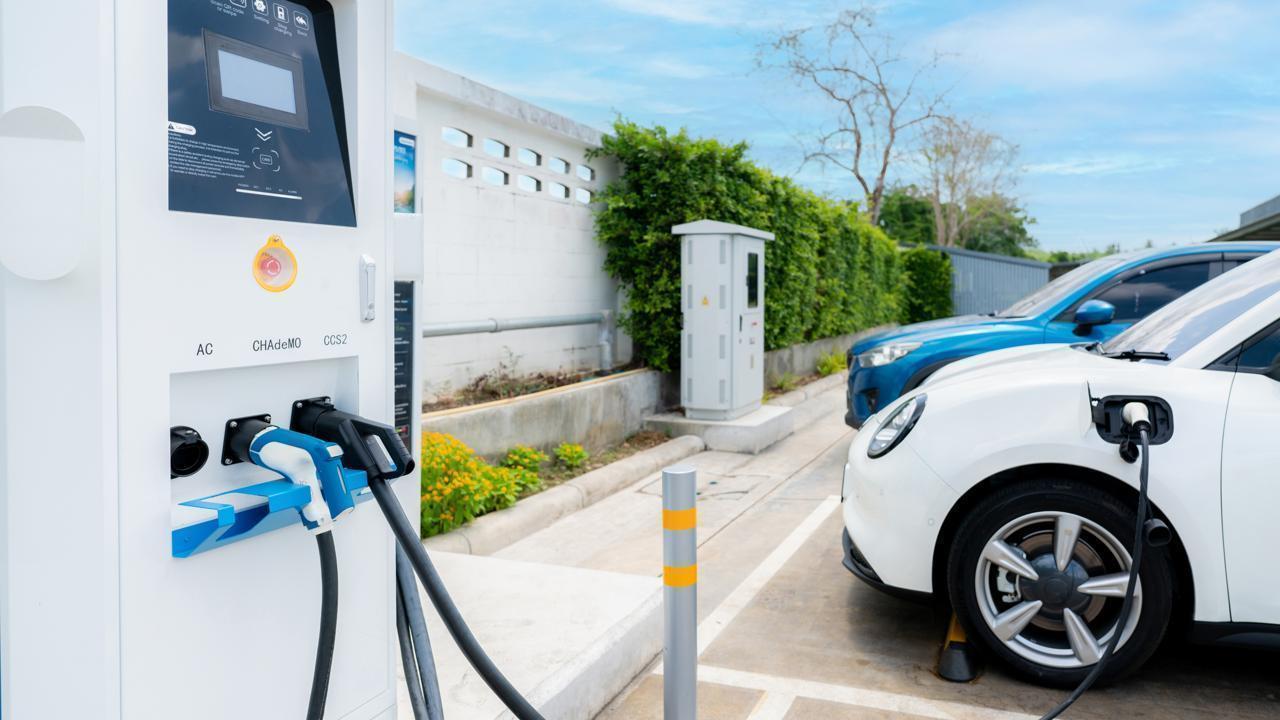
Tripura is gearing up for a major transformation in its urban mobility landscape, as the state government has announced plans to install 45 electric vehicle (EV) charging stations across strategic locations. This initiative aims to support the growing number of EVs in the state, while also encouraging more residents to adopt electric mobility as part of India’s broader clean energy and sustainable transportation goals.
The project comes at a time when India’s EV market is accelerating at record pace, driven by government incentives, technological advancements, and rising environmental consciousness. By committing to a comprehensive EV charging network, Tripura is setting an example for other northeastern states, which are still in the early stages of EV adoption.
Strategic Rollout Across the State
According to officials from the Tripura Renewable Energy Development Agency (TREDA), the new charging stations will be strategically distributed to ensure accessibility for both urban and rural commuters. Locations will include major highways, commercial hubs, government offices, public parking areas, and tourist destinations.
The state’s capital, Agartala, is expected to receive the largest share of installations, serving as the central hub for EV infrastructure in Tripura. Other towns like Udaipur, Dharmanagar, and Kailashahar will also be covered to ensure widespread accessibility.
This planned rollout is in line with the Ministry of Heavy Industries’ FAME-II (Faster Adoption and Manufacturing of Electric Vehicles) scheme, which provides financial support for the establishment of EV charging infrastructure across India.
Meeting the Growing Demand for EVs
Tripura’s EV sales, though modest compared to metro cities, have been steadily increasing over the last two years. Local dealers report rising inquiries for electric scooters, three-wheelers, and passenger cars, driven by high fuel prices and growing awareness of EV benefits.
By ensuring a reliable charging infrastructure, the government hopes to remove one of the biggest barriers to EV adoption — range anxiety. This psychological hurdle has often deterred potential buyers, especially in regions where charging options are limited or non-existent.
An official from TREDA highlighted that these new stations will be equipped with both fast-charging and standard-charging facilities to cater to different vehicle types. The fast chargers will allow electric cars and buses to recharge in less than an hour, while standard chargers will serve two- and three-wheelers.
Boost to the Local Economy and Employment
The EV charging station project is expected to bring significant economic benefits to Tripura. Apart from creating direct employment opportunities for installation, maintenance, and operations, the initiative is likely to stimulate demand for EVs, thereby boosting sales for local dealerships.
Moreover, this infrastructure investment aligns with India’s ‘Atmanirbhar Bharat’ mission by encouraging domestic manufacturing of EV chargers, batteries, and related components. The state government has indicated that wherever possible, locally manufactured equipment will be prioritized.
Environmental Gains and Climate Commitments
Tripura’s decision to push for electric mobility is rooted in its commitment to environmental preservation. As a state blessed with dense forests, rich biodiversity, and sensitive ecological zones, reducing vehicle emissions is a key priority.
Switching from petrol and diesel vehicles to electric alternatives can significantly cut greenhouse gas emissions, improve air quality, and lower noise pollution in urban centers. With transportation contributing a major share of India’s carbon emissions, the move towards EVs is a vital step in meeting both state and national climate targets.
According to preliminary estimates, once operational, the 45 EV charging stations could collectively help offset several thousand tonnes of CO₂ annually, depending on the pace of EV adoption.
Integration with Renewable Energy Sources
One of the most promising aspects of Tripura’s EV infrastructure plan is its emphasis on integrating renewable energy. Officials have revealed that a portion of the charging stations will be powered by solar panels, reducing dependency on the conventional power grid and further cutting carbon emissions.
This approach not only enhances the environmental benefits of EVs but also ensures more reliable operation in areas prone to power outages. The use of solar-powered chargers also aligns with India’s National Electric Mobility Mission Plan and National Solar Mission.
Public-Private Partnerships on the Horizon
The government has indicated that it will explore partnerships with private companies to accelerate the rollout and management of these charging stations. Several private EV infrastructure firms have already expressed interest in setting up and operating the stations under a revenue-sharing model.
Such public-private partnerships (PPPs) can ensure faster execution, higher efficiency, and better customer service while reducing the financial burden on the state government. This approach is already being successfully implemented in other Indian states like Delhi, Maharashtra, and Karnataka.
Preparing for Electric Buses and Public Transport
While private vehicle owners will benefit from this initiative, Tripura is also looking at electrifying its public transport fleet. The state has already begun evaluating proposals for the introduction of electric buses in Agartala and other key routes.
The presence of fast-charging stations will be critical to this transition, ensuring that buses can operate full-day schedules without delays due to charging downtime. This could dramatically reduce fuel costs for the state’s transport department while making urban travel more eco-friendly.
Educating the Public and Creating Awareness
Infrastructure alone is not enough to guarantee EV adoption — public awareness campaigns are equally important. Tripura plans to launch awareness drives highlighting the economic and environmental benefits of EVs.
These campaigns will address common misconceptions about EV range, charging times, and maintenance, as well as provide practical information on subsidies, tax incentives, and financing options available to buyers.
Funding and Implementation Timeline
The funding for the EV charging station project will come from a mix of central government schemes, state allocations, and potential private investment. The target is to complete installation of all 45 stations within the next 18–24 months.
Officials have assured that the rollout will be phased to ensure that at least a portion of the stations are operational by early 2026. This phased approach will allow for real-world testing and adjustments based on user feedback before scaling up to full capacity.
Tripura’s Role in India’s EV Transition
Tripura’s initiative holds symbolic importance for India’s EV transition. The northeastern region, with its geographical challenges and dispersed population, has often lagged behind in infrastructure development. By taking an early lead, Tripura sends a clear message that electric mobility is not just for big cities but can be viable in smaller states as well.
This could inspire other northeastern states like Assam, Meghalaya, and Nagaland to invest in similar infrastructure, thereby creating an interconnected EV ecosystem in the region.
Charging into a Cleaner Future
The installation of 45 EV charging stations marks a defining moment in Tripura’s transportation history. Beyond the immediate benefits of convenience and accessibility, it represents a long-term commitment to sustainability, cleaner air, and a modern mobility framework.
As EV adoption gathers momentum across India, Tripura’s forward-thinking approach could serve as a blueprint for other small states aiming to embrace the electric future. With strong policy support, smart investments, and public engagement, the state is well-positioned to lead a green transport revolution in the northeast.
Tripura, EV Charging Stations



Advances in Aerospace Technology and Commercial Aviation Recovery
Insights into breakthrough aerospace technologies and commercial aviation’s recovery amid 2025 chall

Defense Modernization and Strategic Spending Trends
Explore key trends in global defense modernization and strategic military spending shaping 2025 secu

Tens of Thousands Protest in Serbia on Anniversary of Deadly Roof Collapse
Tens of thousands in Novi Sad mark a year since a deadly station roof collapse that killed 16, prote

Canada PM Carney Apologizes to Trump Over Controversial Reagan Anti-Tariff Ad
Canadian PM Mark Carney apologized to President Trump over an Ontario anti-tariff ad quoting Reagan,

The ad that stirred a hornets nest, and made Canadian PM Carney say sorry to Trump
Canadian PM Mark Carney apologizes to US President Trump after a tariff-related ad causes diplomatic

Bengaluru-Mumbai Superfast Train Approved After 30-Year Wait
Railways approves new superfast train connecting Bengaluru and Mumbai, ending a 30-year demand, easi




