Post by : Sameer Saifi
A powerful typhoon named Fung-wong, known locally as “Uwan”, struck the northern Philippines on Sunday night and caused widespread damage. The storm landed in Aurora province and moved across the main island of Luzon through the night, bringing strong winds, heavy rain, and dangerous sea waves. Government officials reported that at least two people lost their lives and more than one million residents had to leave their homes for safety before the storm arrived. Many families spent the night in evacuation centers, schools, and temporary shelters, listening to loud winds as they worried about their houses and crops.
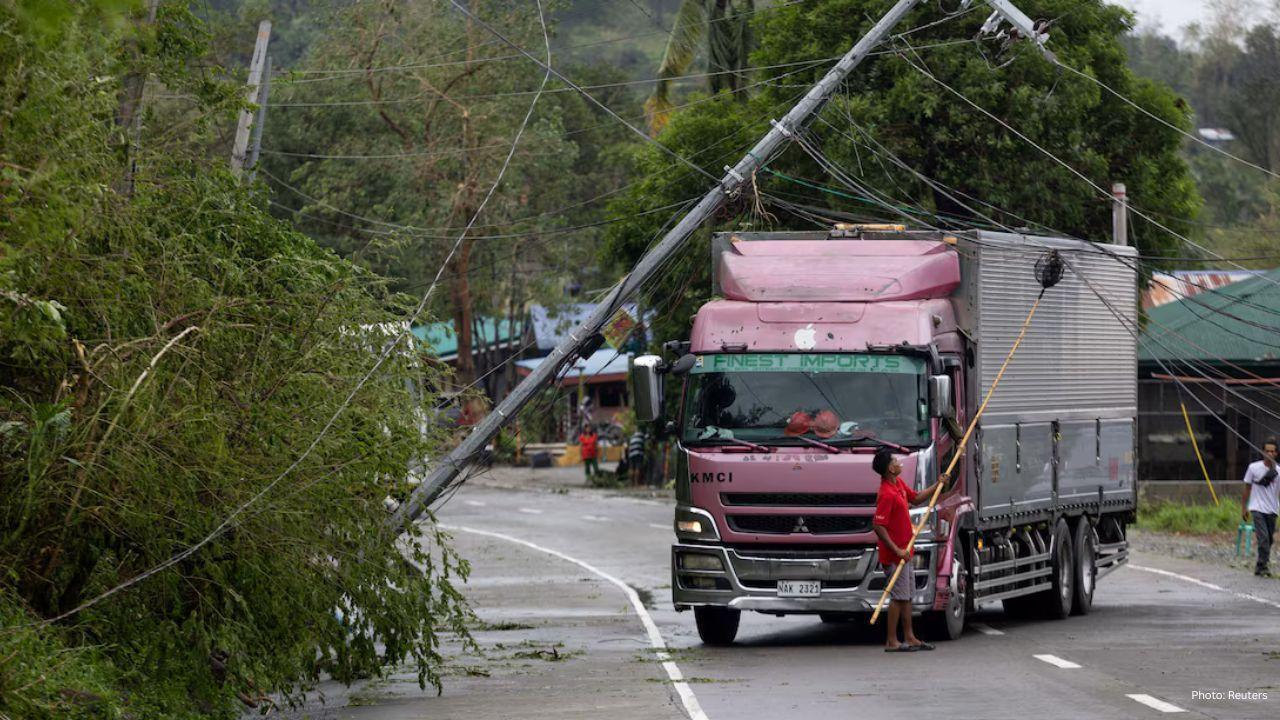
In the city of Santiago in Isabela province, many houses were damaged. Roofs made of metal sheets were blown away, trees fell, and electric posts were knocked down, causing power cuts in several towns. Many roads became blocked by fallen trees and landslides. People woke up in the morning to see broken roads and damaged farms. Some villages could not be reached because of blocked highways. Local authorities said clearing teams had started work, but it may take time to restore normal life.
One resident, Romeo Mariano, said that he and his grandmother could not sleep because of the strong winds hitting their house. He explained that when they stepped outside after the storm passed, they saw tree branches everywhere and part of their home damaged. Several families shared similar experiences, talking about fear and sleepless worry while the storm was at its worst.
Officials from Aurora province confirmed that at least three towns were cut off due to landslides and collapsed roads. Heavy machinery has been sent for clearing operations, but rescuers are moving carefully because the ground is still soft and may slip again. Local leaders urged people not to return home until authorities confirm that it is safe.
The national weather agency announced that the storm had moved out toward the South China Sea, but many parts of the country are still facing strong winds and rain. Coastal areas have been warned of storm surges, which are sudden rises in sea water that can cause flooding. People living near rivers and mountainsides were advised to stay alert for flash floods and landslides.
The Civil Aviation Authority reported that more than 400 flights were cancelled because of the bad weather. Bus trips and ferry services were also suspended in many regions. Schools in several provinces have closed for safety. Farmers fear that the storm may have destroyed rice fields, vegetable farms, and fruit orchards, which could lead to economic loss for rural families who depend on agriculture.
Typhoon Fung-wong is the 21st storm to hit the Philippines this year and arrived shortly after Typhoon Kalmaegi, which caused massive tragedy by killing more than 200 people in the Philippines and several others in Vietnam. Because of the country’s location in the Pacific Ocean, the Philippines is one of the most storm-prone nations in the world. Every year, citizens face typhoons that damage homes, kill livestock, destroy crops, and interrupt daily life. Many families rebuild again and again, but the emotional and financial strain becomes heavier each time.
Rescue teams, volunteers, police, and the army are all working together to deliver food, water, and medical needs to affected communities. Local churches and public halls have opened their doors to shelter families who cannot return home yet. Community kitchens have been set up to serve meals to evacuees, especially children and the elderly. Health workers are reminding people to be careful of water-borne diseases, which often spread after storms due to dirty or flooded water sources.
The government has also warned that recovery and rebuilding may take several weeks. Roads and power lines need repair, schools must be cleaned before reopening, and some families may need assistance to repair their homes. Local leaders are urging donors, private companies, and organizations to help by providing relief goods and financial support.
Climate experts say storms in the region are becoming stronger in recent years. They believe warmer seawater increases the strength of typhoons. Many scientists are calling for better disaster planning, stronger houses, and improved early warning systems. They say that saving lives in the future will depend on how well communities prepare before storms arrive.
Even though Fung-wong has moved away, the weather officials have reminded people not to relax yet. The tail of the storm can still cause heavy rain in many areas. Fishermen have been asked not to sail because waves at sea are still very dangerous. People near hills and rivers are advised to stay in evacuation centers until local officials confirm that landslides and floods are no longer a threat.
The Philippines faces a long process of recovery once the rain stops. Families will return home to check what remains. Some may find only broken walls. Others may find their homes standing but damaged. The work of repairing, rebuilding, and healing will begin. Communities across the region are trying to stay strong, but many are tired and worried. They hope the government and humanitarian groups will provide support quickly so that they can rebuild their lives.
#trending #latest #Philippines #TyphoonFungwong #Uwan #Luzon #StormUpdate #DisasterRelief #WeatherNews #ArmustNews



Advances in Aerospace Technology and Commercial Aviation Recovery
Insights into breakthrough aerospace technologies and commercial aviation’s recovery amid 2025 chall

Defense Modernization and Strategic Spending Trends
Explore key trends in global defense modernization and strategic military spending shaping 2025 secu

Tens of Thousands Protest in Serbia on Anniversary of Deadly Roof Collapse
Tens of thousands in Novi Sad mark a year since a deadly station roof collapse that killed 16, prote

Canada PM Carney Apologizes to Trump Over Controversial Reagan Anti-Tariff Ad
Canadian PM Mark Carney apologized to President Trump over an Ontario anti-tariff ad quoting Reagan,

The ad that stirred a hornets nest, and made Canadian PM Carney say sorry to Trump
Canadian PM Mark Carney apologizes to US President Trump after a tariff-related ad causes diplomatic

Bengaluru-Mumbai Superfast Train Approved After 30-Year Wait
Railways approves new superfast train connecting Bengaluru and Mumbai, ending a 30-year demand, easi




