Post by : Sameer Saifi
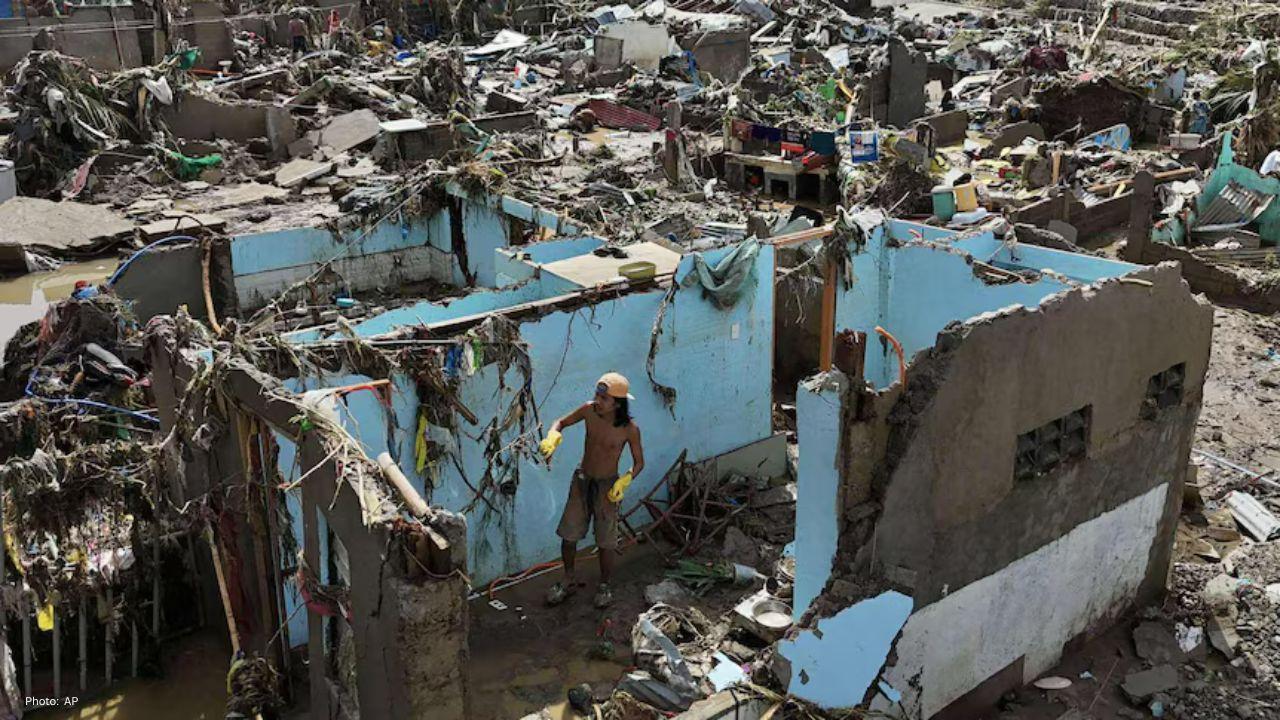
Typhoon Kalmaegi has caused heavy damage and great sadness across the Philippines. The storm brought strong winds, heavy rain, and large floods to several regions, leading to the loss of lives and destruction of homes, roads, and farms. Many families are now left without shelter, electricity, or clean water.
The typhoon hit with powerful force, damaging houses made of light materials and tearing off roofs even in stronger buildings. Floodwaters rose quickly, trapping people in their homes and forcing many to climb to rooftops to stay safe. Rescue teams, including police, military, and volunteers, worked day and night to help people reach safer areas. Some roads became blocked by fallen trees and landslides, making rescue work slow and difficult.
In rural areas, farms were heavily affected. Rice fields, coconut farms, banana trees, and vegetable crops were destroyed. This is a serious loss because many families in these areas depend on farming for their income. Fishermen also suffered heavy losses, as boats and fishing equipment were damaged or washed away by strong waves. These losses will affect their livelihood for many months.
Schools and health centers also experienced damage. In some areas, classes have been stopped, and school buildings are being used as evacuation centers. Many families are staying inside these temporary shelters, where they are receiving food, water, and basic medical care. However, conditions are crowded, and officials are working to prevent the spread of sickness.
Government leaders have promised support to those affected. Emergency funds, relief goods, and temporary housing are being sent to the worst-hit areas. Several countries and international aid groups have also offered help by providing supplies and rescue assistance. Local communities are coming together to support one another, showing strong unity during this difficult time.
Experts say that the Philippines is one of the countries most affected by typhoons each year because of its location in the Pacific region. They also warn that climate change may be making storms stronger and more frequent. This means the country needs better planning, stronger buildings, improved early warning systems, and more training for disaster response.
Even though the people of the Philippines are facing pain and loss, their spirit remains strong. Many families are helping their neighbors, sharing food, and cleaning damaged areas together. Rebuilding will take time, but the resilience of the Filipino people gives hope that communities will recover.
The impact of Typhoon Kalmaegi is a reminder of how quickly nature can change lives. It also shows the importance of being prepared and staying united in times of crisis. The road ahead will be long, but with support and cooperation, the affected communities can rise again and rebuild their homes and future.
#trending #latest #TyphoonKalmaegi #Philippines #DisasterUpdate #Floods #ReliefEfforts #CommunitySupport #armustnews



Advances in Aerospace Technology and Commercial Aviation Recovery
Insights into breakthrough aerospace technologies and commercial aviation’s recovery amid 2025 chall

Defense Modernization and Strategic Spending Trends
Explore key trends in global defense modernization and strategic military spending shaping 2025 secu

Tens of Thousands Protest in Serbia on Anniversary of Deadly Roof Collapse
Tens of thousands in Novi Sad mark a year since a deadly station roof collapse that killed 16, prote

Canada PM Carney Apologizes to Trump Over Controversial Reagan Anti-Tariff Ad
Canadian PM Mark Carney apologized to President Trump over an Ontario anti-tariff ad quoting Reagan,

The ad that stirred a hornets nest, and made Canadian PM Carney say sorry to Trump
Canadian PM Mark Carney apologizes to US President Trump after a tariff-related ad causes diplomatic

Bengaluru-Mumbai Superfast Train Approved After 30-Year Wait
Railways approves new superfast train connecting Bengaluru and Mumbai, ending a 30-year demand, easi




