Post by : Saif
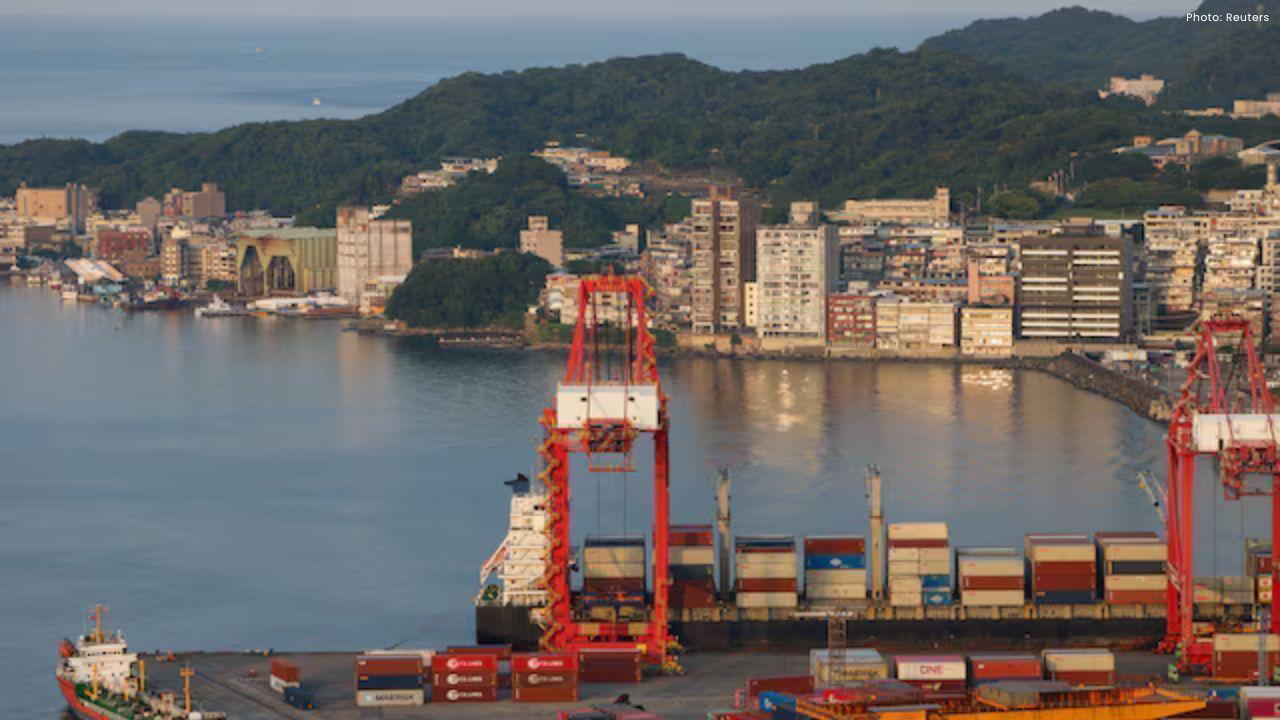
The United States and Taiwan have finalized a major trade agreement aimed at reducing tariffs and boosting the purchase of American goods. The deal confirms that the U.S. will maintain a 15% tariff on imports from Taiwan while Taiwan will gradually eliminate or lower tariffs on nearly all U.S. goods.
The agreement covers a wide range of products and services. Taiwan has committed to buying almost $85 billion worth of U.S. goods between 2025 and 2029. This includes $44.4 billion of liquefied natural gas and crude oil, $15.2 billion of civil aircraft and engines, and $25.2 billion of power grid and marine equipment, as well as steelmaking machinery.
Taiwanese President Lai Ching-te called the agreement “a pivotal moment for Taiwan’s economy and industries,” saying it will strengthen the Taiwan-U.S. economic relationship and help build reliable supply chains. The deal also establishes a high-tech strategic partnership between the two nations, focusing on areas like semiconductors, advanced electronics, and artificial intelligence.
Under the deal, Taiwan will immediately remove tariffs of up to 26% on many U.S. agricultural goods, such as beef, dairy, and corn. Some products, like pork belly and ham, will see their tariffs fall from 40% and 32% to 10%. Taiwan also agreed to remove non-tariff barriers on cars, medical devices, and pharmaceuticals, while adopting U.S. safety standards.
The agreement follows an earlier commitment by Taiwan to invest $250 billion in the U.S. to expand semiconductor, energy, and AI production. Taiwan Semiconductor Manufacturing Corp (TSMC) has already pledged $100 billion toward these investments, with the remainder backed by government guarantees. The deal encourages further new investments in strategic high-tech sectors.
U.S. Trade Representative Jamieson Greer said the deal will increase export opportunities for U.S. farmers, manufacturers, and workers, while enhancing the resilience of high-technology supply chains. For the United States, this agreement comes at a time when the trade deficit with Taiwan has grown sharply, largely due to increased imports of high-end AI chips.
This trade agreement marks a significant step in strengthening economic and strategic ties between the U.S. and Taiwan. By reducing tariffs and opening up new markets for American goods, both countries hope to encourage growth, investment, and innovation in critical industries.
#trending #latest #USTaiwanTradeDeal #TariffReduction #USExports #TaiwanEconomy #HighTechPartnership #Semiconductors #AgricultureTrade #AviationIndustry #InvestmentBoost #GlobalTrade



Advances in Aerospace Technology and Commercial Aviation Recovery
Insights into breakthrough aerospace technologies and commercial aviation’s recovery amid 2025 chall

Defense Modernization and Strategic Spending Trends
Explore key trends in global defense modernization and strategic military spending shaping 2025 secu

Tens of Thousands Protest in Serbia on Anniversary of Deadly Roof Collapse
Tens of thousands in Novi Sad mark a year since a deadly station roof collapse that killed 16, prote

Canada PM Carney Apologizes to Trump Over Controversial Reagan Anti-Tariff Ad
Canadian PM Mark Carney apologized to President Trump over an Ontario anti-tariff ad quoting Reagan,

The ad that stirred a hornets nest, and made Canadian PM Carney say sorry to Trump
Canadian PM Mark Carney apologizes to US President Trump after a tariff-related ad causes diplomatic

Bengaluru-Mumbai Superfast Train Approved After 30-Year Wait
Railways approves new superfast train connecting Bengaluru and Mumbai, ending a 30-year demand, easi




