Post by : Saif
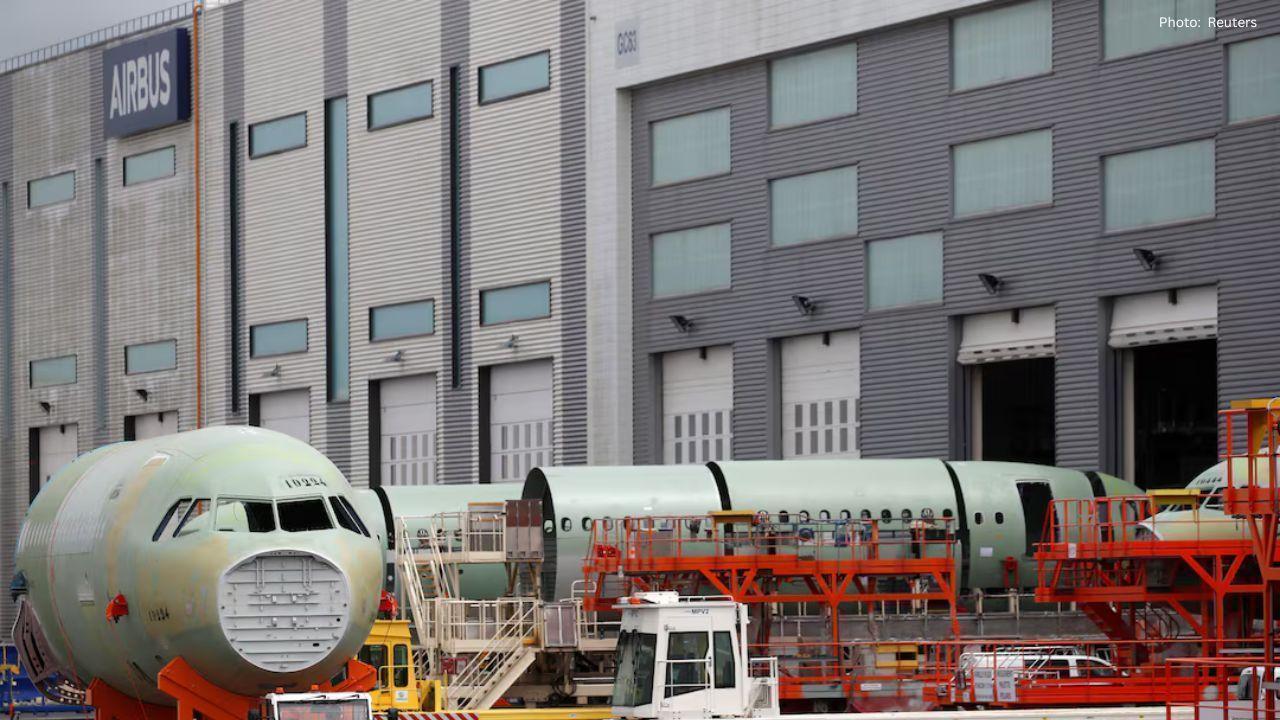
Airbus faced a major safety challenge this week, but the company moved quickly to solve the problem and keep most flights running smoothly. After a mid-air incident involving a JetBlue A320, Airbus recalled around 6,000 A320-family jets for an urgent software change. This recall covered nearly half of all A320 aircraft flying in the world, making it one of the biggest emergency actions in Airbus history.
The issue became known when a JetBlue plane suddenly dropped in altitude during a flight. Experts later discovered a possible link to a software weakness triggered by solar flares. While the connection is still not fully proven, Airbus and global regulators decided it was safer to act immediately. Within hours, Airbus sent an eight-page alert ordering airlines to install a previous version of the software before flying the planes again.
This sudden instruction created concern as the recall came during a busy travel weekend in the United States. Airlines from Asia, Europe, and America rushed to carry out the fix, even though Airbus did not initially provide serial numbers for the affected jets. Many carriers had to check each aircraft individually, which caused delays on some flights.
Despite the shock, the recovery went faster than expected. Airlines reported that engineers quickly identified which jets needed the software change. Airbus had estimated the repair would take about three hours per plane, but several airlines later said the work took much less time for many aircraft. Flyadeal, a budget airline in Saudi Arabia, said their team reacted within minutes of receiving the alert and completed the fix surprisingly fast.
The process required engineers to revert the system to an older, stable version of a program that controls the plane’s nose angle. This update is done through a device called a “data loader,” which must be physically connected to the aircraft. Some airlines faced delays simply because they did not have enough data loaders to update many planes at once.
JetBlue, the airline involved in the original incident, said it expected 137 of its 150 affected planes to return to service by Monday. It planned to cancel around 20 flights due to the repair work.
A small number of older A320 jets will need more than just a software change. These aircraft require new computers, though the number of such planes is lower than what Airbus first estimated.
This incident also highlighted how the aviation industry has changed its approach to safety after the Boeing 737 MAX crisis. Airbus, which has often stayed quiet during safety issues, took a more open and apologetic tone this time. CEO Guillaume Faury publicly said sorry and admitted the company could have handled things better. Industry experts say this was intentional, as both Airbus and Boeing are trying to rebuild trust with the public, airlines, and regulators.
Public relations specialists believe Airbus acted fast to avoid the mistakes Boeing made in the past. During the 737 MAX crisis, Boeing was criticised for slow communication and lack of transparency. Now, aircraft makers understand that honesty and quick action matter just as much as technical solutions.
While this weekend was stressful for airlines, most carriers managed the recall with minimal disruption. Flights continued, passengers were mostly unaffected, and regulators were able to confirm that the problem was being resolved.
Airbus is still monitoring older aircraft that may need hardware replacements. But for now, the company has successfully slowed down the crisis and avoided major global travel problems.
The aviation world will keep watching for updates, but this event has already shown how quickly things can change—and how fast companies must respond to protect passengers and keep the skies safe.
#trending #latest #Airbus #A320 #AviationSafety #JetBlue #SoftwareUpdate #AirTravel #AviationNews #armustnews



Advances in Aerospace Technology and Commercial Aviation Recovery
Insights into breakthrough aerospace technologies and commercial aviation’s recovery amid 2025 chall

Defense Modernization and Strategic Spending Trends
Explore key trends in global defense modernization and strategic military spending shaping 2025 secu

Tens of Thousands Protest in Serbia on Anniversary of Deadly Roof Collapse
Tens of thousands in Novi Sad mark a year since a deadly station roof collapse that killed 16, prote

Canada PM Carney Apologizes to Trump Over Controversial Reagan Anti-Tariff Ad
Canadian PM Mark Carney apologized to President Trump over an Ontario anti-tariff ad quoting Reagan,

The ad that stirred a hornets nest, and made Canadian PM Carney say sorry to Trump
Canadian PM Mark Carney apologizes to US President Trump after a tariff-related ad causes diplomatic

Bengaluru-Mumbai Superfast Train Approved After 30-Year Wait
Railways approves new superfast train connecting Bengaluru and Mumbai, ending a 30-year demand, easi




