Post by : Saif
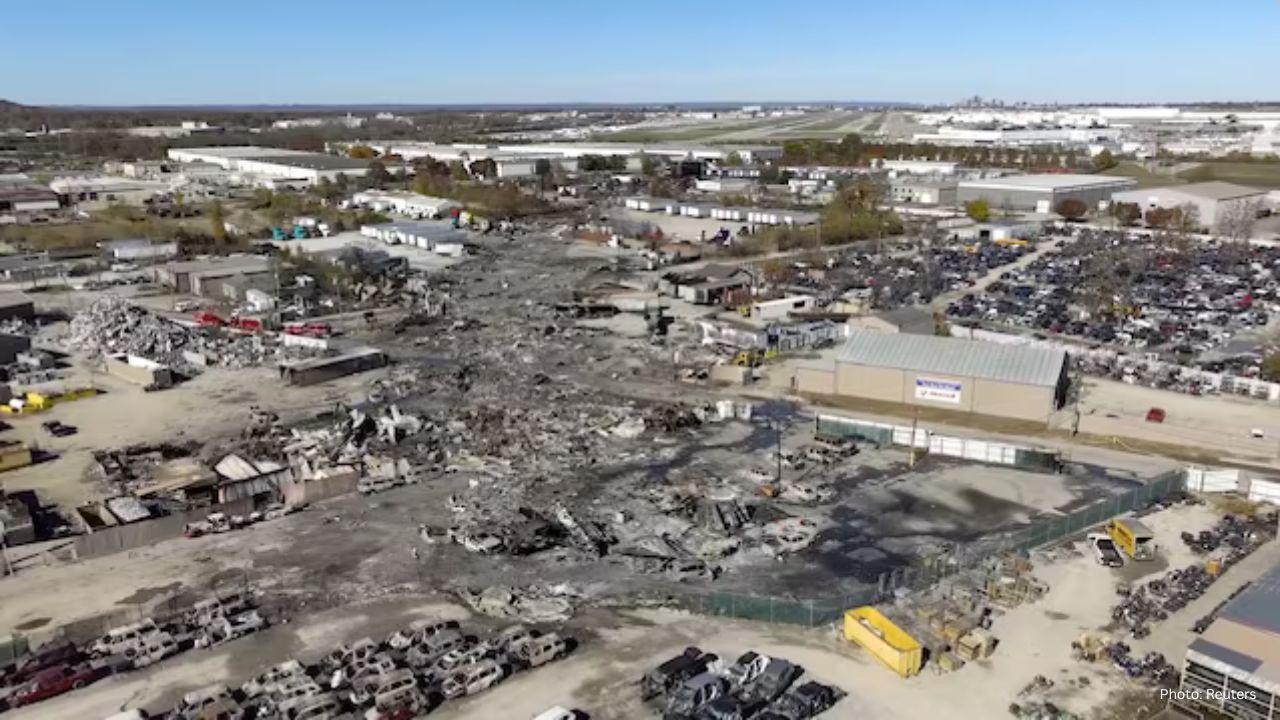
Investigators have discovered evidence of fatigue cracks in a UPS MD-11 cargo jet that crashed on November 4 in Louisville, Kentucky, killing 14 people. The National Transportation Safety Board (NTSB) described the cracks as a “major clue” in understanding the cause of the crash.
The cracks were found in a critical support structure on the left pylon, which connects the plane’s wing to the engine. Experts say such cracks weaken the structure over time, and when one side fails, the other cannot carry the extra load, potentially leading to catastrophic failure.
“That’s a major clue,” said air safety expert Anthony Brickhouse, noting that the cracks likely developed over multiple flights. John Cox, another safety expert, explained that fatigue cracks gradually weaken a structure until forces during flight exceed what it can handle, causing it to break.
The NTSB is also investigating why the cracks were not detected during routine maintenance. The 34-year-old aircraft had recently undergone repairs in Texas at a facility operated by Singapore’s ST Engineering. According to the report, the plane had not flown enough cycles to trigger special inspections for the part that failed.
The preliminary report references a similar accident in May 1979, when an American Airlines DC-10 experienced the separation of its left engine and pylon during takeoff from Chicago O’Hare Airport. Investigators later found fatigue cracks in that case as well.
In response to the UPS crash, both UPS and FedEx grounded their MD-11 fleets as a precaution. Boeing, which owns the MD-11 program after merging with McDonnell Douglas in 1997, has been conducting additional modeling and testing to support the investigation. The Federal Aviation Administration (FAA) also temporarily grounded MD-11 and DC-10 planes due to their similar design.
NTSB Chair Jennifer Homendy said preliminary reports are typically published around 30 days after an accident, with the final, more detailed report expected about a year after the crash. The findings will be closely watched by the aviation industry as authorities continue to examine the plane’s maintenance history and potential design vulnerabilities.
This discovery of fatigue cracks underscores the importance of aircraft maintenance and inspection procedures, particularly for older planes, and highlights the challenges in ensuring flight safety even for well-regulated cargo fleets.
#trending #latest #UPSJetCrash #MD11 #AviationSafety #NTSB #FatigueCracks #AirCargo #PlaneCrashInvestigation



Advances in Aerospace Technology and Commercial Aviation Recovery
Insights into breakthrough aerospace technologies and commercial aviation’s recovery amid 2025 chall

Defense Modernization and Strategic Spending Trends
Explore key trends in global defense modernization and strategic military spending shaping 2025 secu

Tens of Thousands Protest in Serbia on Anniversary of Deadly Roof Collapse
Tens of thousands in Novi Sad mark a year since a deadly station roof collapse that killed 16, prote

Canada PM Carney Apologizes to Trump Over Controversial Reagan Anti-Tariff Ad
Canadian PM Mark Carney apologized to President Trump over an Ontario anti-tariff ad quoting Reagan,

The ad that stirred a hornets nest, and made Canadian PM Carney say sorry to Trump
Canadian PM Mark Carney apologizes to US President Trump after a tariff-related ad causes diplomatic

Bengaluru-Mumbai Superfast Train Approved After 30-Year Wait
Railways approves new superfast train connecting Bengaluru and Mumbai, ending a 30-year demand, easi




