Post by : Saif
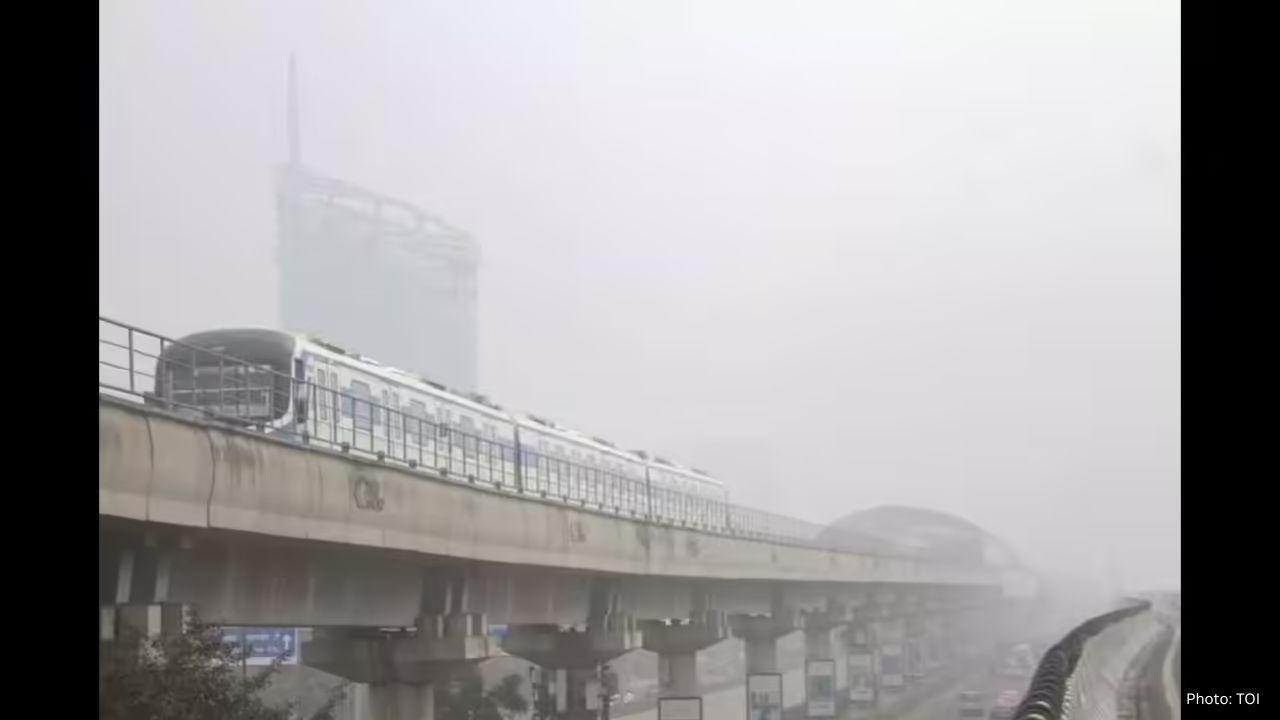
The Haryana government has stepped up its plans to expand Metro rail services and the Namo Bharat rapid rail network after seeing better performance from the Gurugram Rapid Metro. Officials believe the improved results show that people are ready to use fast and reliable public transport when it is well planned and properly managed.
Gurugram is one of the fastest-growing cities in India. It is a major business hub with thousands of offices, malls, and residential areas. Over the years, traffic congestion has become a serious problem. Long travel times and crowded roads have affected daily life for workers, students, and families. The better performance of the Gurugram Rapid Metro has given the state government confidence to invest more in rail-based transport.
Recent data shows that passenger numbers on the Gurugram Rapid Metro have increased. Trains are running more smoothly, and connections with the Delhi Metro network have improved. This has made daily travel easier for office workers and residents who depend on public transport. The rise in ridership also suggests that people trust the system more than before.
Encouraged by these results, Haryana is pushing ahead with plans to extend Metro lines to more areas. New routes are expected to connect growing residential sectors with business districts and industrial zones. These expansions aim to reduce the number of private vehicles on the roads, which could help ease traffic jams and lower pollution levels.
Alongside Metro expansion, the state is also focusing on the Namo Bharat rapid rail system. This high-speed regional network is designed to connect cities across the National Capital Region. For Haryana, Namo Bharat offers a chance to link cities like Gurugram, Faridabad, Panipat, and Sonipat more quickly with Delhi. Faster regional travel can support jobs, education, and trade.
Improved rail connectivity can also bring economic benefits. Areas with good transport links often attract new investments, offices, and housing projects. Small businesses near stations may see more customers, while workers can access jobs without spending hours on the road each day.
Environmental concerns are another key reason behind the push. Metro and rapid rail systems use less energy per passenger compared to cars and buses. If more people choose trains over private vehicles, air quality could improve, which is important for a region that often struggles with pollution.
However, experts say careful planning is needed. Projects must be completed on time and within budget. Authorities will also need to ensure good last-mile connectivity, such as buses, feeder services, and safe walking paths, so that people can easily reach stations from their homes and workplaces.
In summary, the improved performance of the Gurugram Rapid Metro has become a strong signal for Haryana’s transport future. By expanding Metro lines and the Namo Bharat network, the state hopes to build a cleaner, faster, and more connected region. If executed well, these plans could greatly improve daily travel and overall quality of life for millions of people.
#trending #latest #HaryanaMetro #GurugramRapidMetro #NamoBharat #PublicTransport #UrbanMobility #RailExpansion #SmartCities



Advances in Aerospace Technology and Commercial Aviation Recovery
Insights into breakthrough aerospace technologies and commercial aviation’s recovery amid 2025 chall

Defense Modernization and Strategic Spending Trends
Explore key trends in global defense modernization and strategic military spending shaping 2025 secu

Tens of Thousands Protest in Serbia on Anniversary of Deadly Roof Collapse
Tens of thousands in Novi Sad mark a year since a deadly station roof collapse that killed 16, prote

Canada PM Carney Apologizes to Trump Over Controversial Reagan Anti-Tariff Ad
Canadian PM Mark Carney apologized to President Trump over an Ontario anti-tariff ad quoting Reagan,

The ad that stirred a hornets nest, and made Canadian PM Carney say sorry to Trump
Canadian PM Mark Carney apologizes to US President Trump after a tariff-related ad causes diplomatic

Bengaluru-Mumbai Superfast Train Approved After 30-Year Wait
Railways approves new superfast train connecting Bengaluru and Mumbai, ending a 30-year demand, easi




