Post by : Saif
A deadly suicide bombing at a Shiite mosque in Islamabad has shocked Pakistan and the wider world. At least 31 people were killed and more than 160 were injured when an attacker opened fire at the entrance of the mosque and then blew himself up among worshippers during Friday prayers. The Islamic State group has claimed responsibility. This attack is one of the worst acts of violence in Pakistan’s capital city in more than ten years.
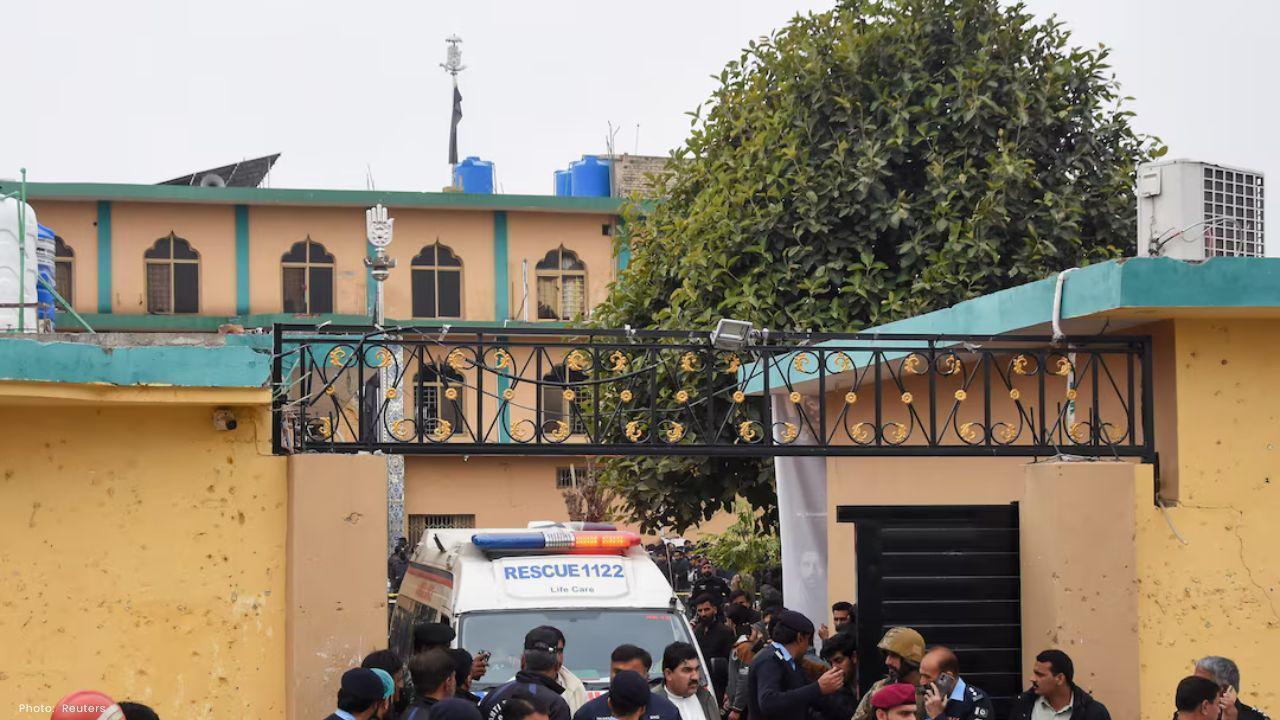
The blast took place at the Khadija Tul Kubra Imambargah on the outskirts of Islamabad. According to officials, the attacker tried to enter the mosque compound but was stopped by guards at the gate. He fired shots and then detonated explosives strapped to his body. Witnesses said the explosion came just seconds after gunfire. Many people were inside for prayers, and the force of the blast caused heavy loss of life and injuries.
Photos and videos from the scene showed broken glass, damaged walls, and worshippers lying wounded on the floor. Survivors spoke of confusion, smoke, and panic. Families rushed to hospitals looking for their loved ones. Doctors worked under pressure as ambulances kept arriving with injured victims. Scenes outside emergency wards were filled with fear and grief.
This attack directly targeted the Shiite Muslim community, which is a minority in Pakistan. Sectarian violence — attacks between different Muslim sects — has a long and painful history in the country. Groups like Islamic State and other militant organizations have often targeted Shiite gatherings, mosques, and processions. These attacks are meant to create fear and divide communities.
What makes this bombing even more worrying is its location. Islamabad is one of the most heavily guarded cities in Pakistan. Government buildings, foreign missions, and security centers are based there. Large checkpoints and patrols are common. Bombings in the capital are rare compared to other regions. For such a major attack to happen in this area raises serious questions about how the attacker managed to reach a crowded place of worship with weapons and explosives.
The timing also adds to the concern. The city was already on high alert due to the visit of Uzbekistan’s president. Security forces were deployed across many roads and key areas. Even with these measures, the attacker was able to carry out a deadly strike. This suggests possible gaps in intelligence, screening, or local security planning.
After the blast, political blame quickly followed. Pakistan’s defence minister accused India of supporting the attack, but did not provide proof. India rejected the charge and called it baseless. Such exchanges are not new after major incidents, but they rarely help victims or improve security. Quick accusations without evidence can increase tensions between countries and distract from the urgent need to investigate facts.
Regional tensions are already high. Pakistan has faced a recent rise in militant violence, especially near the Afghanistan border. Armed groups linked to the Pakistani Taliban and other networks have increased attacks on security forces and civilians. In Balochistan and Khyber Pakhtunkhwa provinces, clashes and bombings have become more frequent. This latest incident shows that the threat is no longer limited to border areas.
There is also a human side that must not be forgotten. Many victims were ordinary citizens who came only to pray. One survivor described hearing gunshots and then seeing “blood everywhere.” Another man learned at the hospital that his brother, who had prayed beside him every Friday, was among the dead. These are not just numbers — they are families broken and futures lost.
An attack on a place of worship is an attack on basic human values. Mosques, temples, churches, and other prayer sites should be safe spaces. When violence enters these places, it spreads fear far beyond the immediate victims. It tells minorities that they are not safe even in their most sacred moments. That is exactly the kind of fear extremist groups want to create.
The answer cannot be only stronger guards and more checkpoints, though security improvements are needed. Authorities must also improve intelligence sharing, track extremist networks, and stop hate speech that fuels sectarian division. Community leaders, teachers, and religious scholars also have a role in promoting unity and rejecting violence in clear words.
Pakistan has suffered from terrorism for many years and has also shown that it can reduce attacks through strong and steady action. But progress can quickly be reversed if militant groups regroup and adapt. This bombing should be a wake-up call that the danger is not over.
The country now faces a clear test: to protect minorities, secure public spaces, and avoid turning tragedy into political blame games. Justice for the victims and safety for citizens must come first.
#trending #latest #Islamabad #Pakistan #MosqueAttack #ShiiteCommunity #Terrorism #SecurityAlert #SectarianViolence #BreakingNews #SouthAsia #armustnews



Advances in Aerospace Technology and Commercial Aviation Recovery
Insights into breakthrough aerospace technologies and commercial aviation’s recovery amid 2025 chall

Defense Modernization and Strategic Spending Trends
Explore key trends in global defense modernization and strategic military spending shaping 2025 secu

Tens of Thousands Protest in Serbia on Anniversary of Deadly Roof Collapse
Tens of thousands in Novi Sad mark a year since a deadly station roof collapse that killed 16, prote

Canada PM Carney Apologizes to Trump Over Controversial Reagan Anti-Tariff Ad
Canadian PM Mark Carney apologized to President Trump over an Ontario anti-tariff ad quoting Reagan,

The ad that stirred a hornets nest, and made Canadian PM Carney say sorry to Trump
Canadian PM Mark Carney apologizes to US President Trump after a tariff-related ad causes diplomatic

Bengaluru-Mumbai Superfast Train Approved After 30-Year Wait
Railways approves new superfast train connecting Bengaluru and Mumbai, ending a 30-year demand, easi




