Post by : Amit
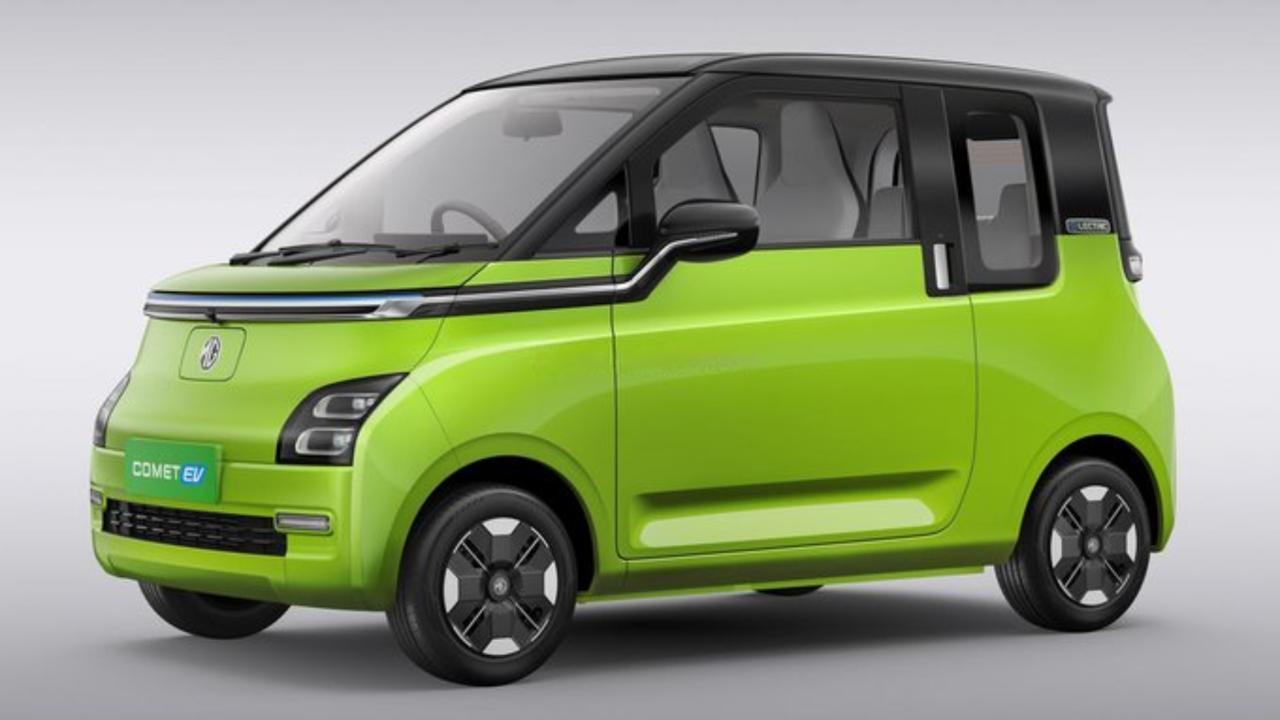
Photo : X / RushLane
New Delhi, July 26, 2025 — In a move that has caught the attention of urban commuters and EV enthusiasts alike, MG Motor India has announced a price hike for its entry-level electric vehicle, the MG Comet EV, effective July 2025. The price increase comes just months after MG celebrated strong sales figures and rising demand for its compact urban electric car.
The price revision ranges from ₹21,000 to ₹25,000 depending on the variant, placing the Comet EV’s new starting price at ₹6.99 lakh (ex-showroom), up from the previous ₹6.74 lakh. While the increase remains moderate, it has sparked discussions on affordability in India’s increasingly competitive electric vehicle segment.
Despite the price adjustment, the MG Comet EV continues to hold its position as one of the most affordable electric cars in India, making it a crucial player in the evolving landscape of sustainable urban mobility.
What’s Behind the Price Hike?
According to official sources from MG Motor India, the price hike is a result of rising input costs, currency fluctuation, and increased logistics expenditures. While the automaker did not specify which raw materials contributed most to the revised pricing, industry insiders point to the escalating cost of battery-grade lithium, rare-earth metals for electric motors, and semiconductor components as major factors.
An MG spokesperson noted, “We have always strived to keep the Comet EV accessible while ensuring the highest levels of quality and safety. This minor adjustment was necessary to reflect the increased cost of inputs while continuing to offer value and reliability.”
This adjustment follows a broader industry trend where nearly all electric vehicle manufacturers have initiated incremental price corrections in 2025, mostly due to raw material supply issues and the weakening Indian rupee against the dollar.
Variant-Wise Breakdown of the New Pricing
The MG Comet EV is available in three primary variants: Pace, Play, and Plush. Here's how their ex-showroom pricing stands after the recent hike:
Even after the hike, the top-end Plush variant comfortably undercuts most rivals, such as the Tata Tiago EV, Citroën ë-C3, and Mahindra e2o NXT, on total cost of ownership—especially in Tier 1 and Tier 2 cities where government subsidies, lower charging costs, and tax breaks remain active.
Comet EV’s Position in India’s Urban EV Market
Since its launch in 2023, the MG Comet EV has carved a niche in India’s electric car ecosystem. With its ultra-compact 2-door, 4-seater layout, and an official range of 230 kilometers per full charge, the vehicle caters to young city dwellers, students, and short-distance commuters.
What makes the Comet EV stand out isn't just its size or range—it’s the tech-first approach MG has adopted. The car features a 10.25-inch touchscreen infotainment system, voice command integration, real-time battery analytics, and OTA (over-the-air) updates, positioning it as a “connected urban EV” rather than just an electric vehicle.
Despite criticism from some corners for its unconventional design and limited highway capabilities, the Comet has been widely praised for its maneuverability in congested cities like Mumbai, Bengaluru, Delhi, and Pune. Sales have shown consistent growth, with monthly units crossing 2,000 for the first time in April 2025.
EV Affordability: A Shifting Landscape?
The price hike brings back to center stage an ongoing conversation: how sustainable is the affordability of EVs in India, especially when subsidies start reducing or input costs continue rising?
The Indian government, through the FAME-II scheme, had offered generous incentives for electric two- and four-wheelers. But in 2024, those subsidies were partially rolled back, with FAME-III still awaiting final policy approval. For manufacturers like MG, which positioned the Comet as the most affordable EV, price elasticity becomes a delicate balancing act.
However, state-level benefits continue to soften the blow in regions like Delhi, Maharashtra, and Telangana. Buyers in these areas still enjoy road tax waivers, registration fee exemptions, and additional bonuses for scrapping older vehicles.
Moreover, many believe the shift toward local battery production—with Giga factories coming online in Gujarat and Tamil Nadu—will stabilize prices over the next 12–18 months.
Charging Infrastructure: Still the Missing Piece?
Even with Comet’s small battery pack—around 17.3 kWh—the availability and reliability of public charging infrastructure remains a concern for many prospective buyers. MG has partially addressed this by offering free home charger installation and access to the MG Charge network, a partnership-driven urban charging grid initiative.
To date, the automaker has helped establish over 7,000 charging stations across India, but interoperability issues and lack of fast-charging options in remote zones continue to slow EV adoption.
Still, MG executives remain optimistic. “We’ve seen a significant behavioral shift, especially among first-time car buyers who are now choosing electric over petrol for intra-city use. With Comet, we’ve proven that an affordable EV doesn’t need to compromise on smart features or design,” said Rajeev Chaba, MG Motor India’s President and Managing Director.
Market Competition Intensifies
The Comet EV's hike arrives as new rivals prepare to hit the Indian market. Tata Motors is expected to launch an ultra-affordable EV under ₹6.5 lakh, while Maruti Suzuki’s eWX is inching closer to its domestic debut in early 2026.
Furthermore, Citroën and Hyundai are reportedly working on their A-segment electric hatchbacks for the Indian market. This intensifying competition could push MG to strategically bundle offers, such as extended warranties, free charging units, or even subscription plans to retain market share.
Some analysts believe the brand perception of MG as a tech-savvy urban mobility provider could help it weather the pricing challenge, especially among younger demographics in metro cities.
Real Users React: Is the Hike Justified?
On social media and EV forums, the reaction to the price hike has been mixed. While long-time fans and owners see it as “an expected market correction,” some prospective buyers have expressed disappointment over “pricing out the middle-class student segment.”
“I was considering the Comet as my first car in Delhi. The increase isn’t too high, but I’ll now wait for festive discounts or see if Tata drops something under 7 lakh,” said Tanmay Mehta, a 23-year-old engineering student and EV enthusiast.
Others argue that value-for-money is still intact, especially when comparing long-term fuel savings, lower maintenance costs, and the increasing resale value of well-maintained electric cars.
MG has yet to announce whether the price hike will be followed by any new features or cosmetic updates, though a 2025 mid-cycle refresh with improved suspension and upgraded infotainment is rumored to be under development.
What Lies Ahead for MG and India’s Budget EVs?
While a ₹25,000 price hike is not insignificant in the entry-level segment, the MG Comet EV still holds firm as one of India’s most accessible urban electric mobility solutions. The brand’s blend of affordability, technology, and design continues to strike a chord with the fast-growing EV-curious population.
However, going forward, MG—and others in the same space—will need to navigate an increasingly complex equation: rising component costs, shifting government policy, emerging competition, and ever-evolving customer expectations.
If MG can maintain a strong after-sales network, continue to invest in charging infrastructure, and bundle offers for students, small families, and gig workers, it could turn this price bump into just a small blip in a larger growth story.
As India moves toward its 2030 net-zero transportation goal, small EVs like the Comet will be instrumental—not just for their environmental impact, but for showing that clean, smart transport doesn’t have to break the bank.
MG Comet, EV, India



Advances in Aerospace Technology and Commercial Aviation Recovery
Insights into breakthrough aerospace technologies and commercial aviation’s recovery amid 2025 chall

Defense Modernization and Strategic Spending Trends
Explore key trends in global defense modernization and strategic military spending shaping 2025 secu

Tens of Thousands Protest in Serbia on Anniversary of Deadly Roof Collapse
Tens of thousands in Novi Sad mark a year since a deadly station roof collapse that killed 16, prote

Canada PM Carney Apologizes to Trump Over Controversial Reagan Anti-Tariff Ad
Canadian PM Mark Carney apologized to President Trump over an Ontario anti-tariff ad quoting Reagan,

The ad that stirred a hornets nest, and made Canadian PM Carney say sorry to Trump
Canadian PM Mark Carney apologizes to US President Trump after a tariff-related ad causes diplomatic

Bengaluru-Mumbai Superfast Train Approved After 30-Year Wait
Railways approves new superfast train connecting Bengaluru and Mumbai, ending a 30-year demand, easi




