Post by : Amit
Photo : X / Beats in Brief
Paradip Port Achieves Historic Cargo Volume Milestone
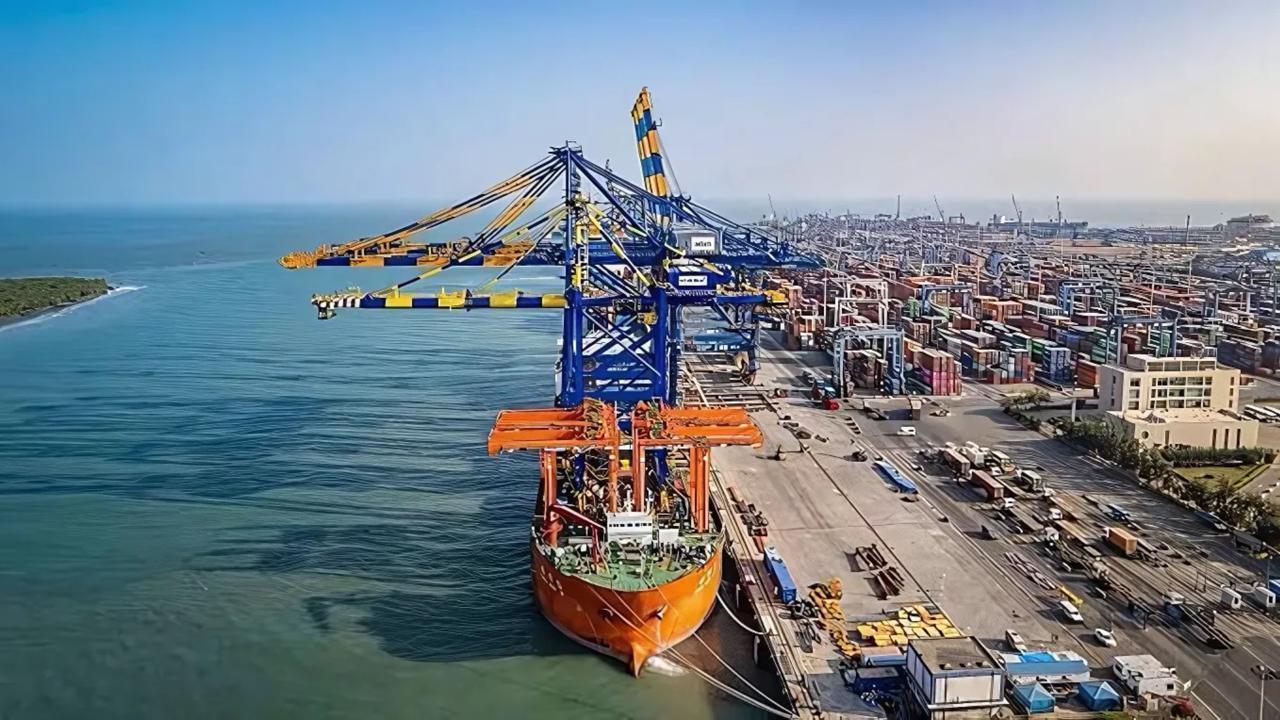
In a resounding achievement that underscores India’s growing prowess in maritime logistics, the Paradip Port Authority (PPA) has reported record-breaking cargo handling performance, crossing the 50 million metric tonnes (MMT) mark in just the first four months of FY 2025-26. This monumental feat not only cements Paradip Port’s standing as one of the nation’s busiest and most efficient maritime hubs but also reflects the broader momentum building across India’s port infrastructure under the government’s continued emphasis on modernization and digitalization.
Setting New Benchmarks for Port Operations in India
Located on the east coast in Odisha, Paradip Port has consistently played a pivotal role in India’s maritime trade. However, the achievement of handling 50 MMT in only 122 days sets a new operational standard. This pace of cargo management places the port well ahead of its previous records and indicates a significant leap in operational efficiency, strategic planning, and technological deployment.
According to Paradip Port Authority, the cargo handled from April 1 to July 31, 2025, comprises a diversified mix that includes coal, iron ore, crude oil, and containers. This surge is a direct result of investments in both physical infrastructure and automated cargo handling systems, including high-speed conveyors, upgraded berth facilities, and integration of real-time monitoring technologies.
Behind the Numbers: The Infrastructure Driving Growth
The foundation of this milestone lies in the robust infrastructure upgrades Paradip Port has undergone in recent years. Key developments include the mechanization of coal and iron ore handling, expansion of deep-draft berths to accommodate larger vessels, and introduction of digital twin-based cargo monitoring systems. These advances have reduced ship turnaround time and drastically improved cargo evacuation rates.
Paradip Port’s Harbour Mobile Cranes (HMCs) and Automated Mooring Systems have also played a role in streamlining docking operations and reducing berth congestion. These automation-driven enhancements ensure maximum throughput with minimal human intervention, translating to time and cost savings for shipping lines and cargo operators.
Rising Demand Across Cargo Types and New Trade Lanes
The diversity in cargo types is an important part of this success story. The port saw significant growth in thermal coal imports due to rising demand from India’s power sector during the summer surge. Iron ore exports, primarily headed to China, Japan, and Southeast Asia, also grew thanks to improved railway linkages and faster cargo aggregation at inland points.
Crude oil shipments and POL (petroleum, oil, and lubricants) throughput remained strong, supported by improved connectivity to downstream refineries. Container traffic, although traditionally not the port’s forte, also registered a modest uptick with improved inland logistics corridors and container rail services.
National Logistics Momentum: Synergy with PM Gati Shakti
Paradip Port’s record-setting performance resonates with India’s broader ambition under the PM Gati Shakti National Master Plan—a framework launched to integrate and coordinate multi-modal logistics infrastructure development across the country.
By aligning its port expansion initiatives with the Gati Shakti blueprint, Paradip Port has managed to seamlessly connect marine operations with inland logistics, particularly through upgraded railway sidings and four-lane highways. This connectivity has led to a smoother cargo flow between production hubs in eastern India and major export destinations.
The result: Paradip is no longer just a port—it’s becoming a critical logistics node in the national transportation grid.
Collaborative Efforts and Public-Private Synergy
The port’s progress has not occurred in isolation. Collaborative efforts between central and state governments, private terminal operators, and logistics providers have contributed significantly to Paradip’s rise. The ongoing Public-Private Partnership (PPP) model has attracted strategic investments in berth development, container freight stations (CFS), and dry port integration, especially from private players with a long-term outlook.
Paradip Port is now in discussions to expand its berth capacity further, with an emphasis on attracting long-haul container traffic and Ro-Ro (Roll-on/Roll-off) cargo. The introduction of green berthing solutions and shore-to-ship power supply systems is also under planning, reflecting India’s push toward decarbonizing its maritime sector.
Environmental Compliance and Green Port Initiatives
Amid record-setting operational growth, Paradip Port has also maintained its focus on sustainability. The port has adopted several green port initiatives, including the deployment of solar-powered lighting, eco-dredging practices, and rainwater harvesting infrastructure. More importantly, it has implemented real-time environmental monitoring systems to track and mitigate emissions during cargo handling.
These efforts align with India’s commitment under the IMO 2050 decarbonization goals, ensuring that growth in cargo handling does not come at the cost of environmental degradation.
Leadership Speaks: A Testament to Strategic Planning
In response to the milestone, Paradip Port Authority Chairperson P.L. Haranadh remarked,
“This accomplishment is the result of coordinated efforts by our entire team, including the dedicated labor force, proactive terminal operators, and progressive policy frameworks from the Ministry of Ports, Shipping, and Waterways. We are proud to be setting new benchmarks for Indian ports.”
His statement reflects the focused leadership and forward-thinking strategies that have guided Paradip's transformation over the past few years—from a traditional bulk port to a modern, multi-modal logistics hub.
Comparative Landscape: Paradip vs. Other Major Ports
While major ports like Jawaharlal Nehru Port (JNPT) and Mundra Port often grab headlines for container throughput, Paradip has carved a distinct niche in handling bulk and break-bulk cargo with unmatched speed and efficiency. In fact, with 50 MMT in four months, Paradip is on track to surpass the 150 MMT mark well ahead of schedule, a figure that few Indian ports have managed in such a time frame.
This competitive edge is bolstered by strategic hinterland access across mineral-rich states like Odisha, Chhattisgarh, and Jharkhand, making it the preferred choice for exporters and importers dealing in raw materials.
Paradip’s Roadmap: Future Expansion and Digitalization
The port is not resting on its laurels. The 2025-2030 Strategic Vision Document prepared by the port authority outlines further ambitions, including:
The next phase of growth will aim to make Paradip not just India’s fastest bulk cargo handler, but also a maritime logistics innovation hub for South Asia.
A Milestone with National Significance
Paradip Port’s achievement of handling 50 MMT in just four months is more than a numerical triumph—it is a signal of India’s rising capability to operate world-class maritime infrastructure. With synchronized investments in port modernization, digital tools, green energy, and multi-modal linkages, Paradip is laying the foundation for a more agile, connected, and competitive Indian shipping sector.
As India aspires to become a $5 trillion economy, efficient ports like Paradip will play a foundational role. Its success offers a roadmap for other ports aiming to scale up, modernize operations, and reduce environmental impact—all while boosting trade volumes and national revenue.
With unwavering momentum and future-ready strategies, Paradip is setting sail toward a new era of maritime excellence.
Paradip Port Authority, India, Cargo



Advances in Aerospace Technology and Commercial Aviation Recovery
Insights into breakthrough aerospace technologies and commercial aviation’s recovery amid 2025 chall

Defense Modernization and Strategic Spending Trends
Explore key trends in global defense modernization and strategic military spending shaping 2025 secu

Tens of Thousands Protest in Serbia on Anniversary of Deadly Roof Collapse
Tens of thousands in Novi Sad mark a year since a deadly station roof collapse that killed 16, prote

Canada PM Carney Apologizes to Trump Over Controversial Reagan Anti-Tariff Ad
Canadian PM Mark Carney apologized to President Trump over an Ontario anti-tariff ad quoting Reagan,

The ad that stirred a hornets nest, and made Canadian PM Carney say sorry to Trump
Canadian PM Mark Carney apologizes to US President Trump after a tariff-related ad causes diplomatic

Bengaluru-Mumbai Superfast Train Approved After 30-Year Wait
Railways approves new superfast train connecting Bengaluru and Mumbai, ending a 30-year demand, easi




