Post by : Meena Rani
India is taking a major step in modernizing its transportation system with the Delhi–Meerut Regional Rapid Transit System (RRTS). Prime Minister Narendra Modi will inaugurate the remaining 27 kilometers of this corridor on 17 September 2025. This development is expected to change commuting between Delhi and Meerut, offering fast, safe, and reliable travel for thousands of people daily.
Project Overview
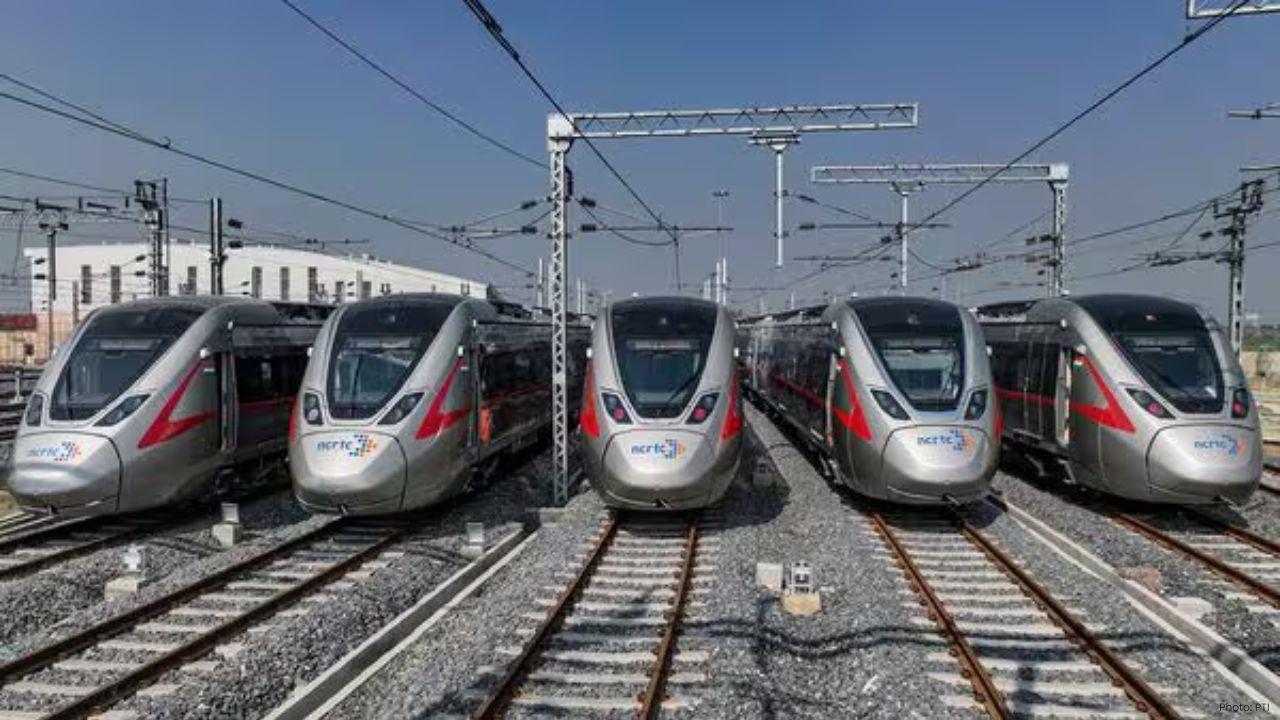
The Delhi–Meerut RRTS is designed as a high-speed rail corridor connecting Delhi to Meerut through Ghaziabad, Sahibabad, Muradnagar, and Modinagar. Covering a total length of 82.15 kilometers, the corridor includes both elevated and underground tracks. Around 68 kilometers are elevated, while 14 kilometers run underground. The project aims to provide faster travel, reduce traffic on roads, and improve connectivity across the National Capital Region (NCR).
Key Features and Benefits
High-Speed Travel
The RRTS trains can reach speeds of up to 180 km/h. This will cut travel time significantly, making it much faster than traveling by car or bus.
Comfortable and Safe Journey
Passengers will enjoy air-conditioned coaches, modern seating, and smooth rides. Safety features like CCTV surveillance, emergency alarms, and automated train control ensure a secure journey.
Seamless Connectivity
The stations are designed to connect easily with metro lines, buses, and other public transport. This allows passengers to travel conveniently to their destinations without extra waiting time.
Environmental Friendliness
The project focuses on eco-friendly measures. Energy-efficient trains and renewable energy use will help reduce pollution and support a greener environment.
Boost to Economy and Development
By connecting major cities quickly, the RRTS corridor will encourage business growth, create jobs, and attract new investment along the route.
Construction Journey
The project officially started with the foundation stone laid in March 2019. Construction began in June 2019. The first 17-kilometer stretch from Sahibabad to Duhai Depot became operational in October 2023. The extension reached Modinagar North in March 2024, Meerut South in August 2024, and New Ashok Nagar in January 2025. The final 27 kilometers are ready to be inaugurated, completing the full corridor.
Impact on Daily Commuters
Once fully operational, the RRTS will transform commuting for thousands of people. Travel between Delhi and Meerut will be faster, more comfortable, and more reliable. Road traffic is expected to reduce, and passengers will have more travel options thanks to connections with the metro and bus networks.
The inauguration of the full Delhi–Meerut RRTS corridor marks a milestone in India’s transportation development. By offering fast, safe, and eco-friendly travel, the corridor is set to become a major part of daily life in the NCR, improving connectivity, reducing travel time, and supporting economic growth.
Delhi–Meerut RRTS, high-speed rail, NCR connectivity, urban transport



Advances in Aerospace Technology and Commercial Aviation Recovery
Insights into breakthrough aerospace technologies and commercial aviation’s recovery amid 2025 chall

Defense Modernization and Strategic Spending Trends
Explore key trends in global defense modernization and strategic military spending shaping 2025 secu

Tens of Thousands Protest in Serbia on Anniversary of Deadly Roof Collapse
Tens of thousands in Novi Sad mark a year since a deadly station roof collapse that killed 16, prote

Canada PM Carney Apologizes to Trump Over Controversial Reagan Anti-Tariff Ad
Canadian PM Mark Carney apologized to President Trump over an Ontario anti-tariff ad quoting Reagan,

The ad that stirred a hornets nest, and made Canadian PM Carney say sorry to Trump
Canadian PM Mark Carney apologizes to US President Trump after a tariff-related ad causes diplomatic

Bengaluru-Mumbai Superfast Train Approved After 30-Year Wait
Railways approves new superfast train connecting Bengaluru and Mumbai, ending a 30-year demand, easi




