Post by : Avinab Raana
Photo : X / AutoGuide.com
The End of Ram’s Electric Pickup Dream
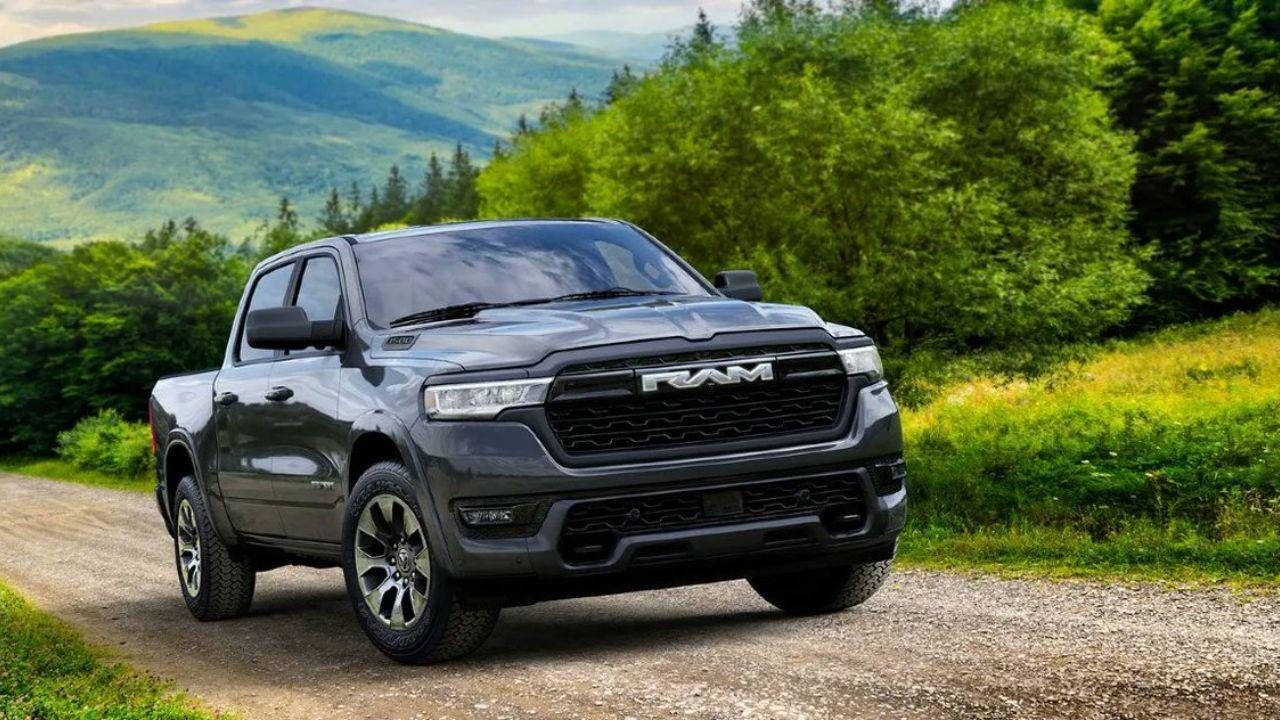
Ram has officially pulled the plug on its much-anticipated electric pickup. For years, the promise was clear: a full-size EV truck with huge battery capacity, massive range, and towing that would outclass rivals. Delays piled up, expectations mounted and now, instead of launching the full BEV model, Ram is shifting gears to a range-extended EV (REEV) platform, branded the Ram 1500 REV. This is a strategic retreat, with implications for what customers will expect in the electric truck segment.
Why the Decision Was Made
Ram’s move stems from several pressures. Demand for full battery electric trucks in North America has not met some forecasts. Battery costs, charging infrastructure, and customer willingness to pay premium prices for trucks with long range and high towing capacity lag behind expectations. These realities have made it harder for automakers to justify the enormous investment in purely electric big pickups. Ram’s leadership appears to have concluded that the economics and market timing favor a hybrid or range-extended path for now rather than pushing all in on a full EV.
What the 1500 REV REEV Offers Instead
The new Ram 1500 REV REEV concept promises a middle-ground solution. It will combine a moderate-sized battery (about 92 kWh) with a gasoline engine backup. The goal: deliver strong electric-only driving range for everyday use, with unlimited range supported by the combustion engine when needed. Ram claims the REV will still offer competitive towing, payload capacity, and performance things that matter deeply to pickup buyers. It’s not the pure EV many expected, but it may be more practical given charging limitations and cost pressures.
Abandoned Specs of the Full EV Truck
The full EV version was supposed to be impressive: huge battery options, with one around 168 kWh for about 350 miles of range, and another even larger pack (around 229 kWh) promising over 500 miles once available. Towing, charging speed, and performance were going to be major selling points. Automotive enthusiasts and industry watchers had marked the Ram EV as a potential game-changer. But repeated delays—from late 2024 to 2025, then 2026, then mid-2027 eroded confidence. In the end, Ram has declared those plans off the table, at least for the United States.
Market Realities: Charging & Consumer Expectations
One big set of constraints has been infrastructure. Charging stations capable of supporting full-size electric trucks especially for towing and heavy payloads are still relatively sparse. Long charging times, battery weight, and electricity cost all complicate the picture. For many buyers, the idea of charging large battery packs daily is newer and more onerous than using gasoline backups. So offering a range-extended EV model positions Ram to address both customer concerns about range anxiety and the slower roll-out of supportive infrastructure.
How Power and Towing Remain Priorities
Ram isn’t backing away from what makes its brand appealing: power, towing, and utility. The REV model is still billed to deliver high torque (610 lb-ft) and strong horsepower—numbers that compete well in the heavy-duty pickup market. Payload and towing capacity remain core to its pitch. Rather than trying to beat full EV rivals on battery alone, Ram is leveraging its strengths in durability, torque, and utility. The idea is to offer a truck that feels capable and tough, while cutting down on frequent fuel stops and lowering emissions during EV-mode driving.
Pricing, Cost Pressures & Competitive Framing
One concern with full EV pickups has been their high sticker prices. Batteries are expensive, supply chain costs remain volatile, and manufacturers often assume premium pricing for EV features. By moving to a REEV format, Ram can reduce some battery costs (smaller packs), limit price escalation, and offer something more affordable—though still likely above many traditional gas trucks. Ram is positioning the REV as a performance and utility pickup that’s more attainable than a full EV in its class, but still high-end.
Impacts on Battery Suppliers & Supply Chain
Shifting away from a large battery EV means changes for component suppliers, battery pack makers, and manufacturers of EV power electronics. Demand for enormous battery packs will drop in favor of medium-sized packs plus hybrid/generator systems. Suppliers may need to pivot or adjust production capacity. On the other hand, REEVs also require packaging both electric systems and a combustion backup, which adds complexity. Automotive supply chains will be watching Ram’s REV rollout closely for cost, reliability, and parts availability.
Environmental Trade-Offs & Regulatory Pressure
Environmental advocates have pointed out that while REEVs produce fewer emissions than pure combustion trucks, they don’t reach the zero tailpipe emissions that fully electric vehicles promise. Regulators in many states and countries are pushing for stricter standards, EV mandates, and greenhouse gas reduction targets. Ram’s move may be interpreted as cautious or even conservative in light of those goals. But in the broader policy landscape, offering REEVs may still help meet certain emissions rules, especially when EV infrastructure is not fully built out.
Customer Reaction & Brand Implications
Pickup buyers tend to prioritize utility, range, and towing over emissions. Some early adopters may be disappointed that the full EV model is canceled. Others may prefer the REV as a more reliable, flexible alternative. Ram’s brand image depends on projecting capability and toughness. The REV must live up to expectations in those areas. There is a balancing act: ensuring the EV-mode performance feels meaningful, while not compromising on reliability or capability in EV off-peak mode (when relying on the gas engine).
Competitive Dynamics: How Rivals See It
Ram’s competitors- Ford, GM, Rivian, Tesla, etc. are all pushing full battery electric pickups. Ram stepping back may give rivals a window to differentiate themselves as leaders in full EV trucks. On the other hand, some buyers may find the hybrid REV approach more practical today. The market might segment more between those who demand zero emissions (and accept range/payment trade-offs) and those who want a flexible, more affordable, partially electric pickup. Ram’s pivot could force competitors to recalibrate pricing, spec, and feature offerings.
What It Means for the U.S. Truck Market
The U.S. truck market has different constraints than smaller vehicles. Heavy-duty payloads, towing, and off-road or work-site demands mean trucks need batteries that are larger, stronger, and more durable. Ram’s decision reflects that those expectations are not yet matched by market conditions everywhere. Until charging infrastructure, power grids, battery costs, and customer expectations align, many trucks may adopt interim solutions like REEVs rather than chasing full EVs. The pickup segment may evolve more slowly than passenger EVs did.
Risk Factors & What’s at Stake Going Forward
Ram’s move carries risk. If environmental regulations accelerate, they may punish non-zero tailpipe emissions more strictly. If battery technology or infrastructure improves dramatically, Ram may be left behind. Also, REV hybrids add complexity- two power sources mean more parts, more maintenance, more potential failure points. Buyers will demand reliability. If Ram’s REV fails to meet expectations for durability, or if costs creep up, it might damage trust. But done well, this pivot could preserve Ram’s relevance through a transition period.
Timeline & What to Watch Next
Ram says the REV will launch in early 2026. Key things to watch include official pricing, real-world EV-mode range, towing under battery power vs. hybrid power, charging speed, and how quickly Ram can ramp production. Also important will be how Ram frames this: whether the REV is marketed as a stopgap or a new long-term direction. Consumer, regulatory, and infrastructure developments over the next year will all influence whether this pivot to REEV is seen as prudent or retreat.
Change of Course But Not of Purpose
Ram’s cancellation of its full-electric pickup isn’t the end of the road for truck electrification- it’s a pivot. By embracing a range-extended EV design with the Ram 1500 REV, the brand acknowledges present limits in charging infrastructure, cost, and customer behavior, while keeping faith in electric performance. It underscores that in automotive transformation, strategy must adapt as the landscape shifts. The real test will be whether the REV can deliver on its pledges of power and towing without compromising affordability or credibility. If it succeeds, it may prove that electric pickup future isn’t just about going all in on batteries, it’s about balancing dreams with reality.
Electric pickup, Range-extended EV, Power and towing



Advances in Aerospace Technology and Commercial Aviation Recovery
Insights into breakthrough aerospace technologies and commercial aviation’s recovery amid 2025 chall

Defense Modernization and Strategic Spending Trends
Explore key trends in global defense modernization and strategic military spending shaping 2025 secu

Tens of Thousands Protest in Serbia on Anniversary of Deadly Roof Collapse
Tens of thousands in Novi Sad mark a year since a deadly station roof collapse that killed 16, prote

Canada PM Carney Apologizes to Trump Over Controversial Reagan Anti-Tariff Ad
Canadian PM Mark Carney apologized to President Trump over an Ontario anti-tariff ad quoting Reagan,

The ad that stirred a hornets nest, and made Canadian PM Carney say sorry to Trump
Canadian PM Mark Carney apologizes to US President Trump after a tariff-related ad causes diplomatic

Bengaluru-Mumbai Superfast Train Approved After 30-Year Wait
Railways approves new superfast train connecting Bengaluru and Mumbai, ending a 30-year demand, easi




