Post by : Saif
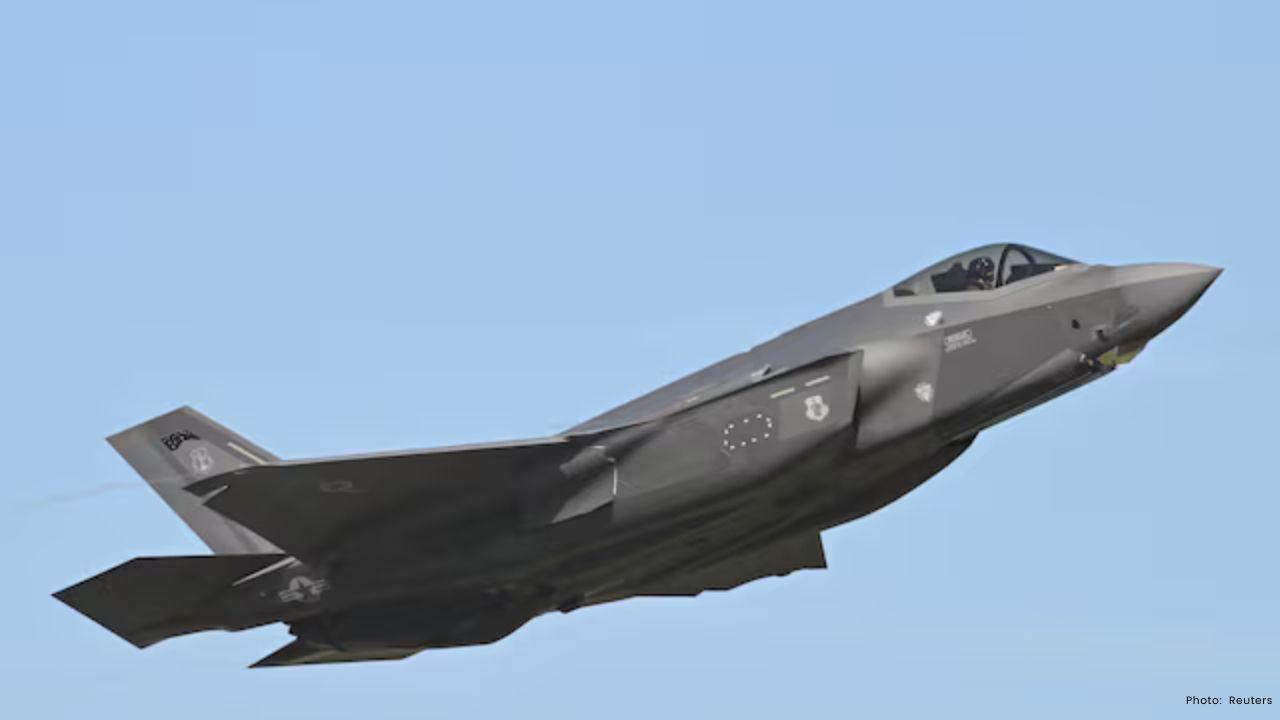
Germany is considering buying more American-made F-35 fighter jets as its joint European fighter program with France faces serious difficulties. According to sources familiar with the discussions, Berlin could order more than 35 additional jets, adding to the 35 aircraft it already purchased in 2022.
If the new deal moves forward, Germany could eventually operate around 85 F-35 jets. However, officials have not confirmed the final decision, and discussions are still ongoing.
The F-35 fighter jet, produced by U.S. defense company Lockheed Martin, costs more than $80 million per aircraft. Germany’s earlier order of 35 jets is expected to begin delivery later this year. Reports also suggest that Germany may soon confirm a separate order of 15 more jets.
This possible expansion would represent a major shift in Germany’s defense policy. For years, Germany and France have worked together on the Future Combat Air System, known as FCAS. This ambitious project, launched in 2017, was meant to develop a next-generation European fighter jet by 2040. The total cost of the program was estimated at 100 billion euros.
However, disagreements between Germany and France have slowed progress. The two countries have struggled to agree on leadership roles, technology sharing, and industrial control. As a result, the future of FCAS is now uncertain. Some sources believe the project could be abandoned entirely.
If Germany chooses to expand its F-35 fleet instead of continuing with FCAS, it would deepen its military ties with the United States. This move could also signal a shift away from the idea of European defense independence, a goal strongly supported by France.
Germany’s decision to buy F-35 jets in 2022 was mainly driven by its obligations within NATO. Under NATO’s nuclear sharing arrangement, Germany must be ready to carry U.S. nuclear weapons stored on its territory if required. The F-35 is currently the only Western fighter jet certified to carry the latest version of the B61 nuclear bomb. It will replace Germany’s aging Tornado jets, which currently serve that role.
German Chancellor Friedrich Merz recently questioned whether developing a new manned sixth-generation fighter jet still makes sense. He raised concerns about the high costs and whether traditional fighter jets will still be needed in the future as military technology continues to evolve.
Experts say that buying more F-35 jets could give Germany time to rethink its long-term strategy. It may allow Berlin to explore new partnerships or invest in other military technologies such as drones, artificial intelligence systems, and digital warfare tools.
The decision also has wider implications for NATO. The F-35 plays a key role in the alliance’s defense strategy, especially in nuclear deterrence. An expanded German F-35 fleet would strengthen NATO’s air capabilities but may raise questions about Europe’s ability to develop its own independent military systems.
While uncertainty surrounds the future of FCAS, Germany and France are expected to continue cooperation in other defense areas, including unmanned aircraft and digital systems.
Germany now faces an important choice: continue pursuing a costly and complex European fighter program or rely more heavily on proven American aircraft. The outcome will shape Europe’s defense direction for decades to come.
#trending #latest #GermanyDefense #F35 #NATO #EuropeanSecurity #FCAS #MilitaryAviation #GlobalDefense #armustnews



Advances in Aerospace Technology and Commercial Aviation Recovery
Insights into breakthrough aerospace technologies and commercial aviation’s recovery amid 2025 chall

Defense Modernization and Strategic Spending Trends
Explore key trends in global defense modernization and strategic military spending shaping 2025 secu

Tens of Thousands Protest in Serbia on Anniversary of Deadly Roof Collapse
Tens of thousands in Novi Sad mark a year since a deadly station roof collapse that killed 16, prote

Canada PM Carney Apologizes to Trump Over Controversial Reagan Anti-Tariff Ad
Canadian PM Mark Carney apologized to President Trump over an Ontario anti-tariff ad quoting Reagan,

The ad that stirred a hornets nest, and made Canadian PM Carney say sorry to Trump
Canadian PM Mark Carney apologizes to US President Trump after a tariff-related ad causes diplomatic

Bengaluru-Mumbai Superfast Train Approved After 30-Year Wait
Railways approves new superfast train connecting Bengaluru and Mumbai, ending a 30-year demand, easi




