Post by : Saif
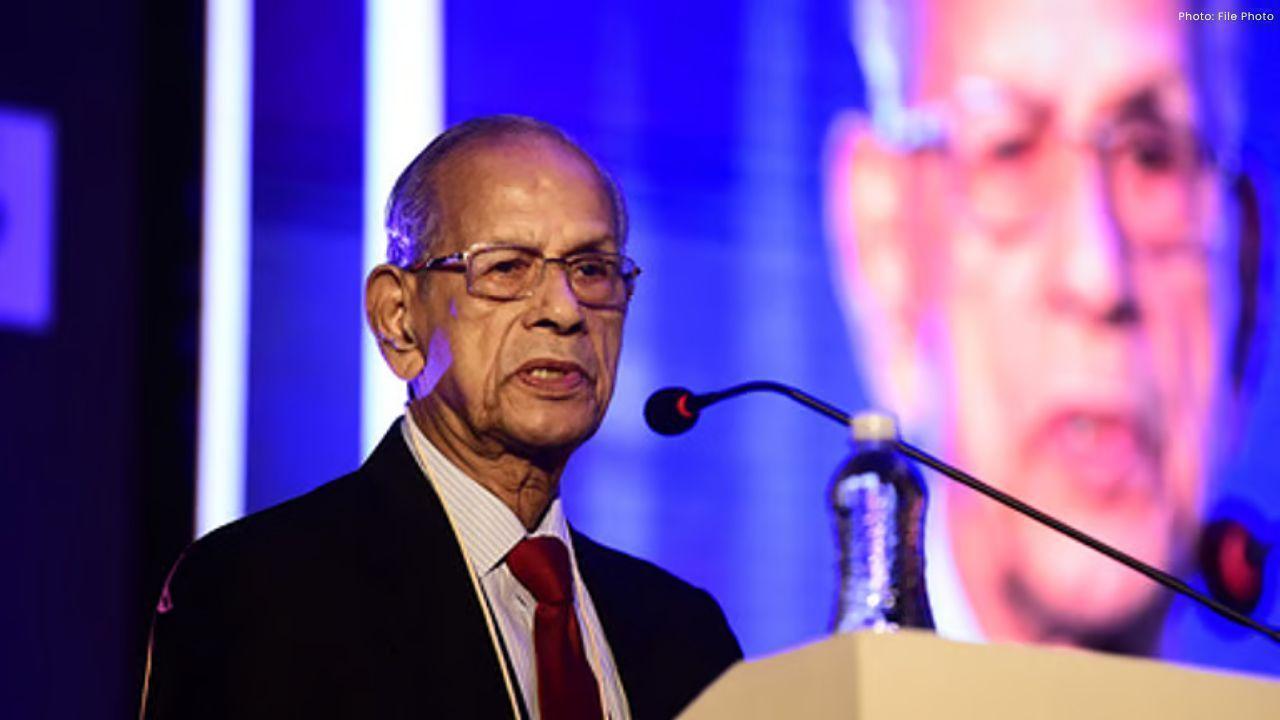
India’s transport plans often create excitement, but they also bring confusion. One such case is the Regional Rapid Transit System, or RRTS. Recently, renowned engineer E Sreedharan, often called the “Metro Man of India,” made it clear that RRTS should not be called a high-speed rail project. His statement has sparked discussion among planners, policymakers, and the public.
E Sreedharan is respected for his role in building major metro systems across India, including the Delhi Metro. When he speaks about rail projects, his views carry weight. According to him, mixing up RRTS with high-speed rail can lead to wrong expectations and poor planning decisions.
At first glance, RRTS trains look fast and modern. They are designed to run at higher speeds than regular metro trains. However, speed alone does not make a system “high-speed rail.” This is the main point E Sreedharan wants people to understand.
High-speed rail systems, like those seen in countries such as Japan and France, usually run at speeds above 250 kilometers per hour. They connect cities that are far apart and often use special tracks built only for these trains. These systems are meant for long-distance travel and reduce travel time between major cities.
RRTS, on the other hand, has a very different purpose. It is designed to connect nearby cities within a region. For example, the Delhi–Meerut RRTS aims to help daily commuters travel faster between towns and urban centers. The distance is shorter, and stations are closer together. Because of this, RRTS trains cannot and do not need to reach very high speeds.
E Sreedharan explained that RRTS is closer to a regional or suburban rail system than a true high-speed rail project. Its goal is not to compete with bullet trains, but to ease traffic, reduce pollution, and make daily travel smoother for millions of people.
Calling RRTS a high-speed rail project can create confusion among the public. People may expect bullet-train-level speeds and luxury features, which RRTS is not designed to offer. This can later lead to disappointment and criticism, even if the system works exactly as planned.
There are also financial concerns. High-speed rail projects are extremely expensive. They require special tracks, advanced safety systems, and large investments. If RRTS is wrongly labeled as high-speed rail, it may face unfair comparisons in terms of cost and performance. This can affect funding decisions and public support.
E Sreedharan also warned that using the wrong label can affect future transport planning. Each rail system serves a specific need. Metros are for city travel, RRTS is for regional commuting, and high-speed rail is for long-distance intercity travel. Mixing these categories can lead to poorly designed networks that fail to serve people effectively.
From a practical point of view, RRTS can still be a game changer. Faster regional travel means less pressure on roads, fewer private vehicles, and lower pollution levels. Workers can live farther from crowded cities and still reach their jobs on time. This can help balanced urban growth.
The engineer’s comments should not be seen as criticism of RRTS itself. Instead, they are a reminder to describe projects honestly and clearly. RRTS does not need to be called high-speed rail to be successful. Its value lies in reliability, comfort, and time savings for daily passengers.
As India continues to expand its transport network, clear communication will be essential. People need to understand what each project is meant to do and what it is not. This helps build trust and ensures realistic expectations.
E Sreedharan’s statement serves as a timely lesson. Big infrastructure projects should be judged by how well they meet their goals, not by impressive labels. RRTS has an important role in India’s future, but it should be recognized for what it truly is—a modern regional transit system, not a high-speed rail line.
#trending #latest #RRTS #ESreedharan #IndianRailways #PublicTransport #InfrastructureNews #RailProjects







Advances in Aerospace Technology and Commercial Aviation Recovery
Insights into breakthrough aerospace technologies and commercial aviation’s recovery amid 2025 chall

Defense Modernization and Strategic Spending Trends
Explore key trends in global defense modernization and strategic military spending shaping 2025 secu

Tens of Thousands Protest in Serbia on Anniversary of Deadly Roof Collapse
Tens of thousands in Novi Sad mark a year since a deadly station roof collapse that killed 16, prote

Canada PM Carney Apologizes to Trump Over Controversial Reagan Anti-Tariff Ad
Canadian PM Mark Carney apologized to President Trump over an Ontario anti-tariff ad quoting Reagan,

The ad that stirred a hornets nest, and made Canadian PM Carney say sorry to Trump
Canadian PM Mark Carney apologizes to US President Trump after a tariff-related ad causes diplomatic

Bengaluru-Mumbai Superfast Train Approved After 30-Year Wait
Railways approves new superfast train connecting Bengaluru and Mumbai, ending a 30-year demand, easi




