Post by : Saif
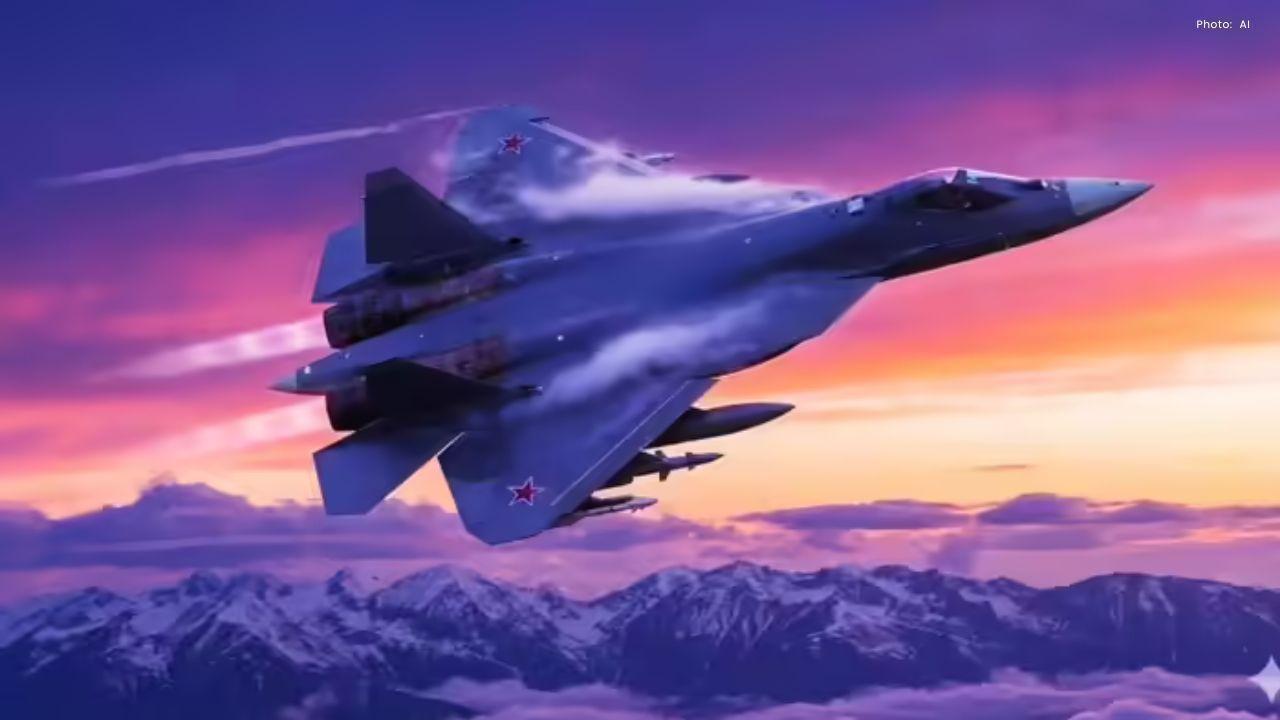
Russia has reportedly prepared a new batch of its Su-57 stealth fighter jets, one of the country’s most advanced military aircraft. The development comes at a time when the war in Ukraine is still ongoing and Western sanctions against Russia remain in place. The move has drawn attention from defense experts and governments around the world because it may affect the military balance in the region.
The Su-57 is Russia’s most modern stealth fighter jet. It is designed to avoid radar detection, fly at very high speeds, and carry advanced weapons. Russian officials have described it as a fifth-generation fighter aircraft, built to compete with top Western jets. The aircraft includes modern radar systems, electronic warfare tools, and the ability to strike both air and ground targets.
Reports suggest that the newest production batch has now been completed and is ready for delivery to the Russian Air Force. This shows that Russia is continuing its defense manufacturing program even while facing strict technology and trade restrictions from the United States and its allies. Sanctions were meant to slow down Russia’s access to key parts, electronics, and financing for military projects. However, continued production suggests that Moscow has found ways to maintain or adjust its supply chains.
Military analysts say stealth fighters play an important role in modern warfare. Because they are harder to detect, they can enter contested airspace, carry out strikes, and return with lower risk compared to older aircraft. If deployed actively, such jets could improve Russia’s strike capability and air defense penetration. Still, experts also note that numbers matter. A small batch alone may not change the overall direction of the war, but it can increase pressure in certain operations.
There are also questions about how widely the Su-57 has been used in real combat so far. While Russia has previously claimed limited operational use, independent confirmation has often been difficult. Modern fighter jets are complex systems that require trained pilots, maintenance crews, and strong support infrastructure. Without these, even advanced aircraft cannot deliver their full potential.
Western governments continue to watch Russia’s defense production closely. Sanctions were designed not only to affect the economy but also to reduce Russia’s long-term military capacity. The continued rollout of advanced aircraft shows that sanctions may slow programs but do not always stop them fully. Some experts believe Russia has increased domestic production and turned to alternative partners for certain components.
From a broader view, this development highlights how the Ukraine conflict has turned into a long and resource-heavy struggle. Both sides are investing in new weapons, drones, aircraft, and missile systems. This raises concerns about escalation and the risk of more destructive battles ahead. Civilian safety, infrastructure damage, and regional stability remain major worries for international organizations.
An editorial view must also stress caution. Military announcements from any side in a conflict often serve strategic messaging purposes. Claims about capability and impact should be examined carefully. True battlefield effect depends on training, logistics, coordination, and real combat conditions — not only on technology.
The release of a new batch of Su-57 jets sends a clear signal that Russia wants to show strength in defense production despite outside pressure. At the same time, it reminds the world that the conflict is far from over and that military modernization continues even during war and sanctions.
Peace efforts, diplomatic talks, and conflict control remain as important as ever. Advanced weapons may shape battles, but lasting stability comes only through political solutions.
#trending #latest #Russia #Su57 #StealthFighter #UkraineWar #DefenseNews #MilitaryAviation #GlobalSecurity #Sanctions #AirPower #WarUpdate #Geopolitics #armustnews



Advances in Aerospace Technology and Commercial Aviation Recovery
Insights into breakthrough aerospace technologies and commercial aviation’s recovery amid 2025 chall

Defense Modernization and Strategic Spending Trends
Explore key trends in global defense modernization and strategic military spending shaping 2025 secu

Tens of Thousands Protest in Serbia on Anniversary of Deadly Roof Collapse
Tens of thousands in Novi Sad mark a year since a deadly station roof collapse that killed 16, prote

Canada PM Carney Apologizes to Trump Over Controversial Reagan Anti-Tariff Ad
Canadian PM Mark Carney apologized to President Trump over an Ontario anti-tariff ad quoting Reagan,

The ad that stirred a hornets nest, and made Canadian PM Carney say sorry to Trump
Canadian PM Mark Carney apologizes to US President Trump after a tariff-related ad causes diplomatic

Bengaluru-Mumbai Superfast Train Approved After 30-Year Wait
Railways approves new superfast train connecting Bengaluru and Mumbai, ending a 30-year demand, easi




