Post by : Saif
The United States has finished its review of the AUKUS defence partnership, a major plan to provide Australia with nuclear-powered submarines. According to U.S. officials, the review has found new ways to make the deal stronger and more secure for the future. This update is expected to guide discussions between the U.S. and Australia next week in Washington.
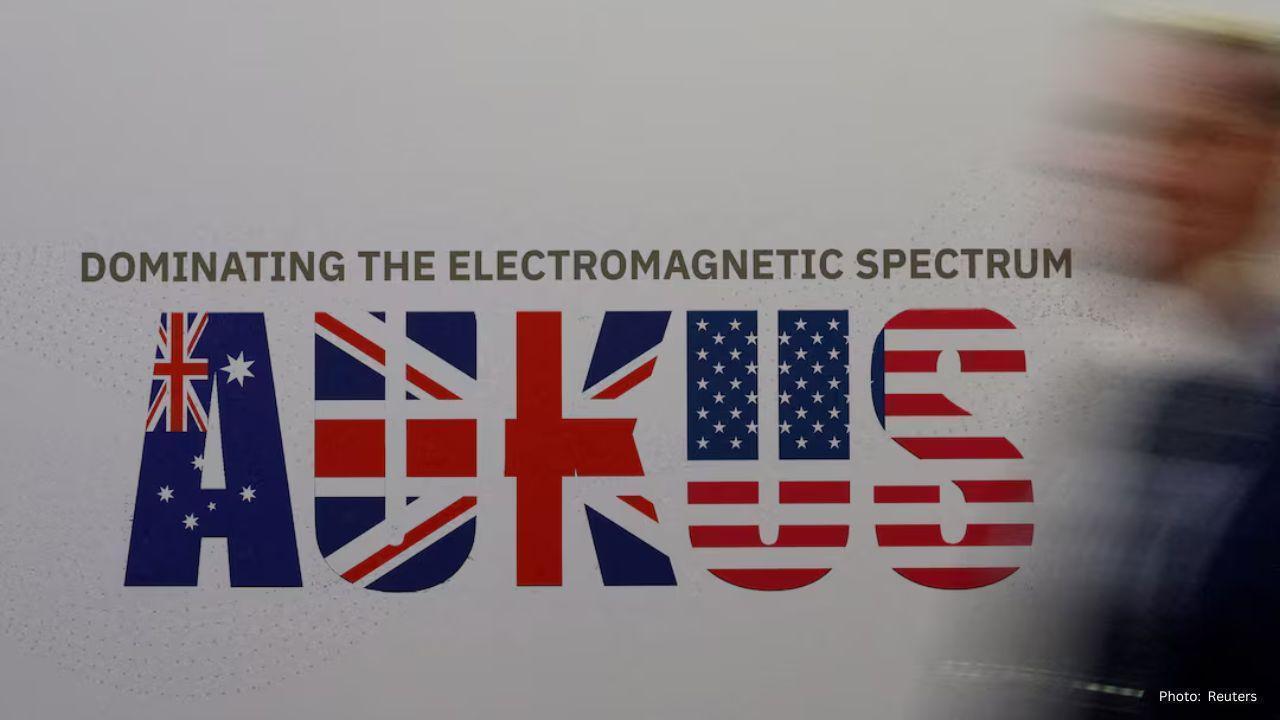
AUKUS is a trilateral security pact between the United States, Australia, and the United Kingdom. It was first announced in 2023 during the Biden administration with the aim of helping Australia build a stronger naval force in the Indo-Pacific region. The plan involves the U.S. selling several Virginia-class nuclear-powered submarines to Australia, while a new AUKUS-class submarine will later be built by Britain and Australia using American technology.
The Pentagon spokesperson, Sean Parnell, said the review followed President Donald Trump’s direction to move AUKUS “full steam ahead.” The findings highlight opportunities to reinforce the agreement so each country can rely on strong cooperation and clear planning.
The review had caused concern in Australia, as the submarine program is the country's largest defence commitment ever. Australia plans to spend A$368 billion over the next 30 years on the project. This includes significant investment in the U.S. submarine production industry, which has already faced pressure due to high demand and limited capacity. Last year, Elbridge Colby, the U.S. Under Secretary of Defense who led the review, warned that U.S. submarine production was struggling to keep up even with American needs.
However, tensions eased after Trump recently met Australian Prime Minister Anthony Albanese and publicly supported the program. That reassurance helped steady concerns in Canberra that the review might lead to delays or major changes.
Australia’s Defence Minister, Richard Marles, confirmed that the government has received the U.S. review and is now studying it. Britain has also received the findings and welcomed the completion of the process.
Next week, top defence and foreign ministers from the U.S. and Australia will meet in Washington to discuss the future of the project. Later in the week, Britain’s Defence Secretary John Healey will join U.S. and Australian officials for a trilateral meeting to continue shaping the long-term plan.
AUKUS remains one of the most important defence partnerships in the Indo-Pacific, designed to increase security and maintain balance in a region facing rising strategic competition. The success of the submarine deal will depend heavily on how well all three nations coordinate technology, funding, and industrial capacity.
The Pentagon’s message is clear: the United States wants AUKUS to grow stronger, faster, and more reliable. With new guidance from the review, the three nations now have a chance to create a defence programme that could shape the future of maritime security for decades.
#trending #latest #AUKUS #USAustraliaRelations #DefenseNews #Pentagon #NuclearSubmarines #IndoPacific #Editorial #armustnews



Advances in Aerospace Technology and Commercial Aviation Recovery
Insights into breakthrough aerospace technologies and commercial aviation’s recovery amid 2025 chall

Defense Modernization and Strategic Spending Trends
Explore key trends in global defense modernization and strategic military spending shaping 2025 secu

Tens of Thousands Protest in Serbia on Anniversary of Deadly Roof Collapse
Tens of thousands in Novi Sad mark a year since a deadly station roof collapse that killed 16, prote

Canada PM Carney Apologizes to Trump Over Controversial Reagan Anti-Tariff Ad
Canadian PM Mark Carney apologized to President Trump over an Ontario anti-tariff ad quoting Reagan,

The ad that stirred a hornets nest, and made Canadian PM Carney say sorry to Trump
Canadian PM Mark Carney apologizes to US President Trump after a tariff-related ad causes diplomatic

Bengaluru-Mumbai Superfast Train Approved After 30-Year Wait
Railways approves new superfast train connecting Bengaluru and Mumbai, ending a 30-year demand, easi




