Post by : Saif
French President Emmanuel Macron has said that Europe’s planned next-generation fighter jet program, known as FCAS, is still alive, even after months of delays and disagreements. His statement comes at a time when many defense experts feared the joint project between France, Germany, and Spain was slowly falling apart. Macron made it clear that, from France’s point of view, the program remains important and should move forward.
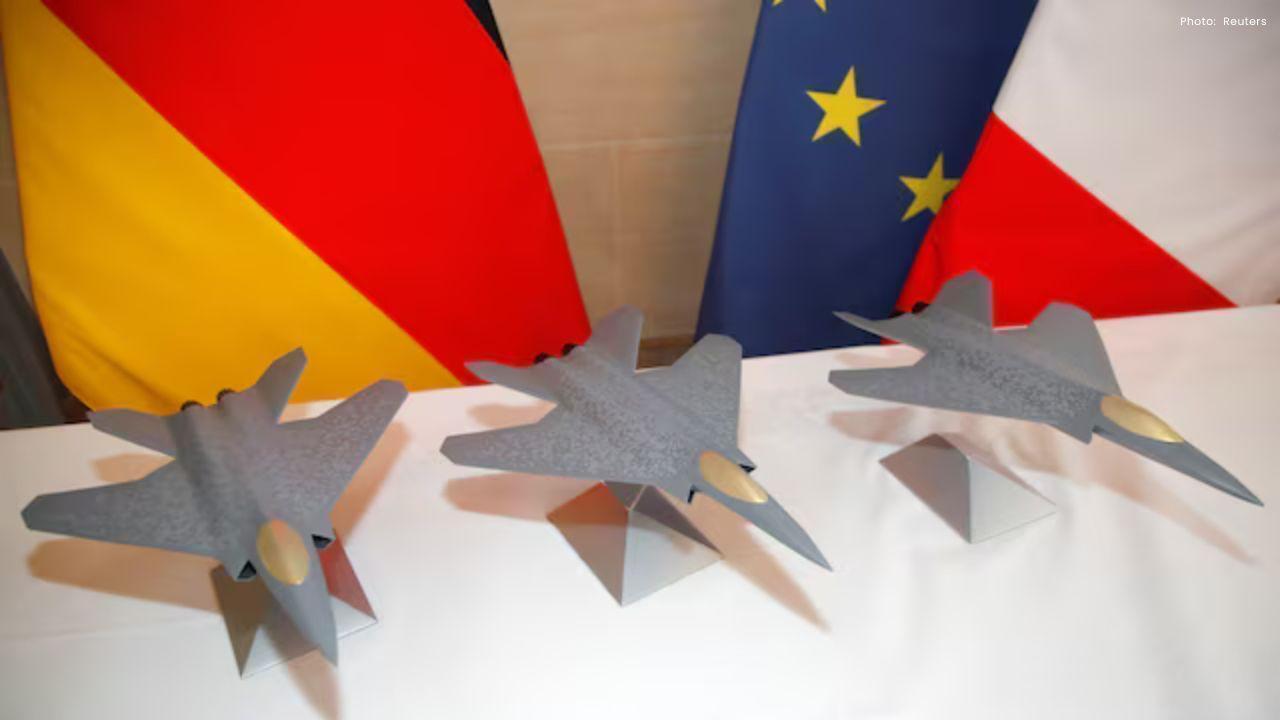
The FCAS project, short for Future Combat Air System, is designed to build a new advanced warplane system for Europe. The goal is to replace France’s Rafale fighter jets and the Eurofighter aircraft used by Germany and Spain. It is not just about one aircraft, but a full combat system that includes drones, sensors, and digital networks working together. Supporters say this project is key if wants to stay strong and independent in defense technology.
In recent months, however, the program has faced serious trouble. Defense ministers from the three partner countries met late last year but failed to reach a major breakthrough. Reports suggested there were disputes between companies and governments over design control, work share, funding, and technology rights. These disagreements slowed progress and created doubts about whether the program could survive in its current form.
When asked directly whether the fighter jet program was dead, Macron answered clearly that it was not. He said France still sees FCAS as a strong and valuable project. He also noted that he has not heard German leaders say the project should be abandoned. Macron added that he hopes to speak soon with the German chancellor to push the plan ahead and remove the roadblocks.
This firm public support matters because large military projects take many years and huge investments. When political backing becomes weak, companies hesitate and planning stalls. By speaking openly, Macron is trying to restore confidence among partners and industry leaders that the project still has top-level support.
The bigger issue behind this story is Europe’s defense future. Many European countries are now increasing military spending due to rising global tensions and security risks. There is also a growing desire in Europe to reduce dependence on non-European weapons systems. Building a shared next-generation fighter would give Europe more control over its own defense tools and technology.
At the same time, joint defense projects in Europe have often struggled. Different countries have different military needs, budgets, and industrial interests. Each government wants jobs and technical leadership for its own companies. That makes cooperation harder, even when the long-term goal is shared. The FCAS program shows both the promise and the difficulty of multinational defense partnerships.
From an editorial point of view, Macron’s message is both political and practical. Politically, it signals that France does not want the project to collapse. Practically, it puts pressure on partners to return to the table and solve disputes. Walking away now would waste years of planning and weaken Europe’s push for defense independence.
Still, words alone will not save the project. Clear agreements on funding, leadership roles, and technology sharing are needed. If the partner nations cannot settle these points soon, delays will grow and costs will rise. That could push countries to choose separate national projects instead of one shared system.
For now, the FCAS program remains alive but fragile. Its future depends on whether Europe’s leading powers can turn public support into concrete decisions. If they succeed, Europe could gain a powerful new defense platform. If they fail, it will be another lesson in how hard joint military projects can be.
#trending #latest #armustnews #Macron #FCAS #FighterJet #EuropeanDefense #FranceGermanySpain #MilitaryAviation #DefenseTechnology #EuropeSecurity #Aerospace



Advances in Aerospace Technology and Commercial Aviation Recovery
Insights into breakthrough aerospace technologies and commercial aviation’s recovery amid 2025 chall

Defense Modernization and Strategic Spending Trends
Explore key trends in global defense modernization and strategic military spending shaping 2025 secu

Tens of Thousands Protest in Serbia on Anniversary of Deadly Roof Collapse
Tens of thousands in Novi Sad mark a year since a deadly station roof collapse that killed 16, prote

Canada PM Carney Apologizes to Trump Over Controversial Reagan Anti-Tariff Ad
Canadian PM Mark Carney apologized to President Trump over an Ontario anti-tariff ad quoting Reagan,

The ad that stirred a hornets nest, and made Canadian PM Carney say sorry to Trump
Canadian PM Mark Carney apologizes to US President Trump after a tariff-related ad causes diplomatic

Bengaluru-Mumbai Superfast Train Approved After 30-Year Wait
Railways approves new superfast train connecting Bengaluru and Mumbai, ending a 30-year demand, easi




