Post by : Saif
Brazilian federal prosecutors have raised strong objections to any plan that would use police force to remove Indigenous protesters gathered near a major Cargill grain terminal in the Amazon region. The dispute centers on environmental concerns, Indigenous rights, and the balance between economic activity and local community protection. The situation shows how development projects in sensitive regions can quickly grow into legal and moral debates.
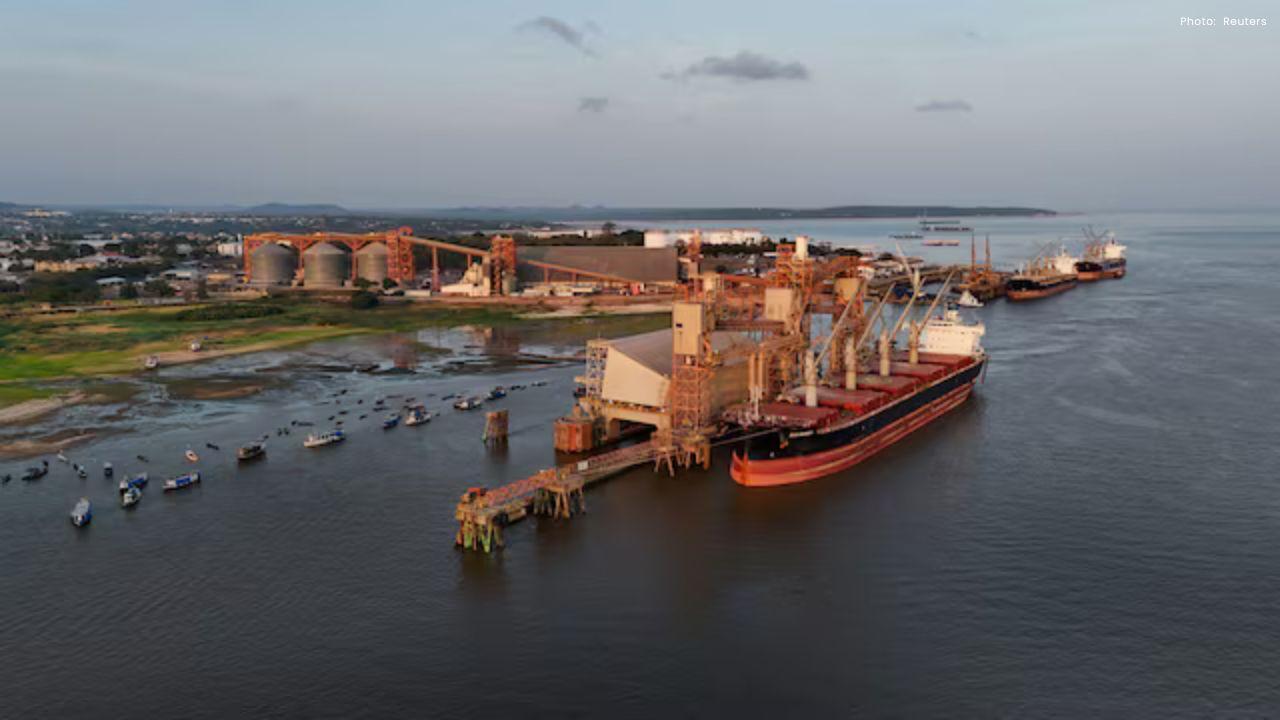
The protest is taking place near Cargill’s port terminal in Santarem, in Para state. Indigenous groups began blocking access to the terminal gate in late January. They are protesting against a planned dredging project on the Tapajos River. Dredging is a process where riverbeds are dug deeper so that larger boats and barges can pass through more easily, especially when water levels are low. Grain traders depend on these river routes to move soybeans and corn for export through northern Brazil.
Prosecutors say that using force to remove the protesters would be wrong and could lead to injuries and rights violations. In an official statement, a branch of the federal public prosecutors’ office said an order allowing police deployment around the port area should be immediately canceled. According to them, sending armed police into an area where Indigenous communities are protesting peacefully could make the situation more dangerous instead of solving it.
They also pointed to an earlier federal court ruling linked to a lawsuit filed by Cargill. In that case, the court did not allow the company to clear the area by force and instead ordered that peaceful talks should take place. Prosecutors stressed that any police action now would go against that court decision. They reminded authorities that police intervention in such a case requires a new and clear court order.
The Brazilian federal government has tried to calm tensions by pausing the process of hiring companies for the dredging work. Officials said dredging is normally done to keep river traffic moving during dry periods, but they agreed to delay the project until proper talks are held with Indigenous communities. They also said that formal consultation must happen before any work begins on the river. This step is important because Brazilian law and international agreements require that Indigenous groups be consulted about projects that affect their land and resources.
Cargill has confirmed that protesters are blocking truck access at the Santarem terminal but has not given detailed public comments on the legal dispute. The terminal is an important export point. Port data shows that more than 5.5 million tons of soybeans and corn were shipped through Santarem last year. Most of this grain came from Brazil’s Center-West farming region, and it made up over 70% of all grain handled at that port. Any long blockage could affect supply chains, export schedules, and farmer incomes.
However, this conflict is not only about trade and transport. It is also about trust and inclusion. Indigenous communities in the Amazon have often said that big infrastructure and resource projects move forward without proper listening or fair study of environmental and cultural impact. Rivers like the Tapajos are not just transport routes. They are sources of food, water, and tradition for local people. Changes to river depth and flow can affect fish stocks, riverbank stability, and nearby forests.
From an editorial point of view, the prosecutors’ position highlights an important principle: the rule of law must guide conflict resolution, especially where vulnerable communities are involved. When a court has already ordered dialogue instead of force, authorities should follow that path. Sending police first and talking later can damage trust for years.
This case also shows the need for early and honest consultation. When governments and companies speak with local communities from the beginning, protests are less likely to grow into standoffs. Development and environmental protection do not have to be enemies, but they require careful planning and respect.
Brazil’s Amazon region is one of the most sensitive places on Earth for both climate and culture. Decisions made there carry weight far beyond one port or one project. A peaceful solution built on dialogue, law, and respect would set a better example than a forced removal that could deepen divisions.
#trending #latest #armustnews #Brazil #Amazon #IndigenousRights #Cargill #Santarem #EnvironmentalJustice #RiverDredging #Protest #LegalRights



Advances in Aerospace Technology and Commercial Aviation Recovery
Insights into breakthrough aerospace technologies and commercial aviation’s recovery amid 2025 chall

Defense Modernization and Strategic Spending Trends
Explore key trends in global defense modernization and strategic military spending shaping 2025 secu

Tens of Thousands Protest in Serbia on Anniversary of Deadly Roof Collapse
Tens of thousands in Novi Sad mark a year since a deadly station roof collapse that killed 16, prote

Canada PM Carney Apologizes to Trump Over Controversial Reagan Anti-Tariff Ad
Canadian PM Mark Carney apologized to President Trump over an Ontario anti-tariff ad quoting Reagan,

The ad that stirred a hornets nest, and made Canadian PM Carney say sorry to Trump
Canadian PM Mark Carney apologizes to US President Trump after a tariff-related ad causes diplomatic

Bengaluru-Mumbai Superfast Train Approved After 30-Year Wait
Railways approves new superfast train connecting Bengaluru and Mumbai, ending a 30-year demand, easi




