Post by : Amit
A New Chapter in Train Accessibility and Hygiene
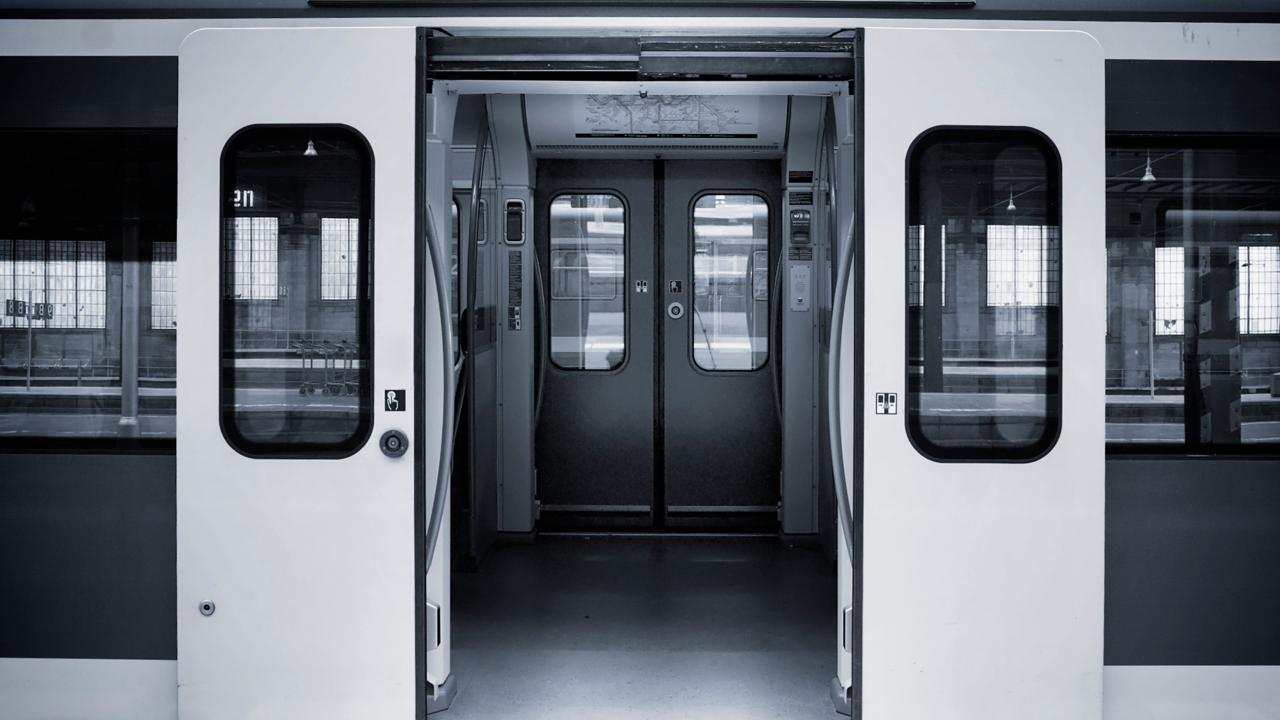
French rail manufacturing giant Alstom has officially unveiled its latest breakthrough for regional passenger rail: touchless sliding doors equipped with advanced proximity and motion sensors. Designed for high-capacity regional trains across Europe, the innovation promises to enhance both hygiene and operational efficiency while addressing the growing demand for contact-free infrastructure in public transport.
The new door system—developed at Alstom’s innovation hub in La Rochelle—is already being installed on next-generation Regio 4.0 trains destined for routes in France, Germany, Italy, and the Netherlands. This touch-free technology will allow passengers to open doors with a simple hand wave, eliminating physical contact and reducing the spread of germs, particularly during flu seasons or pandemic scenarios.
Responding to Post-Pandemic Transport Priorities
The concept of contactless passenger interaction has gained significant traction across Europe’s mobility sector in recent years. While ticketing and payment systems had already gone digital, train interiors lagged behind—especially in the domain of physical interfaces like door buttons. Alstom’s new system directly addresses this gap.
“After COVID-19, passengers expect more than comfort—they expect safety, and that includes minimal touchpoints,” said Claire Bresson, Alstom’s Senior VP of Passenger Experience Design. “With our new smart door modules, we’ve combined accessibility, hygiene, and speed in one solution.”
The doors feature a dual-layered sensor suite: motion detection activates the door as a passenger approaches within 30 centimeters, while a confirmatory hand-gesture zone ensures only intentional actions trigger opening. This duality prevents accidental openings and energy losses in stations or low-traffic areas.
Boosting Efficiency on Busy Regional Routes
Alstom’s trials have shown that boarding and alighting times are reduced by up to 17% on regional routes when touchless doors are used. In high-density networks such as those in the Rhône-Alpes region in France or Germany’s S-Bahn systems, these seconds add up—contributing to improved schedule adherence and lower station dwell times.
The innovation also supports AI-based door management, automatically adjusting sensitivity depending on crowd density, platform height, and ambient temperature—thus aligning with energy optimization protocols.
Seamless Integration with Existing Fleets
One of the key advantages of Alstom’s system is its modularity. The doors are designed to retrofit onto existing trainsets, allowing operators to upgrade older rolling stock without a complete overhaul. According to Alstom’s product lead for the project, Matteo Giordano, the retrofit kits can be installed within 6 hours per carriage, drastically reducing service downtime.
This retrofitting approach is especially relevant for public operators managing aging regional fleets under tight budget constraints. Italian operator Trenord, for instance, is already exploring deployment in its Class 464 electric multiple units running across Lombardy.
Safety Remains Paramount
Critics have often raised concerns about fully automatic or sensor-based doors, especially in crowded or unpredictable environments like rural platforms or mountainous terrain. Alstom has tackled this by embedding fail-safe override mechanisms, emergency release handles, and real-time diagnostics to alert control rooms of any malfunction or obstruction.
Additionally, the doors are compliant with EN 14752, the European standard for train door systems, and include redundant logic controls to prevent accidental openings during motion or in unsafe conditions.
Improved Accessibility for All Passengers
Accessibility is another central pillar of the innovation. Passengers with reduced mobility or vision impairments will benefit from audio feedback signals, multi-lingual voice alerts, and haptic floor guides near the door threshold. This makes the system compliant with TSI PRM (Technical Specifications for Interoperability for Persons with Reduced Mobility) requirements.
In collaboration with the European Disability Forum, Alstom invited test users from various accessibility groups during the prototype stage, refining the gesture height, sound cues, and response timing to match real-world conditions.
Smart Doors as Data Hubs
Alstom has also packed the door modules with IoT sensors and edge computing capability, allowing them to function as data collection nodes. These doors can log information such as passenger movement patterns, climate exposure, and even air pressure differentials between the train’s cabin and external environment. This data feeds into broader fleet health monitoring systems, enabling predictive maintenance and climate control optimization.
“Think of the door as more than a door—it’s a smart interface between the outside world and the onboard ecosystem,” said Giordano. “Every wave of the hand contributes to real-time fleet intelligence.”
Scaling Across Europe
The rollout is part of Alstom’s broader European strategy to modernize regional rolling stock under its "Regional Revival 2030" plan, which includes upgrades to seating ergonomics, lighting, accessibility, and energy systems. Early adopters include SNCF, NS (Dutch Railways), and Czech Railways (ČD), with framework agreements allowing for installation on both new and existing trainsets.
In Germany, the Rhein-Main-Verkehrsverbund (RMV) has begun installing pilot systems on Bombardier-Talent trains in the Frankfurt-Wiesbaden corridor, operated under the Alstom-Bombardier merger umbrella.
Environmental Benefits and Lifecycle Management
The new door system offers energy savings of up to 11%, thanks to reduced unintended door openings and faster thermal equilibrium in cabins. The use of lightweight composite panels, combined with regenerative drive motors for sliding action, means each unit is also 20% lighter than previous models.
From a lifecycle perspective, the doors are rated for up to 1.2 million cycles, with Alstom offering 15-year maintenance support packages under its "GreenTech Service" banner.
Industry Applause and Competitive Landscape
Alstom’s launch has stirred industry-wide interest. Siemens Mobility and CAF are reportedly working on their own touchless door prototypes, hinting at a wave of innovation in rail interiors post-2025. Hitachi Rail Europe, which supplies trains for UK regional routes, has also shown interest in integrating similar tech into future Class 800 refurbishments.
Rail unions and passenger advocacy groups across Europe have welcomed the move. “In an age where passengers expect seamless, hygienic experiences, Alstom has taken a vital step forward,” said Elena Marković, spokesperson for the European Passenger Federation.
Designing for a Touch-Free Future
As Europe continues its rail renaissance, driven by climate goals and changing commuter habits, innovations like touchless door systems underscore the importance of micro-level changes that have macro-level impacts on efficiency, accessibility, and passenger confidence.
By turning a simple daily interaction—opening a train door—into a frictionless, intelligent, and inclusive process, Alstom is not only addressing today’s mobility challenges but also redefining how trains communicate with passengers in a contactless, post-pandemic world.
Alstom, Europe, Railways



Advances in Aerospace Technology and Commercial Aviation Recovery
Insights into breakthrough aerospace technologies and commercial aviation’s recovery amid 2025 chall

Defense Modernization and Strategic Spending Trends
Explore key trends in global defense modernization and strategic military spending shaping 2025 secu

Tens of Thousands Protest in Serbia on Anniversary of Deadly Roof Collapse
Tens of thousands in Novi Sad mark a year since a deadly station roof collapse that killed 16, prote

Canada PM Carney Apologizes to Trump Over Controversial Reagan Anti-Tariff Ad
Canadian PM Mark Carney apologized to President Trump over an Ontario anti-tariff ad quoting Reagan,

The ad that stirred a hornets nest, and made Canadian PM Carney say sorry to Trump
Canadian PM Mark Carney apologizes to US President Trump after a tariff-related ad causes diplomatic

Bengaluru-Mumbai Superfast Train Approved After 30-Year Wait
Railways approves new superfast train connecting Bengaluru and Mumbai, ending a 30-year demand, easi




