Post by : Saif
Asia’s largest aviation event, the Singapore Airshow, opened this week at a time when the global aviation industry is facing mixed signals. On one hand, demand for air travel and new aircraft is rising fast across Asia. On the other, supply chain problems continue to delay aircraft deliveries and slow down expansion plans.
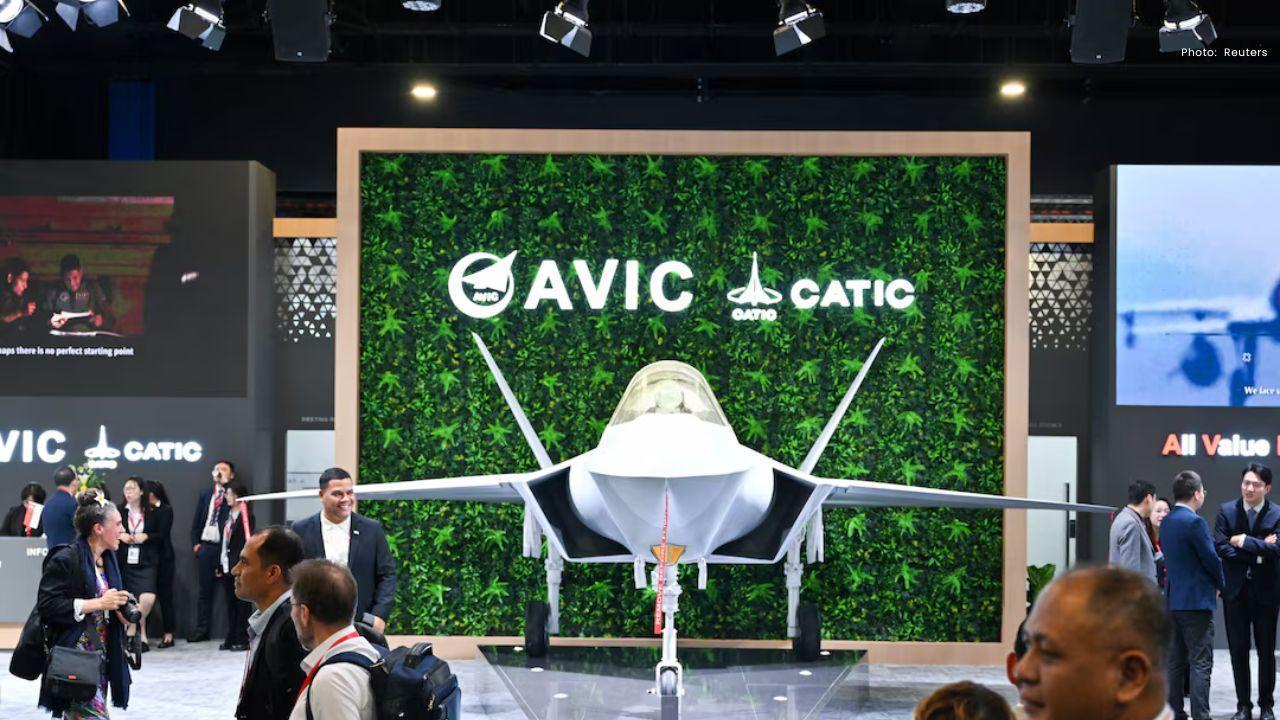
More than 1,000 companies are taking part in the 10th edition of the Singapore Airshow. These include global aircraft makers, engine producers, defence firms, and new technology companies. The event brings together airlines, manufacturers, government officials, and military leaders from around the world.
Organisers expect strong attendance this year. The previous airshow in 2024 attracted close to 60,000 visitors during its trade days. This year’s event is expected to do even better, helped by the launch of a new space-focused summit. Singapore has also announced plans to set up its own space agency, showing its ambition to grow beyond traditional aviation.
The Asia-Pacific region is now the fastest-growing air travel market in the world. Countries like China and India are driving this growth, with passenger traffic expected to rise by more than 7% in 2026. Airlines want to add more planes to meet this demand, but manufacturers are struggling to deliver aircraft on time.
Industry leaders say there is a clear gap between demand and supply. Shortages of parts, delays in engines, and limited production capacity have slowed deliveries. This has affected airlines that are eager to expand routes and fleets.
Despite these challenges, deals are still being announced. Boeing revealed an agreement to supply 10 aircraft to Air Cambodia. Chinese aircraft maker COMAC also gained attention. Its smaller regional aircraft received the first order of the show, while its main passenger jet continues to be promoted in Southeast Asia. Several airlines in the region are already using these planes on regular routes.
Although the Singapore Airshow accounts for a smaller share of global aircraft orders compared to events in Paris or Dubai, it plays an important role. It acts as a meeting place where Asian airlines and global manufacturers can discuss future needs, partnerships, and long-term plans. Asia now handles about one-third of global air traffic, making such discussions increasingly important.
The airshow also highlights defence and security equipment. Many military delegations from Southeast Asia are attending to review aircraft, helicopters, drones, and other systems. Defence companies from several countries are displaying their latest technology, reflecting rising security concerns in the region.
Overall, the Singapore Airshow shows an industry at a turning point. Demand for flying is strong and still growing, especially in Asia. However, supply chain problems remain a major hurdle. How quickly manufacturers can solve these issues will shape the future of aviation in the region and beyond.
#trending #latest #SingaporeAirshow #AviationNews #AirTravel #AsiaPacific #Aerospace #DefenceIndustry #armustnews



Advances in Aerospace Technology and Commercial Aviation Recovery
Insights into breakthrough aerospace technologies and commercial aviation’s recovery amid 2025 chall

Defense Modernization and Strategic Spending Trends
Explore key trends in global defense modernization and strategic military spending shaping 2025 secu

Tens of Thousands Protest in Serbia on Anniversary of Deadly Roof Collapse
Tens of thousands in Novi Sad mark a year since a deadly station roof collapse that killed 16, prote

Canada PM Carney Apologizes to Trump Over Controversial Reagan Anti-Tariff Ad
Canadian PM Mark Carney apologized to President Trump over an Ontario anti-tariff ad quoting Reagan,

The ad that stirred a hornets nest, and made Canadian PM Carney say sorry to Trump
Canadian PM Mark Carney apologizes to US President Trump after a tariff-related ad causes diplomatic

Bengaluru-Mumbai Superfast Train Approved After 30-Year Wait
Railways approves new superfast train connecting Bengaluru and Mumbai, ending a 30-year demand, easi




