Post by : Saif
The arrival of European troops in Greenland has turned global attention toward the icy Arctic island, which is now at the center of a serious political dispute. The move comes as talks between Denmark, Greenland, and the United States revealed deep disagreements about Greenland’s future, especially after U.S. President Donald Trump repeated his desire for the United States to take control of the territory.
Greenland is a self-governing territory within the Kingdom of Denmark. It has its own government, but Denmark still handles defense and foreign affairs. Despite its small population, Greenland holds great importance because of its strategic location in the Arctic and its rich natural resources. As Arctic ice melts, new shipping routes and access to minerals are opening up, making the region more valuable than ever.
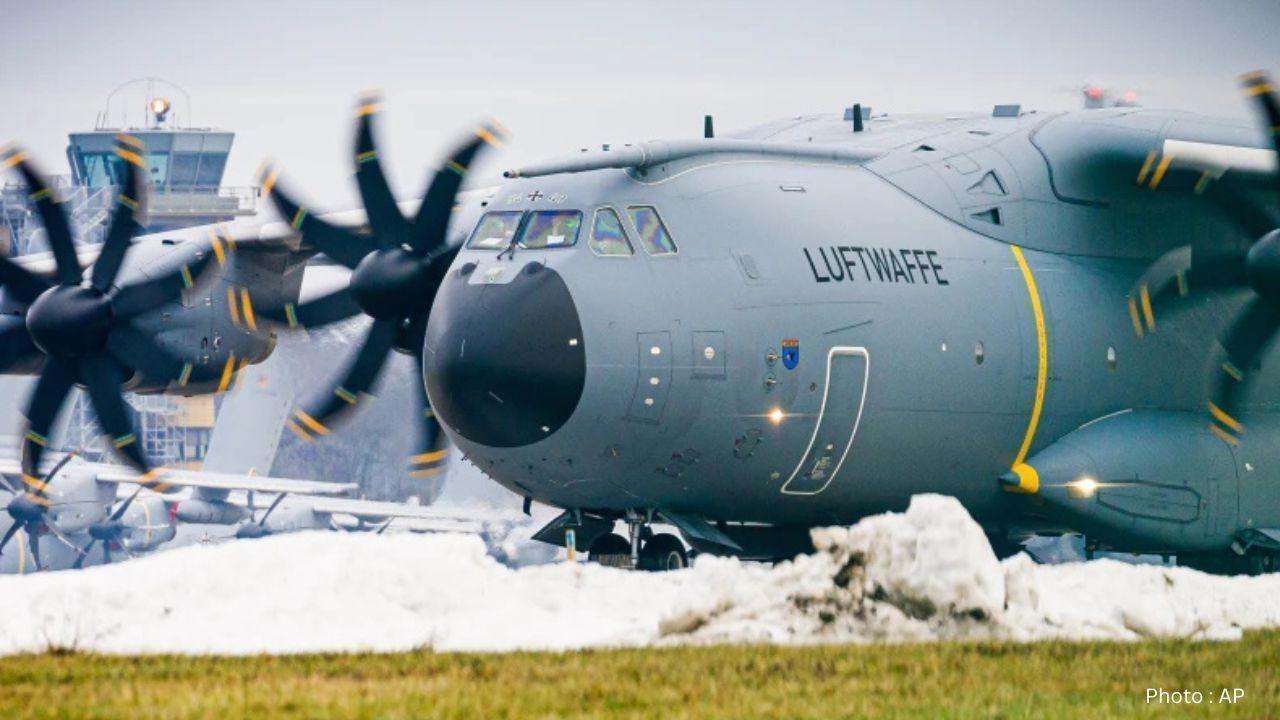
Denmark announced that it would increase its military presence in Greenland just before high-level talks with U.S. officials began in Washington. Soon after, several European NATO allies, including France, Germany, the United Kingdom, Norway, Sweden, and the Netherlands, either sent small numbers of troops or confirmed plans to do so. These deployments are limited in size, but their message is strong. Europe is showing unity and support for Denmark, making it clear that Greenland’s security can be protected through NATO cooperation, without any change in ownership.
European leaders say the troop presence is meant to strengthen stability in the Arctic, especially as Russia and China increase their interest in the region. French officials confirmed that a small group of soldiers had already arrived in Greenland for exercises, while Germany said it was sending a reconnaissance team. Denmark also stated that it wants a more lasting military presence on the island, with NATO troops rotating in and out over time.
While Europe emphasized cooperation, the United States sent a very different signal. The White House described upcoming discussions with Denmark and Greenland as talks related to an “acquisition agreement.” This wording shocked Danish officials, who strongly rejected the idea. Denmark’s Foreign Minister Lars Løkke Rasmussen said the discussions were meant to be a working group to address U.S. security concerns, not talks about handing over Greenland.
Rasmussen openly acknowledged that there is a “fundamental disagreement” with President Trump. He said the U.S. president continues to express a desire to take control of Greenland, but Denmark’s position remains unchanged. Greenland is not for sale, and its future cannot be decided by outside powers.
Greenland’s leaders have been especially clear. Prime Minister Jens-Frederik Nielsen stated firmly that Greenland does not want to be owned, governed, or controlled by the United States. His words reflected the strong feelings of many Greenlanders, who fear losing their autonomy and cultural identity if foreign powers decide their fate.
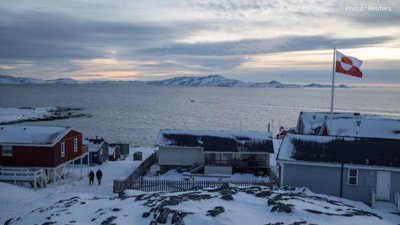
In Nuuk, Greenland’s capital, residents expressed mixed emotions. Some felt relieved that talks are continuing and that European allies are showing visible support. Others felt uneasy, saying the meetings raised more questions than answers. Many locals believe the dispute is not only about security but also about Greenland’s untouched oil, gas, and mineral resources.
Some residents said the presence of European troops makes them feel safer, not because they expect a conflict with the United States, but because it shows that Greenland is not alone. They see the support from Nordic and European countries as a shield against pressure from a much larger power.
NATO officials have described the situation as part of normal alliance coordination and stressed that Greenland is important for transatlantic security. Denmark has informed NATO about its military exercises, and alliance leaders agree that strengthening Arctic defenses is necessary in an uncertain global environment.
Russia has sharply criticized these developments. The Russian embassy accused Western countries of pushing aggressive plans and creating threats where none exist. Moscow said the Arctic should remain a region of peace and cooperation, not military competition. This reaction highlights how Greenland has become part of a wider struggle for influence in the Arctic.
The situation in Greenland is about more than one island. It is a test of international law, respect for sovereignty, and the strength of alliances. Denmark and Greenland are standing firm, Europe is showing unity, and the United States is pressing a claim that has unsettled even its closest partners.
As more talks are planned and military cooperation continues, the future remains uncertain. What is clear, however, is that Greenland’s voice is growing louder. The island is no longer just a remote Arctic landmass. It has become a symbol of how global power, security concerns, and natural resources are reshaping world politics in the 21st century.
#trending #latest #Greenland #ArcticPolitics #Denmark #NATO #USForeignPolicy #EuropeanUnity #GlobalSecurity #Sovereignty







Advances in Aerospace Technology and Commercial Aviation Recovery
Insights into breakthrough aerospace technologies and commercial aviation’s recovery amid 2025 chall

Defense Modernization and Strategic Spending Trends
Explore key trends in global defense modernization and strategic military spending shaping 2025 secu

Tens of Thousands Protest in Serbia on Anniversary of Deadly Roof Collapse
Tens of thousands in Novi Sad mark a year since a deadly station roof collapse that killed 16, prote

Canada PM Carney Apologizes to Trump Over Controversial Reagan Anti-Tariff Ad
Canadian PM Mark Carney apologized to President Trump over an Ontario anti-tariff ad quoting Reagan,

The ad that stirred a hornets nest, and made Canadian PM Carney say sorry to Trump
Canadian PM Mark Carney apologizes to US President Trump after a tariff-related ad causes diplomatic

Bengaluru-Mumbai Superfast Train Approved After 30-Year Wait
Railways approves new superfast train connecting Bengaluru and Mumbai, ending a 30-year demand, easi




