Post by : Saif
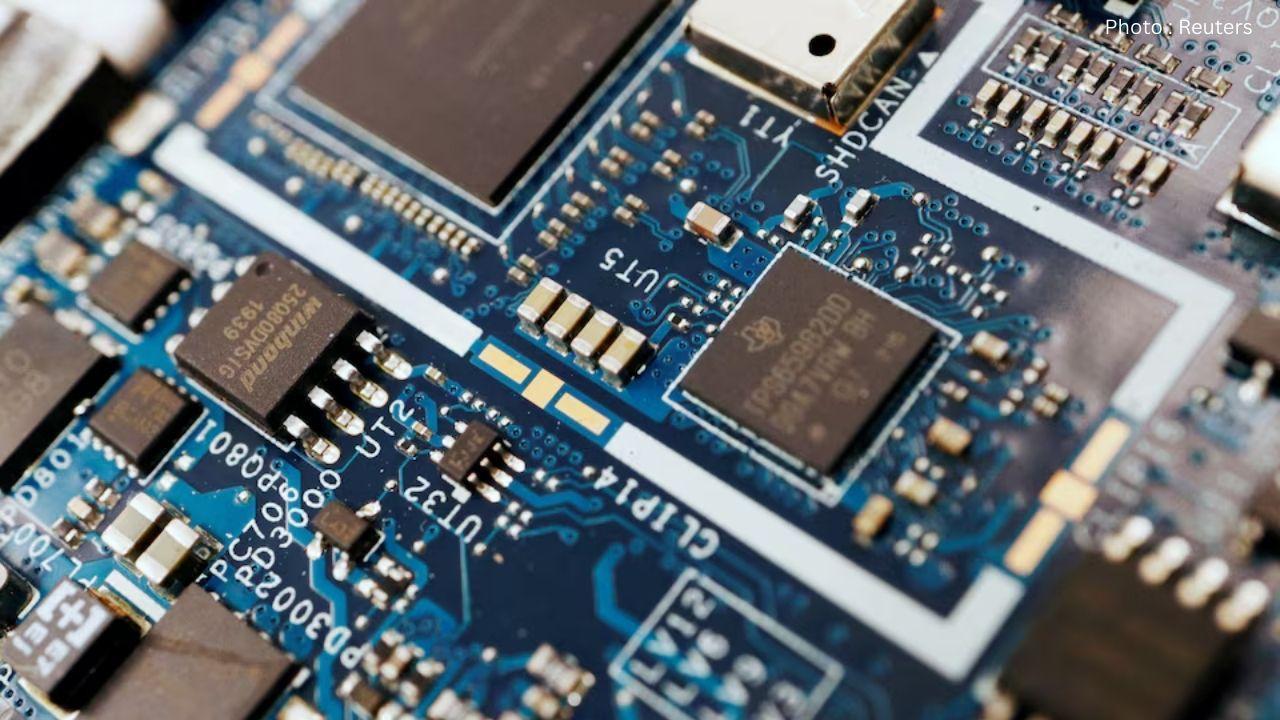
South Korea has said it will closely monitor new U.S. tariffs on certain artificial intelligence (AI) semiconductor chips to reduce any negative impact on its key industries. The statement came after Washington announced a 25% tariff on some advanced AI chips, raising concerns across the global technology sector.
Industry Minister Kim Jung-kwan said the government is carefully watching how the U.S. policy develops. He stressed that protecting South Korea’s semiconductor industry is a top priority, as chips play a major role in the country’s economy and exports.
According to the Ministry of Trade, Industry and Energy, officials met with leaders from South Korean semiconductor companies to discuss how to respond to the new tariffs. During the meeting, companies shared their early assessments of the impact and possible risks ahead.
The ministry said that the immediate effect may be limited. The new U.S. tariffs will not apply to chips used by American data centres or startups. Because of this, companies believe the short-term impact on South Korean firms may be small. Many Korean chipmakers supply parts that are used in large U.S. tech projects, which remain outside the tariff list for now.
However, concerns remain about what could come next. Company officials pointed to a White House fact sheet that suggested President Donald Trump may consider wider tariffs on imported semiconductors and related products. The goal of such measures would be to push more chip production inside the United States.
If broader tariffs are introduced, the situation could become more serious. South Korea is one of the world’s leading chip producers, and its economy depends heavily on exports of memory chips and advanced semiconductors. Any new trade barriers could create uncertainty for companies planning long-term investments and supply chains.
Government officials said they would stay in close contact with U.S. authorities and local companies. They aim to respond quickly if trade conditions change and to support businesses facing new challenges.
South Korea’s semiconductor industry has faced global pressure in recent years, from supply chain disruptions to rising competition and political tensions. The latest U.S. tariff move adds another layer of uncertainty at a time when demand for AI chips is growing fast worldwide.
For now, the government believes the impact can be managed. Still, officials made it clear that they are preparing for different outcomes, including the possibility of wider trade actions that could affect the entire chip industry.
As global competition over advanced technology increases, South Korea’s response shows how closely countries are watching U.S. trade policies and how important semiconductors have become in the world economy.
#trending #latest #SouthKorea #Semiconductors #ChipIndustry #USTariffs #AIChips #GlobalTrade #TechNews #ArmustNews



Advances in Aerospace Technology and Commercial Aviation Recovery
Insights into breakthrough aerospace technologies and commercial aviation’s recovery amid 2025 chall

Defense Modernization and Strategic Spending Trends
Explore key trends in global defense modernization and strategic military spending shaping 2025 secu

Tens of Thousands Protest in Serbia on Anniversary of Deadly Roof Collapse
Tens of thousands in Novi Sad mark a year since a deadly station roof collapse that killed 16, prote

Canada PM Carney Apologizes to Trump Over Controversial Reagan Anti-Tariff Ad
Canadian PM Mark Carney apologized to President Trump over an Ontario anti-tariff ad quoting Reagan,

The ad that stirred a hornets nest, and made Canadian PM Carney say sorry to Trump
Canadian PM Mark Carney apologizes to US President Trump after a tariff-related ad causes diplomatic

Bengaluru-Mumbai Superfast Train Approved After 30-Year Wait
Railways approves new superfast train connecting Bengaluru and Mumbai, ending a 30-year demand, easi




