Post by : Saif
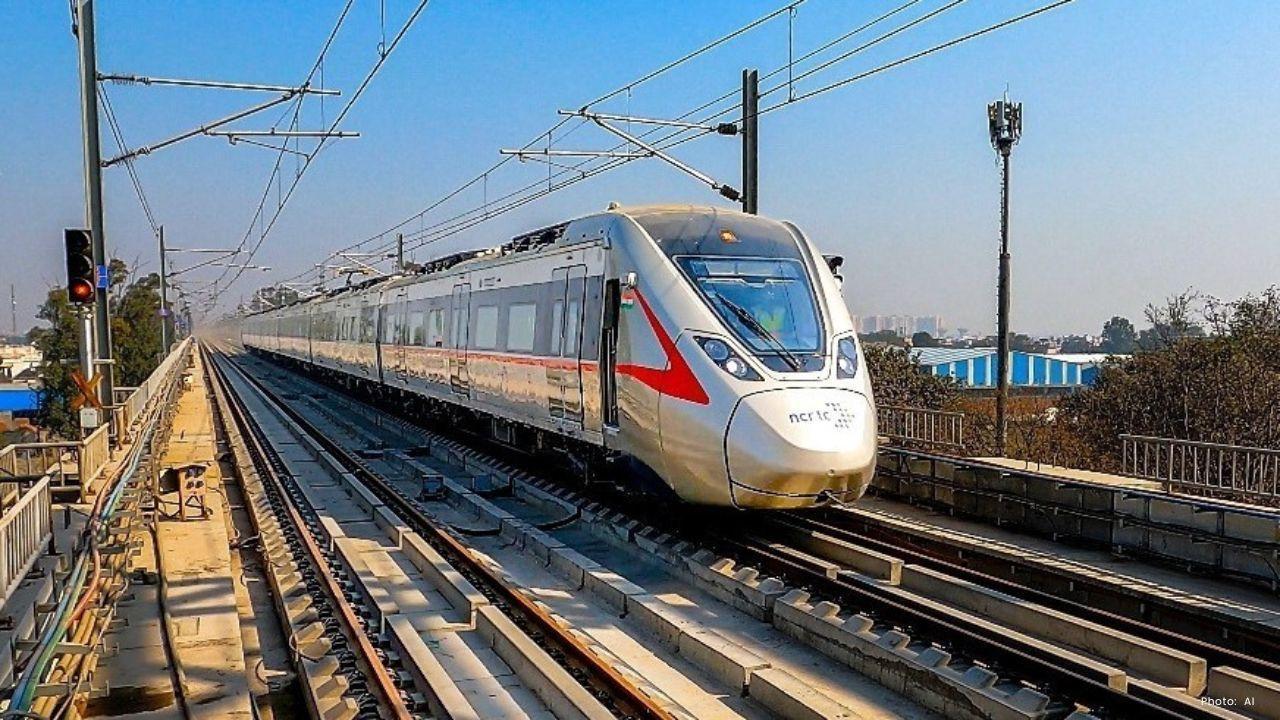
India is preparing to introduce its fastest metro-style rail service in the city of Meerut, where trains are expected to reach speeds of up to 120 km/h. This new service is part of a regional rapid rail network designed to improve travel between cities and nearby urban areas. It reflects a major shift in how public transport is being planned and delivered in fast-growing regions.
The project has been developed by the National Capital Region Transport Corporation with the aim of offering faster, safer, and more dependable rail travel. Unlike traditional metro systems that mostly serve short city routes, this rapid rail line is meant to connect cities across the wider region. That makes it useful not only for city passengers but also for long-distance daily commuters.
Higher speed is not just a technical upgrade. It has a direct effect on daily life. When trains move at 120 km/h, total journey time drops in a big way. Many people who now spend long hours in buses or cars due to traffic will be able to reach their destinations much faster. This saves time, lowers stress, and gives travelers more control over their daily schedule. For office workers, students, and business owners, this kind of time saving can improve both productivity and quality of life.
The trains and stations are being built with modern features so that passengers get a comfortable experience. The coaches are expected to be air-conditioned, clean, and spacious, with better seating and standing areas. Digital display systems will guide passengers about routes and timing. Safety systems such as surveillance cameras and advanced signaling are also part of the design. Ticketing is likely to be smart and digital, reducing the need for long queues. Altogether, the system is planned to feel more like an airport-style transit service than an old commuter line.
Transport experts believe projects like this can also help reduce road congestion and pollution. When fast and reliable public transport becomes available, more people choose trains instead of private cars. Fewer cars on the road mean less traffic and lower fuel use. This is important for cities that are already facing heavy congestion and poor air quality. A strong rail network is often one of the best long-term answers to these problems.
There is also an economic side to such projects. Fast rail links usually attract new housing, offices, and commercial activity around stations. Businesses prefer areas with good transport because workers and customers can reach them easily. In and around Meerut, better connectivity is expected to support local trade and job growth. Property markets may also see changes as areas near stations become more attractive for development.
At the same time, large transport systems must be managed carefully after launch. Safety checks, regular maintenance, and trained staff are necessary to keep high-speed services reliable. Ticket prices must remain reasonable so that common citizens can use the trains every day. Another key issue is last-mile connectivity. Passengers should have easy options such as buses, autos, or shared mobility to travel between stations and their final destinations. Without this support, even the fastest train cannot fully serve public needs.
The Meerut high-speed metro-style service represents a new model for regional travel in India. It sits between a city metro and a long-distance railway, offering speed along with frequent service. If it performs well, other regions may follow the same pattern. Fast, clean, and dependable rail travel is becoming a central part of urban planning, and this launch shows how quickly that change is moving forward.
#trending #latest #Meerut #RapidRail #IndianMetro #HighSpeedRail #PublicTransport #UrbanMobility #SmartTransport #RailDevelopment #NCRTransport #armustnews



Advances in Aerospace Technology and Commercial Aviation Recovery
Insights into breakthrough aerospace technologies and commercial aviation’s recovery amid 2025 chall

Defense Modernization and Strategic Spending Trends
Explore key trends in global defense modernization and strategic military spending shaping 2025 secu

Tens of Thousands Protest in Serbia on Anniversary of Deadly Roof Collapse
Tens of thousands in Novi Sad mark a year since a deadly station roof collapse that killed 16, prote

Canada PM Carney Apologizes to Trump Over Controversial Reagan Anti-Tariff Ad
Canadian PM Mark Carney apologized to President Trump over an Ontario anti-tariff ad quoting Reagan,

The ad that stirred a hornets nest, and made Canadian PM Carney say sorry to Trump
Canadian PM Mark Carney apologizes to US President Trump after a tariff-related ad causes diplomatic

Bengaluru-Mumbai Superfast Train Approved After 30-Year Wait
Railways approves new superfast train connecting Bengaluru and Mumbai, ending a 30-year demand, easi




