Post by : Saif
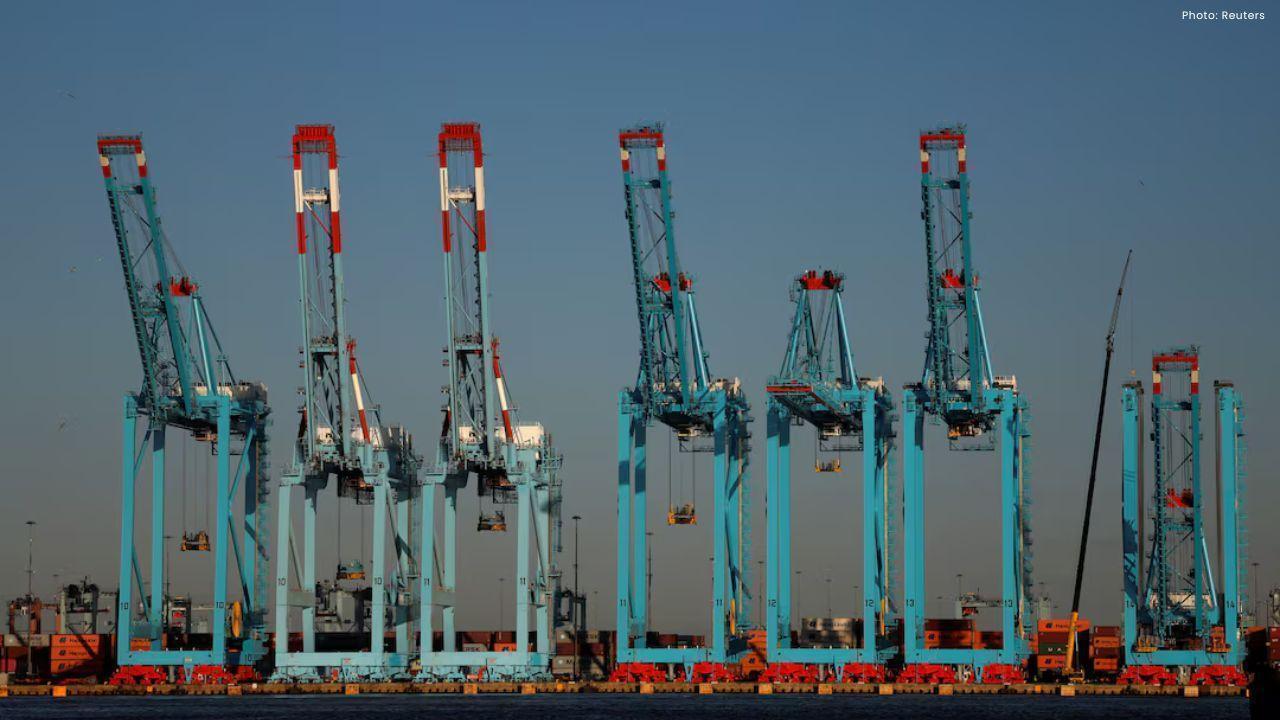
The Trump administration has released a detailed plan aimed at revitalizing the United States’ shipbuilding industry and maritime businesses. The Maritime Action Plan, spanning over 30 pages, lays out a strategy to rebuild a sector that has declined steadily since World War Two and now falls behind countries like China.
The plan includes the creation of maritime prosperity zones to encourage investment and support workforce training and education. It also proposes expanding the fleet of U.S.-built and U.S.-flagged commercial ships. One of the central elements is a Maritime Security Trust Fund, which will use revenue from port fees to reinvest in shipyard revitalization, infrastructure upgrades, and maritime security projects.
Port fees on cargo from Chinese-built ships are an important source of funding for this initiative. These fees, originally introduced last year under Section 301 penalties, were designed to counter China’s dominance in global shipping. The fees were expected to generate about $3.2 billion annually. However, after strong pushback from the shipping industry and retaliatory measures from China, the U.S. and China agreed to pause the fees for one year.
The plan has received strong support from shipyard owners, investors, and lawmakers. U.S. Senator Todd Young of Indiana emphasized that Congress should act quickly to provide the legal authority and funding needed to implement the plan. Senator Young highlighted that the Maritime Action Plan aligns closely with the Shipbuilding and Harbor Infrastructure for Prosperity and Security (SHIPS) Act. This bipartisan legislation would establish a dedicated Maritime Security Trust Fund and support infrastructure projects vital for the U.S. maritime industry.
Reviving shipbuilding is seen as essential for both economic and strategic reasons. A stronger domestic shipbuilding sector would create jobs, improve workforce skills, and enhance national security. The United States currently relies heavily on foreign-built vessels, which limits domestic production capacity and strategic flexibility.
The Maritime Action Plan also proposes reducing regulations that slow down production and investment. By creating zones with tax incentives and fewer bureaucratic hurdles, the government hopes to attract private investment and encourage new shipbuilding projects. Workforce training is another major focus, as the industry requires skilled labor for construction, engineering, and maritime operations.
Experts say that rebuilding U.S. shipbuilding is a long-term effort that will take years, but strategic planning and funding could make the United States competitive again. The Trump administration’s initiative signals a renewed focus on domestic manufacturing and maritime security, reflecting broader concerns about global trade, national defense, and economic independence.
The success of the plan will largely depend on congressional approval, private investment, and collaboration with the maritime industry. If implemented effectively, it could restore the United States as a leader in shipbuilding, strengthen ports, and provide new opportunities for workers and businesses across the country.
The Maritime Action Plan represents both an economic and strategic ambition: to ensure that the United States can produce its own ships, protect trade routes, and maintain a modern, competitive maritime sector for the years to come.
#trending #latest #USShipbuilding #MaritimeActionPlan #SHIPSAct #MaritimeSecurity #AmericanManufacturing #PortInfrastructure #EconomicRevival #armustnews



Advances in Aerospace Technology and Commercial Aviation Recovery
Insights into breakthrough aerospace technologies and commercial aviation’s recovery amid 2025 chall

Defense Modernization and Strategic Spending Trends
Explore key trends in global defense modernization and strategic military spending shaping 2025 secu

Tens of Thousands Protest in Serbia on Anniversary of Deadly Roof Collapse
Tens of thousands in Novi Sad mark a year since a deadly station roof collapse that killed 16, prote

Canada PM Carney Apologizes to Trump Over Controversial Reagan Anti-Tariff Ad
Canadian PM Mark Carney apologized to President Trump over an Ontario anti-tariff ad quoting Reagan,

The ad that stirred a hornets nest, and made Canadian PM Carney say sorry to Trump
Canadian PM Mark Carney apologizes to US President Trump after a tariff-related ad causes diplomatic

Bengaluru-Mumbai Superfast Train Approved After 30-Year Wait
Railways approves new superfast train connecting Bengaluru and Mumbai, ending a 30-year demand, easi




