Post by : Saif
Bangladesh is preparing for what many observers are calling its most competitive national election in more than 15 years. The upcoming vote is also being described as the world’s first major election strongly shaped by Generation Z voters. These are young citizens under the age of 30 who played a big role in recent political protests and movements across the country.
For many years under former Prime Minister Sheikh Hasina, elections were often marked by opposition boycotts, arrests of rival leaders, and weak street campaigning by opposition parties. That pattern has now changed. After Hasina was removed from power in a 2024 uprising, the political field has opened up. Her Awami League party is now banned, and new political forces have entered the race.
This election looks very different from the past. Streets are filled with posters, banners, campaign songs, and rallies. Voters are seeing real competition between parties instead of one dominant force. Many young voters say this is the first time they feel their vote will truly matter.
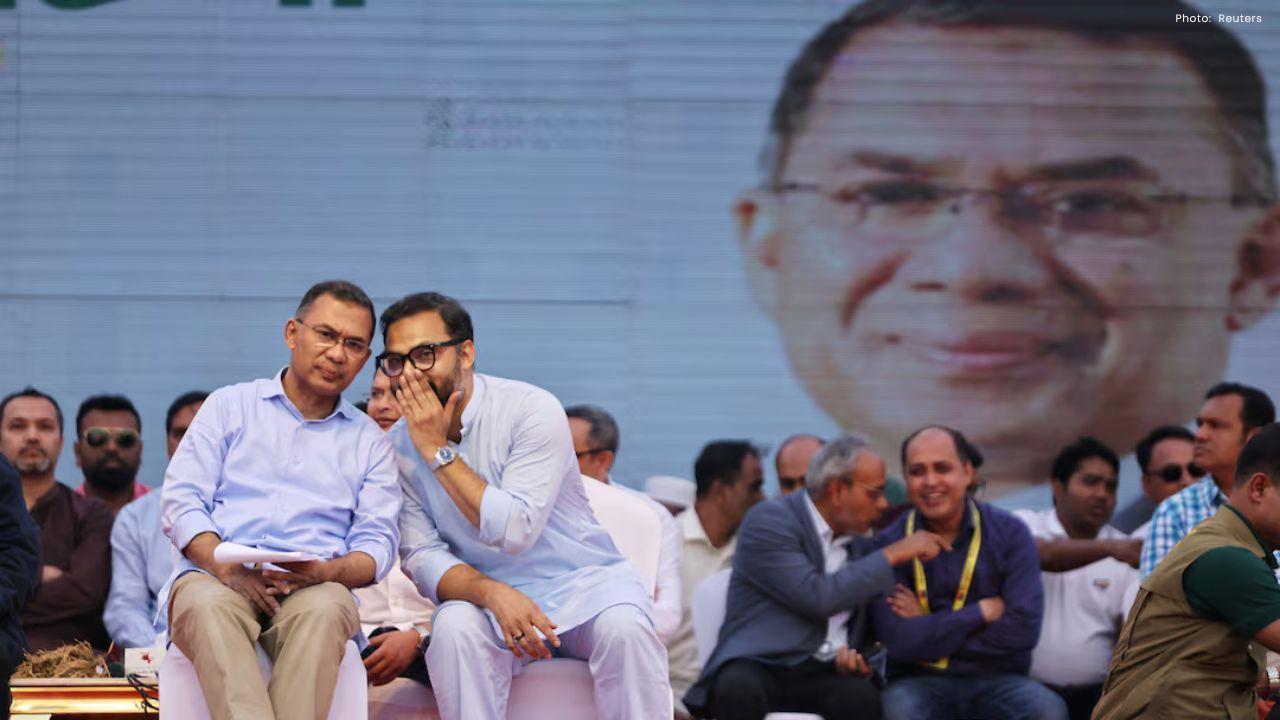
The main contest appears to be between the Bangladesh Nationalist Party, known as the BNP, and a coalition led by Jamaat-e-Islami. The BNP is contesting almost all parliamentary seats and says it is confident of forming the next government. Its leader, Tarique Rahman, has publicly said the party expects enough seats to take power.
At the same time, a Gen Z-driven political group has also entered the picture. This youth-led movement grew out of anti-government street protests but struggled to build a strong election machine on its own. It has now aligned with the Jamaat-led coalition. Even though it is new, its presence shows how strongly young voters are shaping the political story.
Experts say this youth factor could decide the result. Around one-fourth of all voters in Bangladesh belong to Generation Z. That is a very large share. Many of them are first-time voters. Their main concerns are not old political slogans but daily life issues like corruption, rising prices, jobs, and freedom of expression.
Surveys show that corruption is the number one concern for voters, followed by inflation and the cost of living. Bangladesh has been facing economic pressure in recent years. Prices have risen, foreign exchange reserves have weakened, and investment growth has slowed. The country has taken large loans and support packages from global institutions such as the International Monetary Fund and the World Bank. Because of this, people are focused on honest governance and economic stability.
The garments industry, which is one of the biggest employers and export earners for Bangladesh, has also faced disruption during months of unrest after the last government fell. Business leaders want a clear election result and a stable government so that industries can recover and grow again.
The election also has an important foreign policy angle. Bangladesh sits between major regional powers, mainly India and China. Under Hasina, the country was widely seen as close to India. After her exit and move to New Delhi, China’s influence has grown stronger, according to several analysts.
Different election outcomes could shift this balance. Some experts believe the BNP may keep balanced relations with both India and China. A Jamaat-led government, they say, could move closer to Pakistan and China, though Jamaat leaders say they are not tied to any one country and will act in national interest.
For ordinary voters, however, foreign policy is not the top issue. Many just want a fair system where they can vote freely and speak without fear. Young voters especially say they want dignity, accountability, and a government that listens.
A 21-year-old first-time voter in Dhaka said he hopes the next government will protect free expression and ensure that elections remain open and fair. He said many people felt they had no real voice in earlier elections and want that to change now.
From an editorial point of view, this election is important not only for Bangladesh but also as a sign of how youth participation can reshape democracy. When young citizens move from street protests to ballot boxes, politics begins to renew itself. But energy alone is not enough. New leaders must also show skill, honesty, and respect for institutions.
Bangladesh now stands at a turning point. A clear and accepted election result could bring stability after a period of tension. A disputed or fractured outcome could lead to more uncertainty. The responsibility lies with political parties, election officials, and security forces to ensure the vote is peaceful and fair.
Most of all, the moment belongs to the voters — especially the young — who are stepping forward to shape their country’s next chapter.
#trending #latest #BangladeshElection #GenZVoters #BNP #Jamaat #SouthAsiaPolitics #YouthVote #Democracy #Elections2026 #PoliticalChange #armustnews



Advances in Aerospace Technology and Commercial Aviation Recovery
Insights into breakthrough aerospace technologies and commercial aviation’s recovery amid 2025 chall

Defense Modernization and Strategic Spending Trends
Explore key trends in global defense modernization and strategic military spending shaping 2025 secu

Tens of Thousands Protest in Serbia on Anniversary of Deadly Roof Collapse
Tens of thousands in Novi Sad mark a year since a deadly station roof collapse that killed 16, prote

Canada PM Carney Apologizes to Trump Over Controversial Reagan Anti-Tariff Ad
Canadian PM Mark Carney apologized to President Trump over an Ontario anti-tariff ad quoting Reagan,

The ad that stirred a hornets nest, and made Canadian PM Carney say sorry to Trump
Canadian PM Mark Carney apologizes to US President Trump after a tariff-related ad causes diplomatic

Bengaluru-Mumbai Superfast Train Approved After 30-Year Wait
Railways approves new superfast train connecting Bengaluru and Mumbai, ending a 30-year demand, easi




