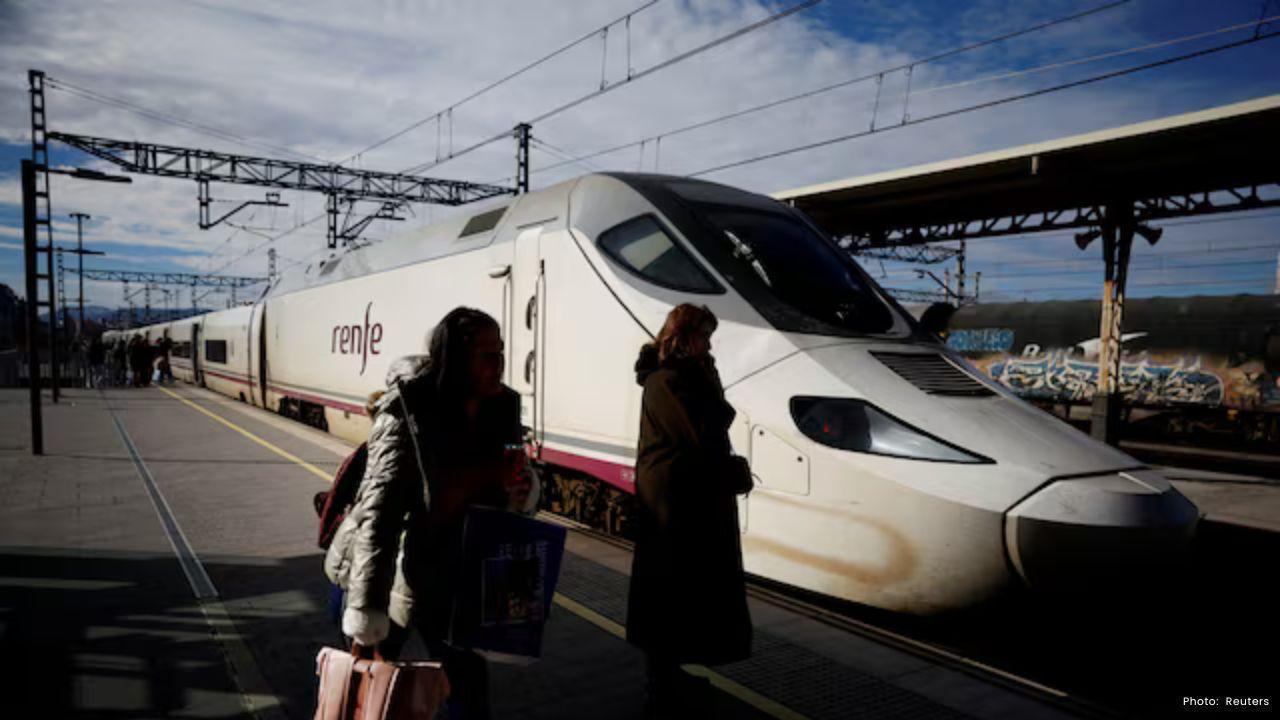
Post by : Saif
Saudi Arabia has placed a large new order for 20 high-speed trains from Spanish manufacturer Talgo, in a deal worth about 1.33 billion euros. The agreement includes both the trains and their long-term maintenance. It is one of the biggest recent export wins for Spain’s rail industry and shows Saudi Arabia’s continued push to expand and modernize its rail network.
Talgo announced that this order has lifted its total order backlog to nearly 6 billion euros, the highest in the company’s history. An order backlog means confirmed work that the company will build and deliver in the coming years. A large backlog gives a company more financial stability and helps it plan jobs, factories, and supply chains with greater confidence.
For Saudi Arabia, the purchase supports its long-term transport plans. The country has been investing heavily in rail projects, including high-speed and intercity lines, to reduce travel time between major cities and lower dependence on road and air travel. Fast trains are seen as a clean and efficient way to move large numbers of passengers.
High-speed rail also fits into Saudi Arabia’s wider economic development goals. Modern transport systems help tourism, business travel, and regional growth. When cities are better connected, people can move more easily for work, education, and trade. Rail systems also tend to produce fewer emissions per passenger than cars or short flights, which supports environmental targets.
The contract is also important for Spain. Talgo is one of the country’s best-known train builders and has exported rail technology around the world. Winning a major overseas order strengthens Spain’s position in the global rail market, where competition is strong from companies in Europe and Asia.
The timing of the deal matters. Spain’s rail sector has recently faced public concern after a serious train collision near Cordoba last month that killed 46 people. That accident led to questions about network safety, maintenance spending, and whether infrastructure upgrades are keeping up with rising passenger numbers. In that context, a major international order provides a welcome sign of confidence in Spanish rail engineering.
Still, the contrast is clear. While Spanish companies are winning foreign contracts, there is pressure at home to ensure that domestic rail lines remain safe and well maintained. Large export deals can boost reputation, but safety performance at home remains just as important. Public trust depends not only on technology and speed, but also on reliability and protection for passengers.
The inclusion of maintenance in the Saudi contract is another key point. Modern train deals are no longer just about selling vehicles. They often include years of technical support, spare parts, inspections, and system upgrades. This creates longer partnerships between buyer and supplier and ensures trains stay in good condition over time. It also provides steady service revenue for manufacturers beyond the initial sale.
From an industry point of view, this reflects a shift in how rail companies operate. Instead of one-time sales, they now focus on full life-cycle service — building, monitoring, repairing, and improving trains over decades. That model benefits operators who want predictable performance and costs.
For passengers in Saudi Arabia, the result should be more capacity and smoother journeys once the trains are delivered and placed into service. More trains usually mean more frequent departures and less crowding. High-speed systems can also compete directly with air routes on certain distances, especially when station access and security wait times are considered.
Globally, high-speed rail continues to expand as countries look for faster and greener transport choices. Large projects require strong partnerships between governments and specialized manufacturers. Deals like this one show how rail has become an international business, with design in one country, manufacturing in another, and operation in a third.
In the end, this order is more than a business transaction. It highlights how transport, technology, safety, and national reputation are closely linked. For Saudi Arabia, it is another step toward a faster rail future. For Spain and Talgo, it is proof that their trains remain in demand — but it also brings responsibility to maintain high standards everywhere they operate.
#trending #latest #SaudiArabia #Talgo #HighSpeedRail #TrainNews #RailIndustry #TransportInfrastructure #SpainRail #GlobalMobility #armustnews







Advances in Aerospace Technology and Commercial Aviation Recovery
Insights into breakthrough aerospace technologies and commercial aviation’s recovery amid 2025 chall

Defense Modernization and Strategic Spending Trends
Explore key trends in global defense modernization and strategic military spending shaping 2025 secu

Tens of Thousands Protest in Serbia on Anniversary of Deadly Roof Collapse
Tens of thousands in Novi Sad mark a year since a deadly station roof collapse that killed 16, prote

Canada PM Carney Apologizes to Trump Over Controversial Reagan Anti-Tariff Ad
Canadian PM Mark Carney apologized to President Trump over an Ontario anti-tariff ad quoting Reagan,

The ad that stirred a hornets nest, and made Canadian PM Carney say sorry to Trump
Canadian PM Mark Carney apologizes to US President Trump after a tariff-related ad causes diplomatic

Bengaluru-Mumbai Superfast Train Approved After 30-Year Wait
Railways approves new superfast train connecting Bengaluru and Mumbai, ending a 30-year demand, easi




