Post by : Saif
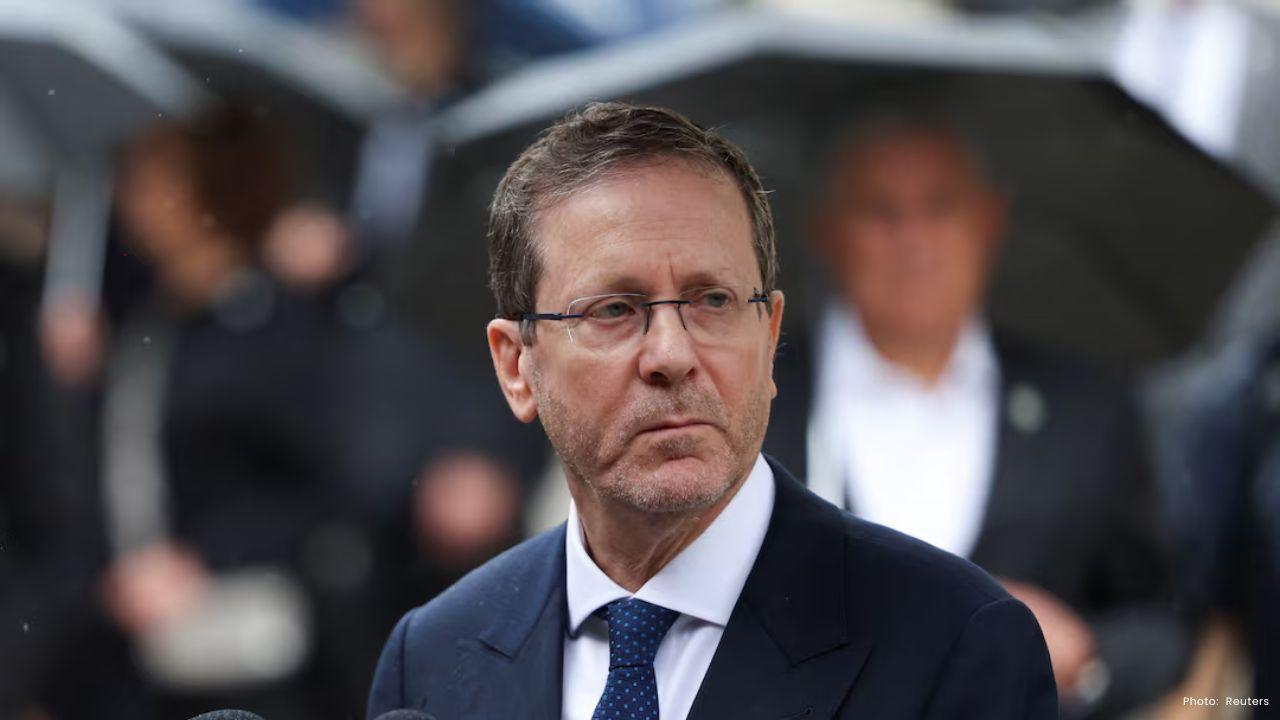
Israeli President Isaac Herzog has begun his official visit to Australia with a solemn stop at Bondi Beach in Sydney, where he honored victims of a deadly shooting that took place during a Hanukkah celebration in December. His trip is meant to show support for Australia’s Jewish community after the tragic attack, but it has also triggered strong protests and political debate across the country.
The December 14 shooting at Bondi Beach shocked Australia. Fifteen people were killed during a Jewish Hanukkah gathering. It was one of the worst such attacks the country has seen in decades. The event deeply affected both the Jewish community and the wider Australian public. Many people saw it not only as an act of violence against a group, but as an attack on shared values like religious freedom and peaceful celebration.
President Herzog started his visit by laying a wreath at a memorial near the Bondi Pavilion. He met survivors and families of those who were killed. Speaking at the site, he said the attack was not only against Jewish people but against all Australians and against democratic values. He spoke about the importance of human life, dignity, tolerance, and respect between communities.
The visit comes after an invitation from Australian Prime Minister Anthony Albanese, who asked Herzog to come in the aftermath of the attack. The goal was to send a message of unity and support. Leaders of several Jewish organizations in Australia welcomed the visit and said it would help comfort a community still in pain. They believe the presence of Israel’s president shows that victims are not forgotten and that global Jewish communities stand together in difficult times.
At the same time, the visit has not been welcomed by everyone. Several groups, including pro-Palestinian organizations, strongly oppose Herzog’s presence in Australia. They accuse him of being linked to Israeli government actions in Gaza and say he should not be honored with an official visit. These groups have planned protests in multiple cities during his trip.
Some Jewish Australians have also spoken out against the visit. A group of Jewish academics and community leaders signed an open letter asking the prime minister to cancel the invitation. They argue that not all Jewish people support the policies of the Israeli government and that inviting Herzog does not represent the full diversity of Jewish opinion in Australia. This shows that debate on this issue exists even within the same community.
Because of expected demonstrations, Sydney authorities have put major security plans in place. Around 3,000 police officers have been deployed during the visit. Police have been given special temporary powers that allow them to control crowd movement, block certain areas, search vehicles, and direct people to leave if needed. Officials say these steps are meant to prevent clashes and keep both protesters and the general public safe.
Police leaders have said they are in close contact with protest organizers and hope the events will remain peaceful. They have suggested safer locations for rallies, but some protest groups say they plan to gather at different public sites they consider more visible and symbolic. A legal challenge has also been filed against some protest restrictions, showing how tense and sensitive the situation has become.
This moment highlights a difficult balance for democratic societies. On one side is the right of leaders to show solidarity after a terror attack and support grieving communities. On the other side is the right of citizens to protest and express strong disagreement with political figures and foreign policies. Both are protected in a democracy, but managing them at the same time requires care and fairness.
There is also a broader lesson about how global conflicts affect local communities. Events in the Middle East often create strong reactions in countries far away, including Australia. These reactions can lead to division, anger, and fear among different groups. Leaders and civil society groups face the challenge of preventing overseas conflicts from breaking social harmony at home.
Herzog’s visit is therefore more than a diplomatic trip. It is also a test of Australia’s ability to handle grief, disagreement, and protest without violence. It shows how acts of terror can echo far beyond the place where they happen, shaping politics, security, and public debate months later.
In the end, the success of the visit will not be judged only by meetings and speeches, but by whether communities feel heard, protected, and respected — even when they strongly disagree. Respectful dialogue, peaceful protest, and careful leadership will be key in the days ahead.
#trending #latest #IsaacHerzog #AustraliaVisit #BondiBeach #SydneyNews #JewishCommunity #PublicSafety #GlobalPolitics #ProtestRights #armustnews



Advances in Aerospace Technology and Commercial Aviation Recovery
Insights into breakthrough aerospace technologies and commercial aviation’s recovery amid 2025 chall

Defense Modernization and Strategic Spending Trends
Explore key trends in global defense modernization and strategic military spending shaping 2025 secu

Tens of Thousands Protest in Serbia on Anniversary of Deadly Roof Collapse
Tens of thousands in Novi Sad mark a year since a deadly station roof collapse that killed 16, prote

Canada PM Carney Apologizes to Trump Over Controversial Reagan Anti-Tariff Ad
Canadian PM Mark Carney apologized to President Trump over an Ontario anti-tariff ad quoting Reagan,

The ad that stirred a hornets nest, and made Canadian PM Carney say sorry to Trump
Canadian PM Mark Carney apologizes to US President Trump after a tariff-related ad causes diplomatic

Bengaluru-Mumbai Superfast Train Approved After 30-Year Wait
Railways approves new superfast train connecting Bengaluru and Mumbai, ending a 30-year demand, easi




