Post by : Amit
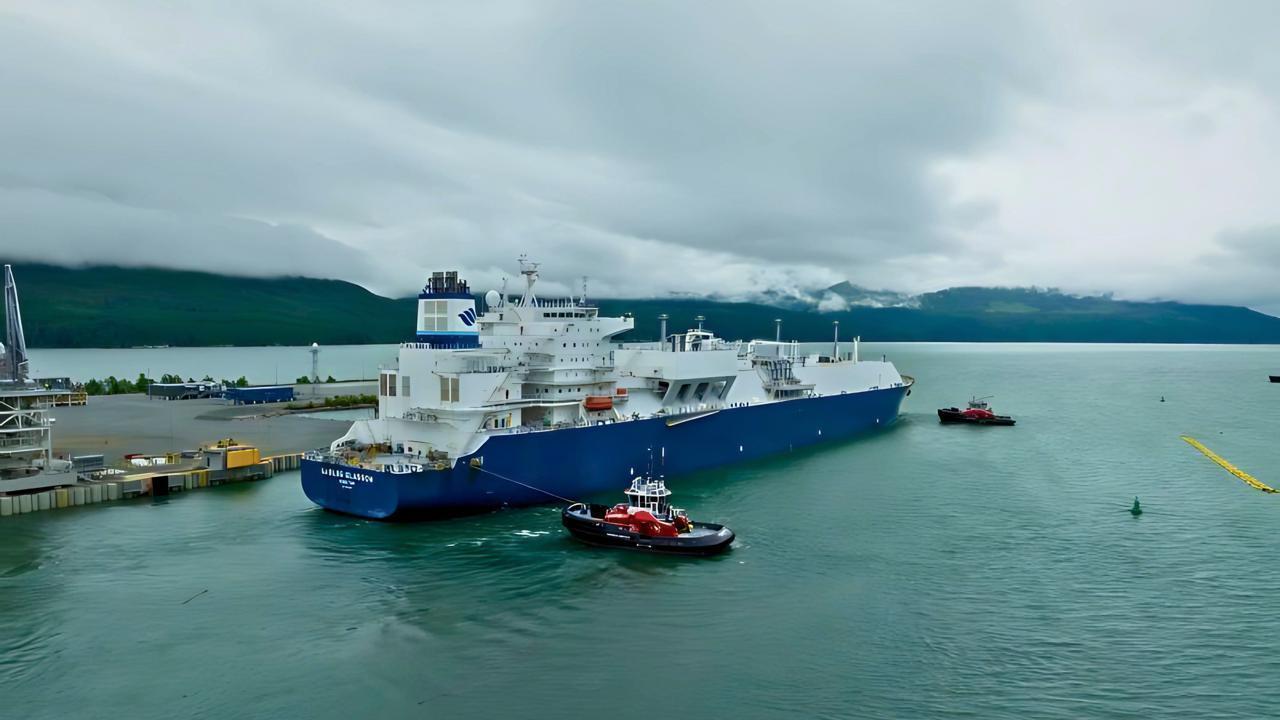
Photo: Linkdin/Fluor Corporation
Canada has officially joined the ranks of global liquefied natural gas (LNG) exporters, with the first-ever shipment of LNG departing from a project on British Columbia’s west coast. This marks a significant moment for Canada’s energy sector, opening new doors for international trade while raising discussions about climate impacts and Indigenous partnerships.
The milestone shipment departed from FortisBC’s Tilbury LNG facility in Delta, British Columbia, bound for Asia, where demand for cleaner-burning fuels continues to surge.
While Canada has long been one of the world’s largest producers of natural gas, it had not previously exported LNG by sea. This first cargo changes that, positioning Canada as a new player in the fast-growing global LNG market alongside giants like Qatar, Australia, and the United States.
The shipment follows years of planning, infrastructure development, and regulatory navigation. FortisBC’s Tilbury facility—which originally served domestic markets—has now been expanded to handle international LNG exports.
Meeting Global LNG Demand—Especially in Asia
The global market for LNG has grown dramatically in recent years, driven by:
Countries like Japan, South Korea, and China are among the top importers of LNG, using it for power generation, heating, and industrial processes. Canada’s west coast location offers a geographic advantage by shortening shipping times to these major Asian markets compared to U.S. Gulf Coast exporters.
Several Indigenous communities have become stakeholders in LNG projects, seeing them as opportunities for economic development, employment, and long-term prosperity. At the same time, environmental groups have raised concerns about the impact of LNG on carbon emissions and fragile ecosystems.
FortisBC has emphasized its commitment to:
This approach reflects a broader Canadian trend of seeking balanced development that supports both economic growth and climate goals.
The Tilbury shipment is likely just the beginning. Several larger LNG projects are under construction or in development across Canada’s Pacific and Atlantic coasts, including:
These projects aim to position Canada as a reliable and responsible LNG supplier in an increasingly competitive global market.
The rise of LNG exports presents both opportunities and challenges for Canada. On one hand, LNG is seen as a bridge fuel that can help countries phase out higher-emission coal. On the other, critics argue that expanding fossil fuel exports could slow down the shift toward renewable energy.
Canada, which has pledged to reach net-zero emissions by 2050, must now navigate this complex landscape—balancing economic benefits, energy security, Indigenous rights, and environmental responsibility.
The maiden LNG shipment from British Columbia represents more than just a new export—it symbolizes Canada’s evolving role in the global energy transition. As demand for LNG grows, the choices Canada makes today will help shape its energy future, its economy, and its contribution to the fight against climate change.
For now, the ship has sailed—marking a new beginning for Canada’s place on the global energy map.
Canada, British Columbia



Advances in Aerospace Technology and Commercial Aviation Recovery
Insights into breakthrough aerospace technologies and commercial aviation’s recovery amid 2025 chall

Defense Modernization and Strategic Spending Trends
Explore key trends in global defense modernization and strategic military spending shaping 2025 secu

Tens of Thousands Protest in Serbia on Anniversary of Deadly Roof Collapse
Tens of thousands in Novi Sad mark a year since a deadly station roof collapse that killed 16, prote

Canada PM Carney Apologizes to Trump Over Controversial Reagan Anti-Tariff Ad
Canadian PM Mark Carney apologized to President Trump over an Ontario anti-tariff ad quoting Reagan,

The ad that stirred a hornets nest, and made Canadian PM Carney say sorry to Trump
Canadian PM Mark Carney apologizes to US President Trump after a tariff-related ad causes diplomatic

Bengaluru-Mumbai Superfast Train Approved After 30-Year Wait
Railways approves new superfast train connecting Bengaluru and Mumbai, ending a 30-year demand, easi




