Post by : Saif
The global aviation industry is facing a serious repair backlog, with many jet engines waiting months for maintenance. Now, GE Aerospace is trying a new approach to solve the problem. The company is bringing robots, automation, and “Lean” work methods into its repair centers to speed up engine servicing and reduce delays for airlines.
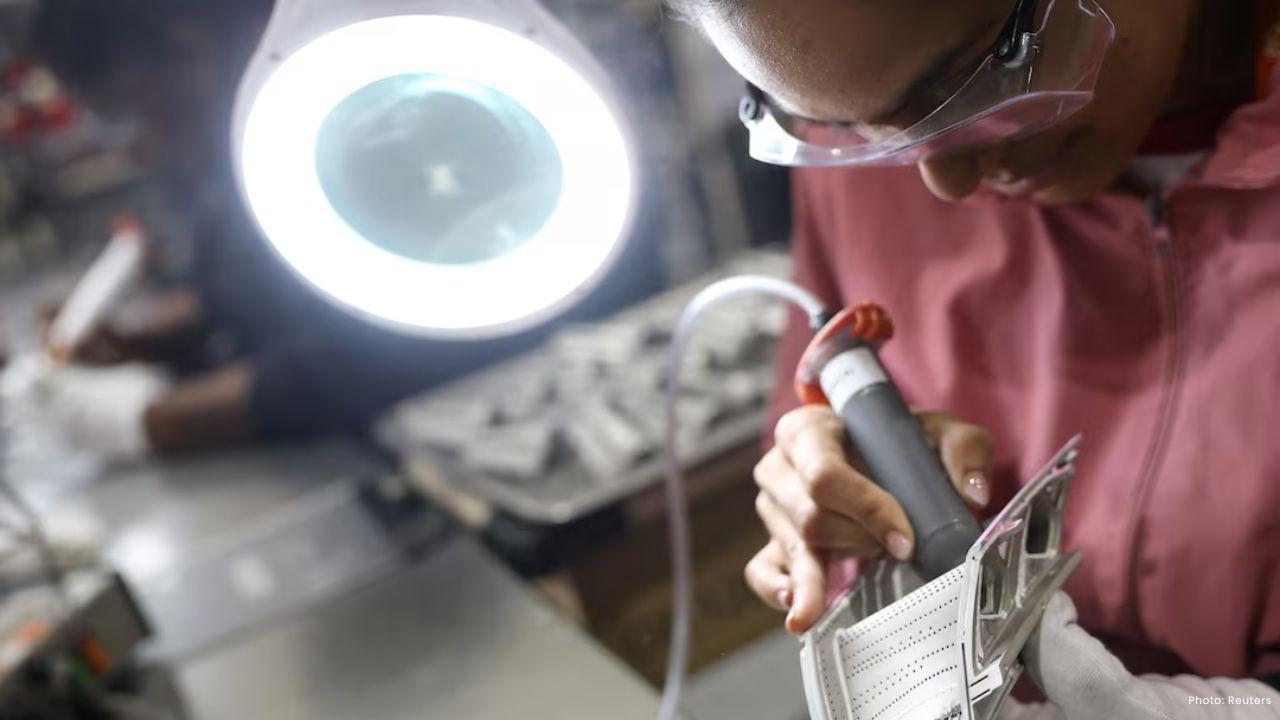
At one of its major repair hubs in Singapore, GE Aerospace is building advanced automation labs where robots are being trained to do tasks that were once handled only by skilled human technicians. These include delicate jobs like sanding and reshaping jet engine compressor blades, which require steady hands and years of experience.
For a long time, such repair work depended fully on human touch and judgment. Skilled workers would carefully guide metal parts across sanding belts and tools, making tiny adjustments measured in thousandths of an inch. Now engineers are teaching robots to copy those same movements. The goal is not to remove people, but to help them handle more work in less time and with more consistency.
The pressure on repair shops has been rising across the aviation sector. Newer jet engines have shown unexpected wear and tear, forcing airlines to send engines for maintenance earlier than planned. At the same time, supply chain shortages have made it harder to get replacement parts. This has left many aircraft on the ground and pushed airlines to keep older planes flying longer than expected.
Airline leaders have openly expressed frustration. Tony Fernandes, co-founder of AirAsia, recently said engine makers must remember that airlines are long-term partners and should be supported during this difficult period. Airlines argue that repair delays and parts shortages raise their costs and affect ticket prices for travelers.
GE Aerospace says its Singapore center is a key part of the solution. The company plans to invest hundreds of millions of dollars to upgrade the site with automation, digital tracking tools, and smarter workflows. Instead of expanding the building, the company wants to increase output by reorganizing the workspace and cutting wasted time and motion.
This is where Lean methods come in. Lean is a system first made popular by Japanese car manufacturers. It focuses on removing waste, improving daily processes, and making small but constant improvements. GE Aerospace’s CEO Larry Culp has strongly promoted this style of working across the company. The message is simple: steady daily gains are better than last-minute rush efforts.
By using Lean layouts, some repair lines in Singapore have already reduced turnaround times. For example, certain turbine nozzle repairs that once took around 40 days are being pushed toward a target of about three weeks in the coming years. Faster repairs mean engines return to service sooner, which helps airlines keep planes flying.
Robotics also helps with another major challenge: the shortage of highly trained repair workers. Engine repair requires special skills that take years to learn. By programming robots to handle repeatable precision tasks, companies can reduce dependence on a small pool of experts while still keeping strict quality standards. Human workers then focus on inspection, decision-making, and the most complex steps.
Still, automation is not a magic fix. Aircraft engine repairs must follow approved safety procedures, and every step is tightly controlled. Not all tasks can be automated easily. Industry analysts also warn that while repair speed may improve, overall supply pressure will not disappear overnight.
Competitors like Pratt & Whitney are also trying to balance new engine production with the need to maintain engines already in service. The entire sector is adjusting its support systems after years of disruption.
GE Aerospace’s robot and Lean strategy shows how traditional heavy industry is changing. Instead of only building more factories, companies are trying to work smarter inside existing ones. If this effort succeeds, airlines could see shorter repair queues, more available aircraft, and more stable operating costs. That would be good news not just for carriers, but also for passengers who depend on reliable flights.
#trending #latest #Aviation #JetEngines #GEAerospace #AircraftMaintenance #Robotics #LeanManufacturing #Airlines #AerospaceIndustry #armustnews



Advances in Aerospace Technology and Commercial Aviation Recovery
Insights into breakthrough aerospace technologies and commercial aviation’s recovery amid 2025 chall

Defense Modernization and Strategic Spending Trends
Explore key trends in global defense modernization and strategic military spending shaping 2025 secu

Tens of Thousands Protest in Serbia on Anniversary of Deadly Roof Collapse
Tens of thousands in Novi Sad mark a year since a deadly station roof collapse that killed 16, prote

Canada PM Carney Apologizes to Trump Over Controversial Reagan Anti-Tariff Ad
Canadian PM Mark Carney apologized to President Trump over an Ontario anti-tariff ad quoting Reagan,

The ad that stirred a hornets nest, and made Canadian PM Carney say sorry to Trump
Canadian PM Mark Carney apologizes to US President Trump after a tariff-related ad causes diplomatic

Bengaluru-Mumbai Superfast Train Approved After 30-Year Wait
Railways approves new superfast train connecting Bengaluru and Mumbai, ending a 30-year demand, easi




