Post by : Saif
The United States is increasing its military presence in the Middle East by sending a second aircraft carrier to the region. The move comes at a time of high tension with Iran and uncertain progress in talks over Tehran’s nuclear program. It is a strong signal that Washington wants more pressure and more military readiness while diplomacy continues behind the scenes.
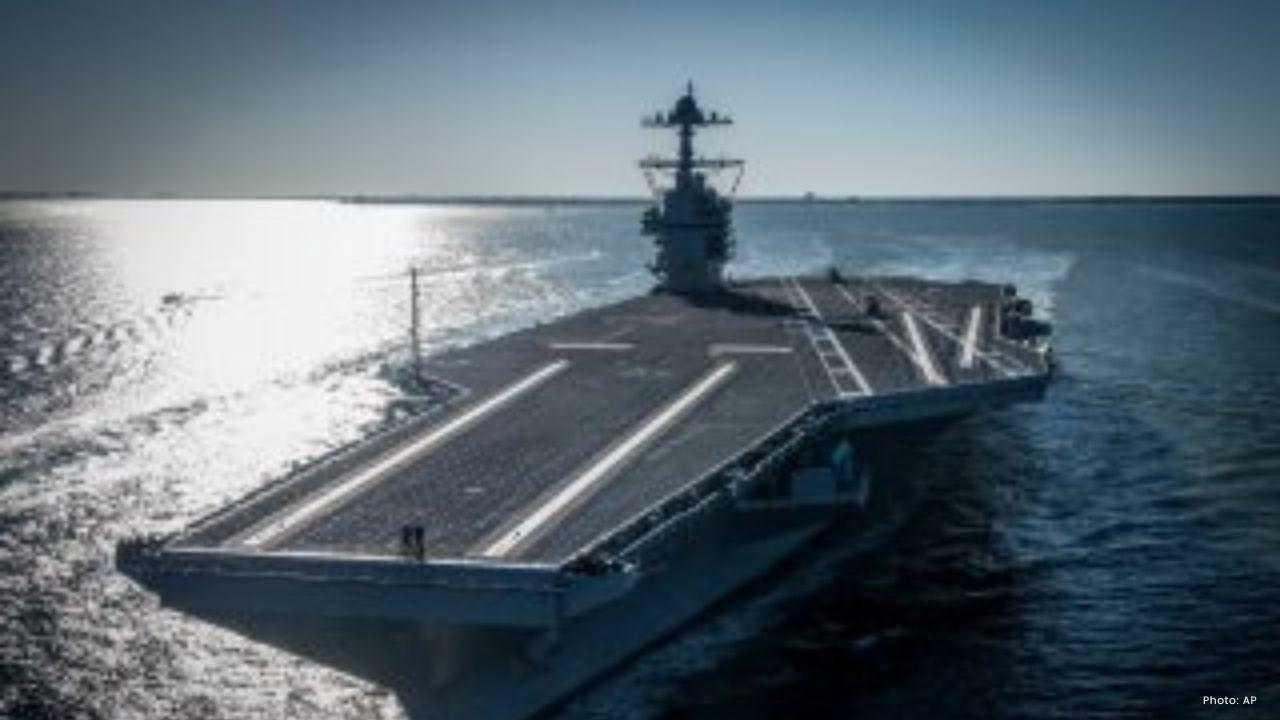
According to officials familiar with the plan, the carrier being sent is the USS Gerald R. Ford, the largest and most advanced aircraft carrier in the world. It will join another carrier already operating in nearby waters, the USS Abraham Lincoln. With two carrier strike groups in the area, the United States will have a much larger naval and air combat force close to Iran.
This step follows recent warnings and statements from President Donald Trump, who has pushed Iran to agree to a new deal over its nuclear activities. He has said that failure to reach an agreement could lead to very serious consequences. At the same time, he has also said he prefers a deal and wants negotiations to move quickly.
Aircraft carriers are not just ships. They are floating military bases. Each one carries dozens of fighter jets, helicopters, radar systems, and thousands of crew members. They are usually escorted by destroyers and other warships that can defend against missiles and submarines. When two carriers operate in the same region, it greatly increases air power and strike ability. It also sends a clear political message.
Supporters of the deployment say it is meant to prevent conflict, not start one. Their argument is simple: strong military presence can discourage attacks and risky behavior. By showing readiness, the U.S. hopes to push Iran toward compromise at the negotiating table instead of confrontation on the battlefield.
However, critics warn that more military buildup can also raise the risk of accidents and miscalculations. When forces from rival countries operate close to each other, even a small incident can grow into a larger clash. The Middle East is already tense after years of war, proxy conflicts, and political unrest. Many regional governments worry that another crisis could spread quickly across borders.
Iran is facing pressure not only from outside but also from inside. The country has seen widespread unrest after a harsh crackdown on protests. Many families are now holding traditional 40-day mourning ceremonies for those killed. These public gatherings can become moments of political expression and anger. That adds another layer of pressure on Iran’s leadership as it deals with foreign threats and domestic dissatisfaction.
Indirect contacts between U.S. and Iranian representatives have taken place through mediators in Gulf countries. So far, there is no confirmed breakthrough. Talks appear fragile and slow. Military moves like this carrier deployment may be designed to strengthen the U.S. position in those talks, but they can also make trust harder to build.
Another important part of the situation is Israel’s role. Trump recently held talks with Israeli Prime Minister Benjamin Netanyahu, who has long argued that Iran’s missile program and support for armed regional groups must be included in any deal. Israel sees Iran as its main security threat and favors a tougher line.
There is also a human factor that is often forgotten. Aircraft carrier crews spend many months away from home. The Ford has already been deployed for a long period, and this new mission could extend that time further. Long deployments are stressful for sailors and their families. Military strategy decisions reach far beyond maps and politics — they affect real lives.
A stable solution with Iran will not come from threats alone, and it will not come from talks alone. History shows that lasting agreements usually require both pressure and dialogue. The challenge is to balance the two without sliding into open conflict.
Sending a second carrier raises the stakes. It increases leverage, but it also increases risk. The coming weeks will show whether this show of strength helps produce a nuclear agreement — or deepens the divide.
#trending #latest #MiddleEastTensions #IranCrisis #USNavy #AircraftCarrier #GeraldRFord #AbrahamLincoln #NuclearTalks #GlobalSecurity #armustnews



Advances in Aerospace Technology and Commercial Aviation Recovery
Insights into breakthrough aerospace technologies and commercial aviation’s recovery amid 2025 chall

Defense Modernization and Strategic Spending Trends
Explore key trends in global defense modernization and strategic military spending shaping 2025 secu

Tens of Thousands Protest in Serbia on Anniversary of Deadly Roof Collapse
Tens of thousands in Novi Sad mark a year since a deadly station roof collapse that killed 16, prote

Canada PM Carney Apologizes to Trump Over Controversial Reagan Anti-Tariff Ad
Canadian PM Mark Carney apologized to President Trump over an Ontario anti-tariff ad quoting Reagan,

The ad that stirred a hornets nest, and made Canadian PM Carney say sorry to Trump
Canadian PM Mark Carney apologizes to US President Trump after a tariff-related ad causes diplomatic

Bengaluru-Mumbai Superfast Train Approved After 30-Year Wait
Railways approves new superfast train connecting Bengaluru and Mumbai, ending a 30-year demand, easi




