Post by : Saif
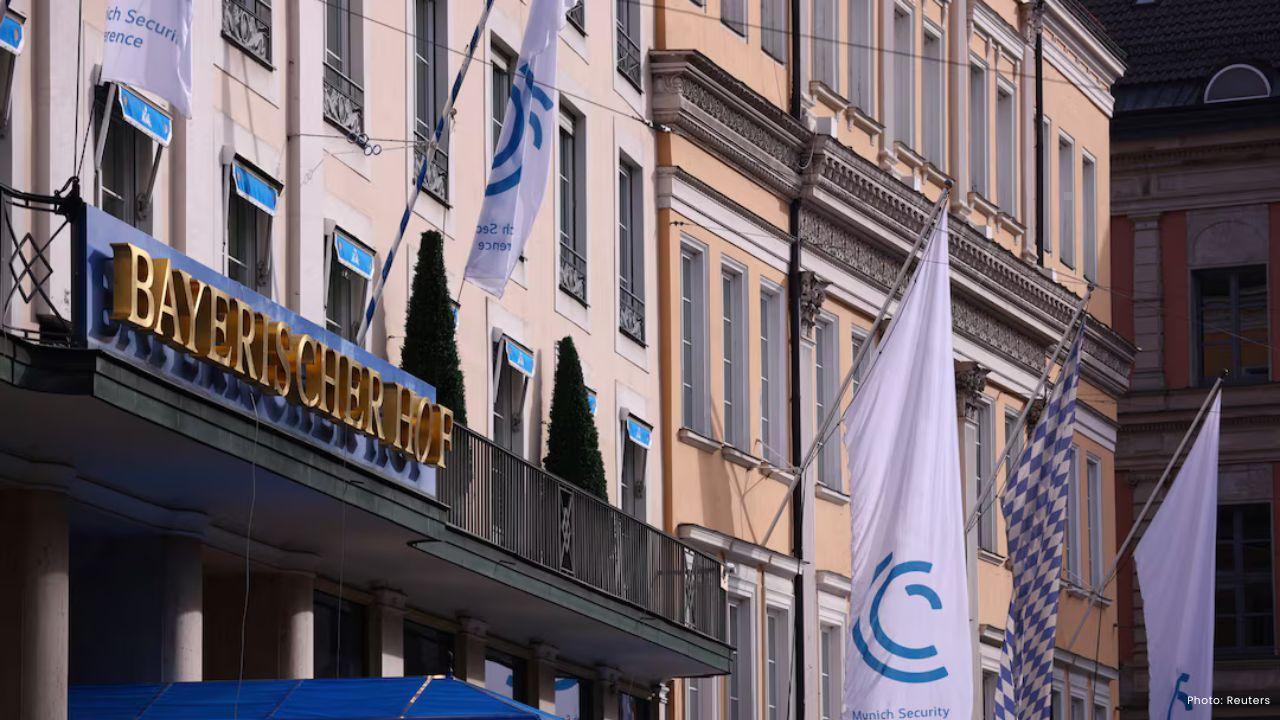
The Munich Security Conference begins this week at a time of deep global tension and political change. For many years, this meeting was a strong symbol of unity between the United States and Europe. Now, that unity is being tested.
The annual gathering in Germany brings together presidents, prime ministers, ministers, military chiefs, and security experts from around the world. They meet to discuss wars, threats, and global stability. This year’s meeting comes during conflicts in Ukraine, Gaza, and Sudan, along with rising political mistrust between long-time allies.
A major reason for the uneasy mood is the foreign policy direction of U.S. President Donald Trump and his administration. His recent moves and statements have shaken the traditional Atlantic alliance — the partnership between North America and Europe that has guided global security for decades.
The conference itself — the Munich Security Conference — was originally built during the Cold War as a place for Western allies to coordinate defense strategy. For years, cooperation across the Atlantic was treated as a basic fact. That is no longer guaranteed.
Over the past year, sharp words and policy shocks from Washington have changed the tone of relations. Trade tariffs, threats of military action in new regions, and bold territorial ideas have worried European governments. Some leaders fear that the old rules-based order is weakening.
Because of this, European countries are now talking more openly about becoming more independent in defense and security. They still want cooperation with the United States, but they no longer feel they can depend on it in the same way as before.
This does not mean Europe can quickly stand alone. Many European armies still rely heavily on American weapons, intelligence, and logistics. Building full independence would take years of spending and planning. Still, the political mood is shifting toward greater self-reliance.
The future of NATO is also part of the discussion. NATO has been the backbone of European security since 1949. Recent disputes and strong language about alliance commitments have raised fears about its long-term strength. Even when tensions cool, trust takes time to rebuild.
This year’s conference will host a record number of top leaders and ministers. Many see this as proof that the world is going through a very dangerous and complex period. With several wars happening at the same time, security talks are more urgent than ever.
European leaders are expected to use the forum to send two messages at once. First, they want to keep the partnership with Washington alive. Second, they want to show that Europe is ready to take more responsibility for its own defense and economy.
Ukraine will be a key topic. Leaders want to know whether American support will continue at the same level and what kind of security guarantees might be offered in the future. Without steady backing, European officials worry that any ceasefire could fail and lead to another round of war later.
Economic strength is also part of the security debate. Central bank and finance leaders are attending to discuss how Europe can make its economy more resilient. The idea is simple: a stronger economy helps support a stronger defense.
Not every country is attending. Russia is not sending a delegation. Iranian officials were not invited after recent internal unrest and a harsh crackdown on protests. Opposition voices from Iran are expected to speak instead. This shows how the conference is also a stage for political signaling, not just quiet diplomacy.
Even with all the tension, the meeting still matters. It offers a place where rivals and partners can speak face to face. In times of distrust, direct talks are often more important, not less.
The central question hanging over the gathering is clear: Can the Atlantic alliance adjust to new political realities without breaking apart? The answer will not come in one weekend. But the tone and outcomes of this conference will give an early signal.
For now, the message from many European capitals is steady — cooperate where possible, prepare where necessary, and avoid sudden shocks. In a world already full of conflict, few want to see the alliance system collapse as well.
#trending #latest #MunichSecurityConference #TransatlanticAlliance #GlobalSecurity #NATO #EuropeDefense #UkraineWar #Geopolitics #armustnews



Advances in Aerospace Technology and Commercial Aviation Recovery
Insights into breakthrough aerospace technologies and commercial aviation’s recovery amid 2025 chall

Defense Modernization and Strategic Spending Trends
Explore key trends in global defense modernization and strategic military spending shaping 2025 secu

Tens of Thousands Protest in Serbia on Anniversary of Deadly Roof Collapse
Tens of thousands in Novi Sad mark a year since a deadly station roof collapse that killed 16, prote

Canada PM Carney Apologizes to Trump Over Controversial Reagan Anti-Tariff Ad
Canadian PM Mark Carney apologized to President Trump over an Ontario anti-tariff ad quoting Reagan,

The ad that stirred a hornets nest, and made Canadian PM Carney say sorry to Trump
Canadian PM Mark Carney apologizes to US President Trump after a tariff-related ad causes diplomatic

Bengaluru-Mumbai Superfast Train Approved After 30-Year Wait
Railways approves new superfast train connecting Bengaluru and Mumbai, ending a 30-year demand, easi




