Post by : Saif
Japan has decided not to explain why the Bank of Japan did not join a joint statement issued by major global central banks in support of U.S. Federal Reserve Chair Jerome Powell. The move has attracted attention at a time when questions about political pressure on central banks are growing worldwide.
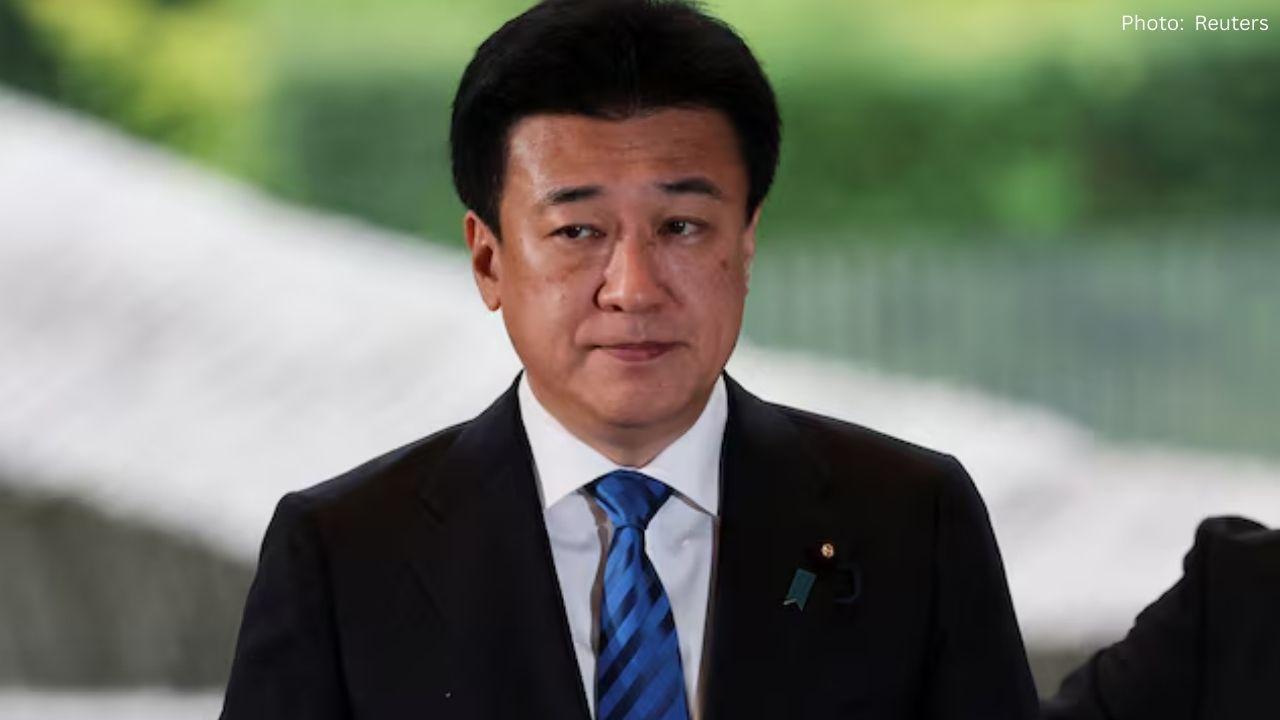
On Wednesday, Chief Cabinet Secretary Minoru Kihara told reporters in Tokyo that the issue was a matter for the Bank of Japan alone. He said the government would refrain from making any comments, stressing that decisions like these fall under the central bank’s own judgment.
The statement in question was released by several leading central banks after the Trump administration threatened possible criminal action against Powell. The message was widely seen as a sign of unity among global financial leaders and a reminder of the importance of protecting central banks from political influence.
Those who signed the statement included the heads of the European Central Bank, the Bank of England, and the Bank of Canada. Central bank leaders from Sweden, Denmark, Switzerland, Australia, South Korea, Brazil, and France also joined. The Bank of Japan was noticeably absent from the list.
When asked about the importance of central bank independence, Kihara said the Japanese government believes the final responsibility for managing the economy lies with the government itself. He explained that, under Japanese law, monetary policy is part of overall economic policy and requires close coordination and regular communication between the government and the Bank of Japan.
At the same time, Kihara said decisions on how monetary policy is carried out should be left to the Bank of Japan. This reflects Japan’s long-standing system, where the government sets broad economic goals while the central bank handles specific policy actions.
Japan’s decision to stay silent does not clearly show support or opposition to the joint statement. Instead, it highlights the country’s careful approach to sensitive financial and political matters. Analysts say Japan may be trying to avoid taking sides publicly while maintaining stability at home.
The situation also points to a larger global issue. As political leaders face economic pressure, central banks are increasingly drawn into political debates. How governments respond to these situations can affect investor confidence and public trust in financial systems.
For now, Japan’s message is one of restraint. By refusing to comment, the government has placed responsibility squarely on the Bank of Japan, while keeping its own position neutral in a tense global financial environment.
#trending #latest #Japan #BankOfJapan #JeromePowell #CentralBanks #MonetaryPolicy #GlobalEconomy #WorldNews








Advances in Aerospace Technology and Commercial Aviation Recovery
Insights into breakthrough aerospace technologies and commercial aviation’s recovery amid 2025 chall

Defense Modernization and Strategic Spending Trends
Explore key trends in global defense modernization and strategic military spending shaping 2025 secu

Tens of Thousands Protest in Serbia on Anniversary of Deadly Roof Collapse
Tens of thousands in Novi Sad mark a year since a deadly station roof collapse that killed 16, prote

Canada PM Carney Apologizes to Trump Over Controversial Reagan Anti-Tariff Ad
Canadian PM Mark Carney apologized to President Trump over an Ontario anti-tariff ad quoting Reagan,

The ad that stirred a hornets nest, and made Canadian PM Carney say sorry to Trump
Canadian PM Mark Carney apologizes to US President Trump after a tariff-related ad causes diplomatic

Bengaluru-Mumbai Superfast Train Approved After 30-Year Wait
Railways approves new superfast train connecting Bengaluru and Mumbai, ending a 30-year demand, easi




