Post by : Saif
A deadly UPS cargo plane crash in Kentucky has taken a troubling turn after investigators confirmed that a cracked aircraft part linked to the accident had been flagged by Boeing more than a decade ago. The discovery has raised serious concerns about aircraft maintenance, inspection rules, and how early warnings are handled in the aviation industry.
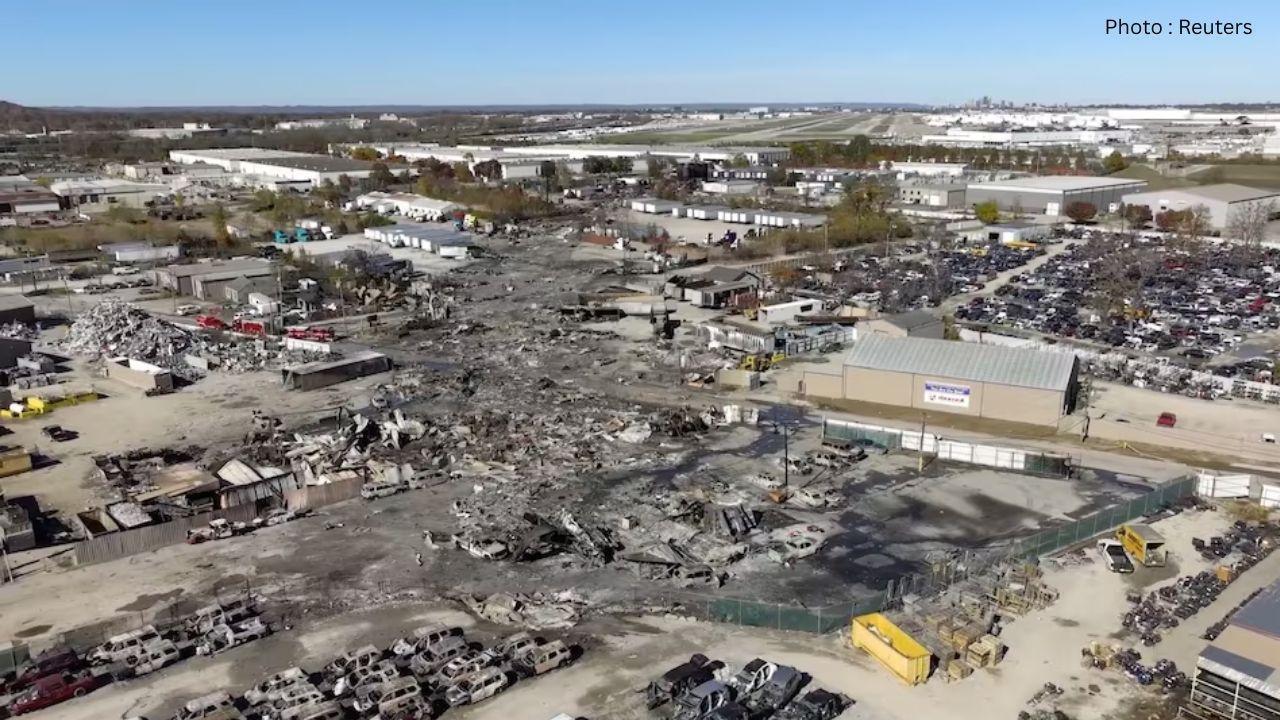
The crash happened in November near a runway at Muhammad Ali International Airport in Louisville, Kentucky. The UPS MD-11 cargo jet went down in a fiery accident that killed 15 people, including three crew members. Following the crash, aviation authorities grounded the MD-11 cargo aircraft model as a safety measure.
According to the U.S. National Transportation Safety Board, investigators found fatigue cracks in a key support structure on the aircraft. The damaged part was located on the left pylon, which connects the engine to the wing. The specific component, known as the bearing race, plays a vital role in holding the engine securely in place during flight.
What has alarmed investigators is that this exact part had been mentioned in a Boeing service letter issued back in 2011. That letter noted that the bearing race had failed four times across three different aircraft. Boeing advised visual inspections of the part but did not classify the issue as a serious flight safety risk at the time. The company said the part was normally inspected every five years.
The NTSB now says the cracks found on the UPS aircraft show clear signs of metal fatigue. Fatigue cracks form slowly over time due to repeated stress, especially in parts that carry heavy loads, such as engine supports. If these cracks are not detected early, they can grow and lead to sudden failure.
Air safety expert Anthony Brickhouse said the Boeing notice had already identified fatigue as a concern. He warned that when fatigue is not properly addressed, it can turn into a direct threat to flight safety. His comments underline a growing debate about whether inspection schedules were strong enough to catch such damage before tragedy struck.
The investigation also revealed new details about the final moments of the flight. The NTSB said the plane’s first engine caught fire, while the second engine showed unusual thrust behavior. The MD-11 is a three-engine aircraft, and under normal conditions, it should still be able to climb even if one engine fails. This has led investigators to look closely at whether debris may have been sucked into the engines or whether the damaged structure affected engine performance.
Boeing has said it is cooperating fully with the investigation but has not commented directly on the 2011 service letter. The Federal Aviation Administration also declined to comment. Investigators are now reviewing maintenance records, inspection practices, and past failure reports to understand whether earlier action could have prevented the crash.
The UPS crash has once again highlighted the importance of strict safety checks in aviation, especially for older aircraft still in active service. Cargo planes often fly at night and carry heavy loads, placing extra stress on critical parts. Even small cracks, if overlooked, can grow into deadly failures.
As the investigation continues, families of the victims and the aviation industry are waiting for answers. The findings may lead to changes in inspection rules, maintenance schedules, and how manufacturers classify potential risks. For now, the case stands as a painful reminder that warnings left unaddressed can have devastating consequences in the skies.
#trending #latest #UPSCrash #AviationSafety #PlaneCrashInvestigation #Boeing #NTSB #AirCargo #FlightSafety #BreakingNews



Advances in Aerospace Technology and Commercial Aviation Recovery
Insights into breakthrough aerospace technologies and commercial aviation’s recovery amid 2025 chall

Defense Modernization and Strategic Spending Trends
Explore key trends in global defense modernization and strategic military spending shaping 2025 secu

Tens of Thousands Protest in Serbia on Anniversary of Deadly Roof Collapse
Tens of thousands in Novi Sad mark a year since a deadly station roof collapse that killed 16, prote

Canada PM Carney Apologizes to Trump Over Controversial Reagan Anti-Tariff Ad
Canadian PM Mark Carney apologized to President Trump over an Ontario anti-tariff ad quoting Reagan,

The ad that stirred a hornets nest, and made Canadian PM Carney say sorry to Trump
Canadian PM Mark Carney apologizes to US President Trump after a tariff-related ad causes diplomatic

Bengaluru-Mumbai Superfast Train Approved After 30-Year Wait
Railways approves new superfast train connecting Bengaluru and Mumbai, ending a 30-year demand, easi




