Post by : Saif
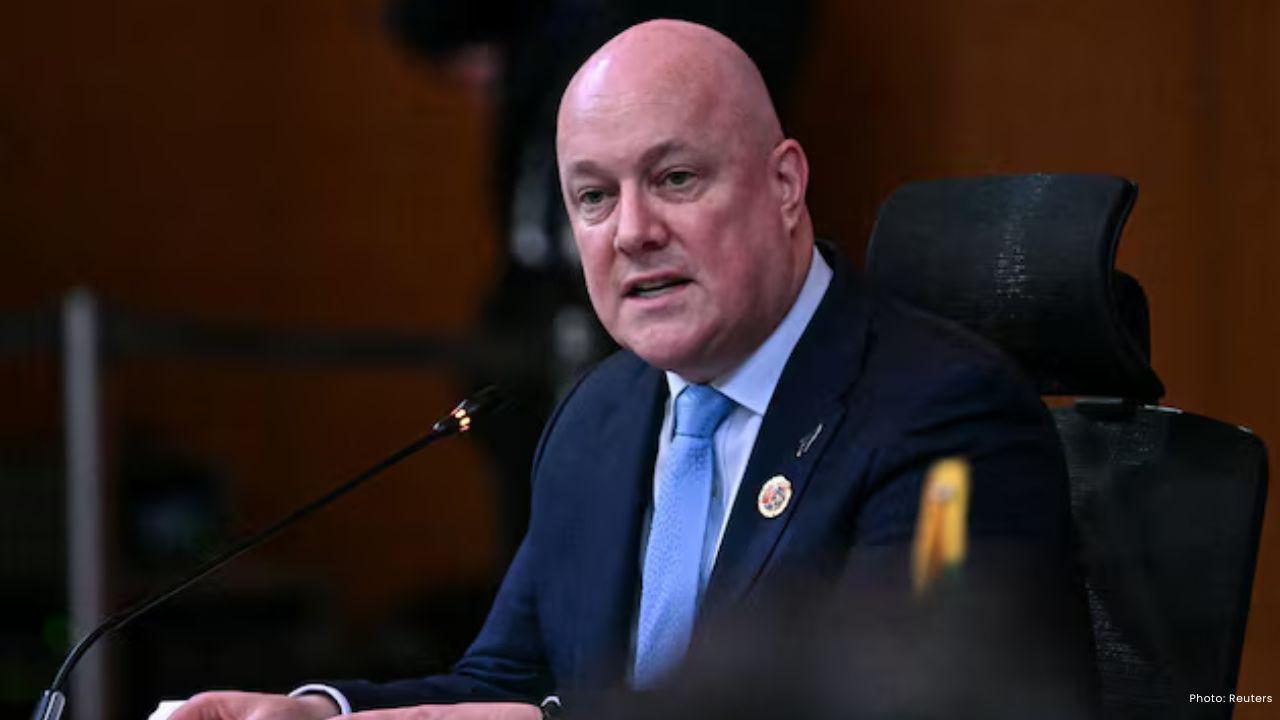
New Zealand Prime Minister Christopher Luxon has announced that the country will go to the polls on November 7, officially launching his campaign to remain in office. By calling the election, Luxon has asked voters to choose continuity and trust his government’s plan to deliver economic growth at a time of global uncertainty.
Luxon heads a centre-right coalition government made up of the National Party, New Zealand First, and the ACT Party. The coalition has been in power since the 2023 election. Speaking at a news conference in Wellington, Luxon said New Zealanders must decide who can offer strong and stable leadership in a world facing economic pressure and political tension.
The prime minister said his government is focused on rebuilding the economy through responsible spending, lower taxes, and creating better opportunities for families. He warned that changing direction now could undo progress already made. While Luxon said he is open to working again with his current coalition partners after the election, he stressed that he wants a strong vote for the National Party.
Over the past year, Luxon has faced growing criticism as the economy weakened and unemployment rose above 5%. Many households are struggling with high living costs, and this has hurt his public support. He has also drawn criticism for policy decisions such as shutting down a separate health authority for Māori and limiting funding increases for frontline workers.
Opinion polls suggest the election will be very close. Neither Luxon’s coalition nor the opposition Labour Party appears to have enough support to govern alone. Labour is led by former Prime Minister Chris Hipkins, who has accused the current government of pushing cuts and division. Hipkins says voters should choose a new government with a more positive and forward-looking vision for the country.
Coalition politics are common in New Zealand. Since the country adopted its current voting system in 1996, governments have usually depended on agreements between multiple parties. Smaller parties are expected to play a key role again after the November vote.
The election will also be held under new voting rules passed last year. These changes stop people from registering to vote on election day and prevent prisoners from voting while serving their sentences. Critics argue these measures could reduce voter turnout and affect certain groups more than others.
For most voters, the economy remains the top issue. Although inflation has eased, everyday costs such as housing, local taxes, and basic services remain high. House prices are still far below their peak in 2021, and economic growth has been slow over the past two years. The government is hoping that recent signs of improvement will convince voters that recovery is on track.
International events may also shape voter thinking. New Zealand relies heavily on trade, making it sensitive to global political and economic changes. Analysts say developments in U.S. politics and wider global tensions could affect New Zealand’s economy in the months ahead.
As the campaign begins, voters face a clear choice. They must decide whether to stick with Luxon’s promise of steady leadership and economic repair or opt for a change in government. With the race expected to be tight, the November 7 election is likely to be one of New Zealand’s most closely watched in years.
#trending #latest #NewZealandPolitics #ChristopherLuxon #NZElection2026 #GeneralElection #EconomicStability #NationalParty #LabourParty



Advances in Aerospace Technology and Commercial Aviation Recovery
Insights into breakthrough aerospace technologies and commercial aviation’s recovery amid 2025 chall

Defense Modernization and Strategic Spending Trends
Explore key trends in global defense modernization and strategic military spending shaping 2025 secu

Tens of Thousands Protest in Serbia on Anniversary of Deadly Roof Collapse
Tens of thousands in Novi Sad mark a year since a deadly station roof collapse that killed 16, prote

Canada PM Carney Apologizes to Trump Over Controversial Reagan Anti-Tariff Ad
Canadian PM Mark Carney apologized to President Trump over an Ontario anti-tariff ad quoting Reagan,

The ad that stirred a hornets nest, and made Canadian PM Carney say sorry to Trump
Canadian PM Mark Carney apologizes to US President Trump after a tariff-related ad causes diplomatic

Bengaluru-Mumbai Superfast Train Approved After 30-Year Wait
Railways approves new superfast train connecting Bengaluru and Mumbai, ending a 30-year demand, easi




