Post by : Amit
In a bold move that could redefine the future of urban commuting, Transport for London (TfL) has begun piloting biometric fare gates powered by facial recognition technology at several key Underground stations. The trial aims to explore whether secure, opt-in facial scanning can eventually replace contactless cards and smartphones as the primary method for accessing public transport.
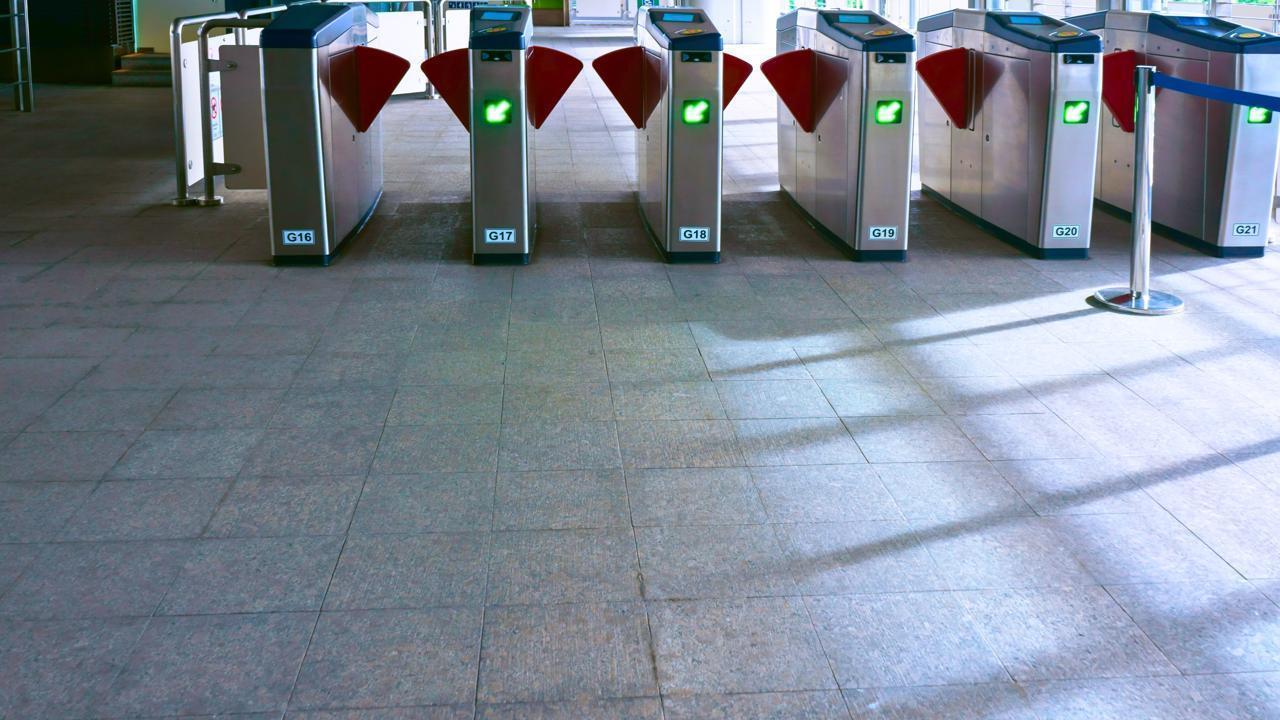
The trial, currently underway at select high-traffic locations such as Canary Wharf, Oxford Circus, and King’s Cross St Pancras, uses cutting-edge AI-driven facial recognition software to identify registered passengers as they approach ticket gates. Commuters who opt into the pilot program can simply walk through the barrier without touching anything, as the system verifies their identity in real time and automatically deducts the fare from a linked account.
TfL officials have described the technology as a major step toward creating a "frictionless travel experience", one that could enhance passenger flow, reduce physical contact in public spaces, and increase fare gate efficiency during peak hours.
The move places London at the forefront of biometric transit innovation, a trend gaining momentum in Asia and the Middle East, where metro systems in cities like Dubai, Singapore, and Shanghai are already investing in similar facial-recognition infrastructure. TfL's trial is being closely watched by global transit authorities eager to see whether biometric fare collection can scale in a complex, high-density network like London’s.
While facial recognition has sparked debate over privacy and surveillance, TfL has been careful to emphasize that participation in the trial is entirely voluntary, with robust safeguards in place. All biometric data is encrypted and stored securely, with no information shared beyond the fare processing system. The agency has also engaged with privacy watchdogs and civil liberties groups to ensure the pilot aligns with UK data protection laws.
Since the 2012 rollout of Oyster and contactless card technology, London has been a pioneer in digital fare systems. The biometric gate trial is a natural next step in TfL’s smart mobility evolution, offering the potential to speed up gate flow, reduce bottlenecks, and allow more seamless multi-modal travel across Underground, Overground, and even bus services in the future.
TfL’s Chief Innovation Officer, Marianne Griffith, explained, “This trial isn’t just about embracing innovation for innovation’s sake. It’s about ensuring the network evolves with the needs of Londoners—faster, safer, and smarter. If successful, we could see facial recognition become an integral part of everyday travel, alongside or in place of physical cards.”
As urban transport systems worldwide look for ways to modernize and optimize passenger experiences, London's biometric fare gate pilot could serve as a blueprint for large-scale implementation. Industry analysts note that if successful, it could spark a wave of investment in biometric technology across public transport systems in major cities from Tokyo to Riyadh.
TfL plans to run the pilot over several months, gathering user feedback, technical data, and operational metrics before making a final decision on wider deployment. A public consultation is also expected, with further transparency reports promised to address privacy concerns.
Whether it becomes the new norm or not, London’s latest transit experiment underscores one thing clearly: the future of commuting may not be in your wallet, but in your face.
Biometric Fare Gates



Advances in Aerospace Technology and Commercial Aviation Recovery
Insights into breakthrough aerospace technologies and commercial aviation’s recovery amid 2025 chall

Defense Modernization and Strategic Spending Trends
Explore key trends in global defense modernization and strategic military spending shaping 2025 secu

Tens of Thousands Protest in Serbia on Anniversary of Deadly Roof Collapse
Tens of thousands in Novi Sad mark a year since a deadly station roof collapse that killed 16, prote

Canada PM Carney Apologizes to Trump Over Controversial Reagan Anti-Tariff Ad
Canadian PM Mark Carney apologized to President Trump over an Ontario anti-tariff ad quoting Reagan,

The ad that stirred a hornets nest, and made Canadian PM Carney say sorry to Trump
Canadian PM Mark Carney apologizes to US President Trump after a tariff-related ad causes diplomatic

Bengaluru-Mumbai Superfast Train Approved After 30-Year Wait
Railways approves new superfast train connecting Bengaluru and Mumbai, ending a 30-year demand, easi




