Post by : Saif
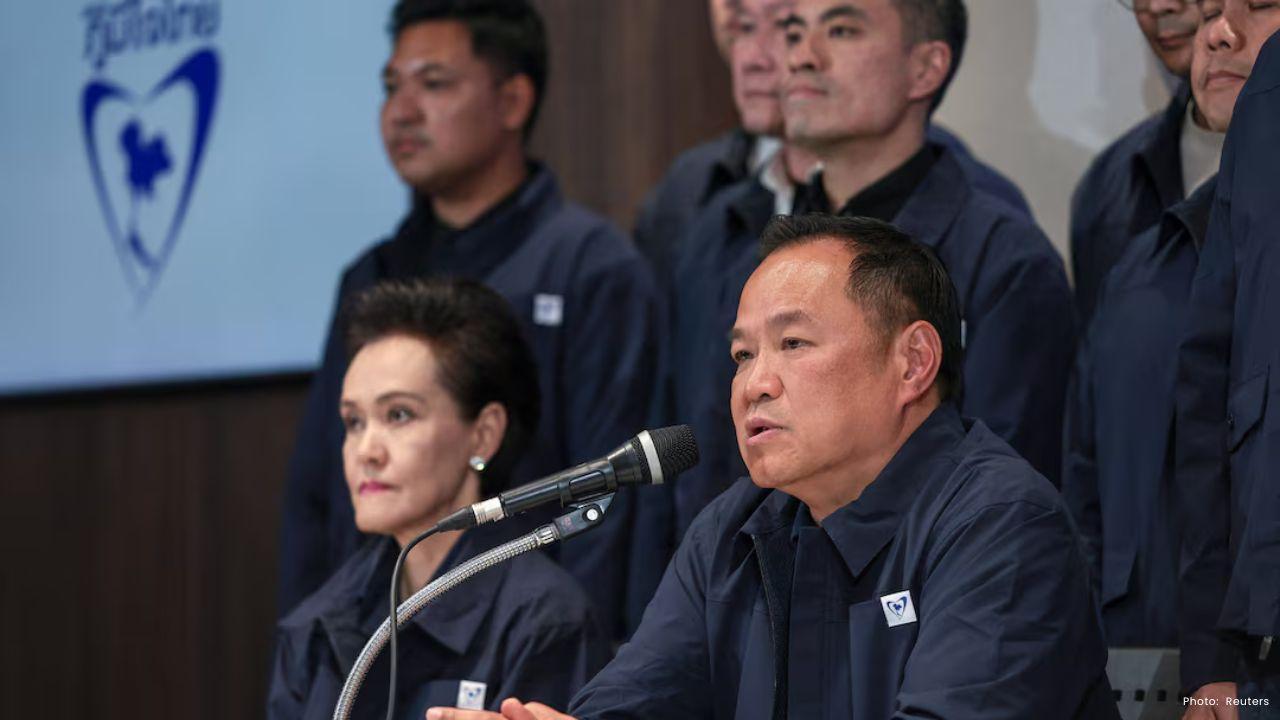
Thailand’s latest general election has changed the country’s political map and opened the door to a new phase of coalition negotiations. The Bhumjaithai Party, led by caretaker Prime Minister Anutin Charnvirakul, won far more seats than many experts expected. However, even with this strong performance, the party does not have enough seats to govern alone. What happens next will depend on coalition talks, political compromise, and the public demand for constitutional reform.
With most votes counted, Bhumjaithai secured 192 seats out of 500 in parliament. This puts it well ahead of its closest rivals. The left-leaning People’s Party won 117 seats, while the Pheu Thai Party took 74. Several smaller parties shared the remaining seats. Under Thailand’s system, final party-list numbers may still shift slightly, but the main result is already clear: Bhumjaithai is now the largest political force in parliament.
This outcome surprised many observers. Pre-election opinion polls suggested that the People’s Party might come out on top. Instead, Bhumjaithai gained strong support across many regions. Analysts say the party managed to gather much of the conservative and nationalist vote. Recent tensions along Thailand’s border with Cambodia also raised patriotic feelings among some voters, which may have helped the ruling party.
Yet winning the most seats is not the same as winning full power. To control parliament and form a stable government, a party or coalition needs at least 251 seats. Bhumjaithai is short of that number. This means coalition talks are not just important — they are necessary.
Prime Minister Anutin has said he will wait for the final certified results before making formal moves. Each party must first hold internal meetings to decide its position. Only after that will serious coalition discussions begin. Anutin has also signaled that if he returns as prime minister, he would likely keep key ministers in finance, foreign affairs, and commerce in their current roles. This suggests he wants policy continuity and a message of stability to markets and foreign partners.
However, building a coalition will not be easy. The People’s Party has already announced that it will not join a government led by Anutin. Its leader has made this position clear. At the same time, the People’s Party has also said it will not try to build a rival coalition of its own. This removes one path to a competing government but also reduces the number of options for alliance-building.
That leaves Bhumjaithai looking toward mid-sized and smaller parties. These groups may become “kingmakers,” meaning their support could decide who governs. In such situations, negotiations often involve policy promises, cabinet posts, and regional development plans. While this is normal in coalition politics, it can also lead to weak alliances if partners do not share common goals.
Another major message from the election is the public’s support for constitutional change. Alongside voting for parties, citizens also backed a proposal to replace the current constitution, which was written after the 2014 military coup. Nearly two-thirds of voters supported rewriting it. Critics have long argued that the present charter gives too much power to unelected bodies, especially the senate, and limits the strength of elected governments.
Changing the constitution will be a long process. It is expected to take at least two years and will require more referendums. First, voters must approve the drafting process itself. Later, they must approve the final text. This means constitutional reform will likely stretch across the life of the next government and could become one of its biggest tests.
The election also shows a deeper shift inside conservative politics. In past years, conservative votes were spread among several parties, often linked to military or establishment groups. This time, Bhumjaithai appears to have gathered much of that support under one banner. If this trend continues, the party could become the main home of conservative voters in future elections.
For Pheu Thai, once the dominant force connected to the Shinawatra political family, the result is a setback. Losing many seats suggests that its traditional voter base is no longer guaranteed. The party will now need to rethink its message, leadership style, and campaign strategy if it wants to recover.
From a governance point of view, Thailand now stands at a crossroads. Voters have chosen a leading party from the conservative side, but they have also voted for structural political reform. This creates a mixed signal: support for order and stability on one hand, and desire for systemic change on the other. The next government will need to balance both.
Investors and foreign governments will also be watching closely. A smooth coalition deal and a stable cabinet would likely calm markets. But if talks drag on or produce a fragile alliance, uncertainty could grow. Policy delays, budget disputes, or internal conflicts could slow economic decisions.
For ordinary citizens, the key issues remain practical: cost of living, jobs, healthcare, education, and local development. Election wins and coalition math matter most when they lead to real improvements in daily life. Any new government that fails to deliver on these bread-and-butter issues may quickly lose public trust.
In the coming days, attention will turn from vote counting to deal making. Meetings behind closed doors may shape the country’s next leadership team. The numbers are important, but so are relationships and political skill. Thailand’s democracy is once again entering a negotiation phase — one where compromise will decide the final outcome.
#trending #latest #ThailandElection #Bhumjaithai #CoalitionPolitics #ConstitutionReform #SoutheastAsiaPolitics #Democracy #armustnews



Advances in Aerospace Technology and Commercial Aviation Recovery
Insights into breakthrough aerospace technologies and commercial aviation’s recovery amid 2025 chall

Defense Modernization and Strategic Spending Trends
Explore key trends in global defense modernization and strategic military spending shaping 2025 secu

Tens of Thousands Protest in Serbia on Anniversary of Deadly Roof Collapse
Tens of thousands in Novi Sad mark a year since a deadly station roof collapse that killed 16, prote

Canada PM Carney Apologizes to Trump Over Controversial Reagan Anti-Tariff Ad
Canadian PM Mark Carney apologized to President Trump over an Ontario anti-tariff ad quoting Reagan,

The ad that stirred a hornets nest, and made Canadian PM Carney say sorry to Trump
Canadian PM Mark Carney apologizes to US President Trump after a tariff-related ad causes diplomatic

Bengaluru-Mumbai Superfast Train Approved After 30-Year Wait
Railways approves new superfast train connecting Bengaluru and Mumbai, ending a 30-year demand, easi




