Post by : Saif
Boeing says it is seeing strong improvements in the quality of parts coming from its airplane supply chain. Company leaders report that problems from suppliers have dropped sharply over the past two years. This change comes after tighter inspections, closer supervision, and Boeing’s decision to bring a major supplier back under its control.
The update was shared by a senior Boeing executive at a supplier conference near Seattle. He explained that the company now spends far less time fixing mistakes in supplied parts than it did before. According to him, the hours spent repairing supply chain defects have fallen by about 40 percent compared to 2024 levels. That is a large drop for a company that builds complex aircraft with millions of parts.
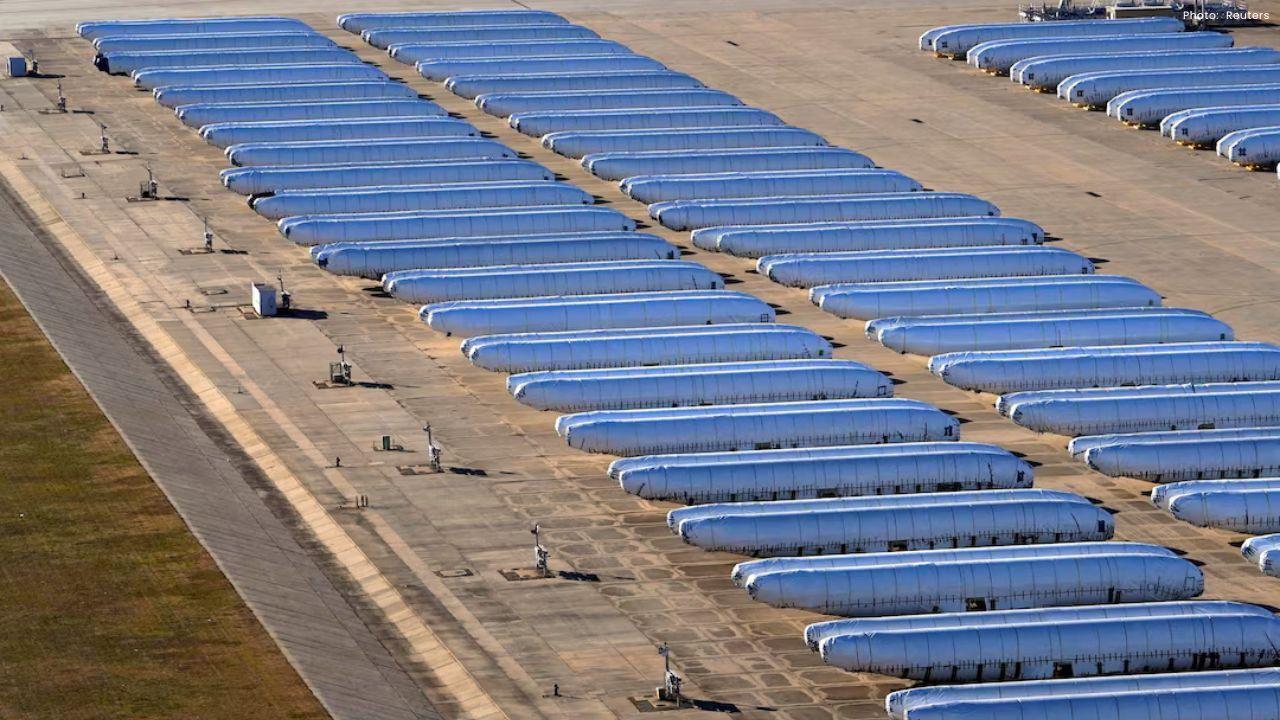
One of the biggest changes involves Spirit AeroSystems, a key supplier that makes fuselages for the Boeing 737 MAX and structures for other aircraft models. A fuselage is the main body of the airplane, so quality at this stage is critical. Boeing increased its inspection and quality checks at Spirit facilities in 2024 after serious safety concerns were raised.
Defects from Spirit AeroSystems have now fallen by about 60 percent, according to Boeing’s supply chain leadership. This is a major improvement and shows that tighter controls and better processes can make a real difference.
The focus on quality followed a troubling incident in early 2024 involving a Boeing 737 MAX aircraft operated by Alaska Airlines. A door plug panel blew out during a flight. Investigators linked the part to Spirit AeroSystems, which built and installed that section. After the incident, the U.S. Federal Aviation Administration placed production limits on Boeing and increased oversight. The event damaged public trust and increased pressure on Boeing to improve safety and quality across its system.
Since then, Boeing has worked to rebuild confidence step by step. One major move was buying back Spirit AeroSystems in December. Spirit had originally been part of Boeing but was spun off in 2005 when Boeing sold parts of its aerostructures business to outside investors. By bringing Spirit back, Boeing now has more direct control over how key aircraft structures are built and checked.
Company leaders believe this decision will help prevent gaps in communication and quality control. When a supplier is outside the company, it can be harder to enforce the same standards and culture across teams. With Spirit back inside the group, Boeing can align processes, training, and inspections more closely.
The executive speaking at the conference described the Spirit buyback as one of the most important and positive events in his career. His comment shows how strongly Boeing management feels about tighter integration with suppliers.
The aerospace supply chain is large and complex. A modern jet depends on thousands of suppliers across many countries. Even a small defect in one part can delay production or create safety risks. After the pandemic, many suppliers struggled with labor shortages, financial stress, and slower output. These problems hurt aircraft production and led to delays for airlines waiting for new planes.
Boeing’s recent progress suggests that steady oversight and direct involvement can improve results. However, improvements must continue over time. In aviation, safety is not something that can be fixed once and then ignored. It requires constant checking, reporting, and correction.
From an editorial point of view, Boeing’s reported gains are encouraging but should be watched carefully. The company is still under close review by regulators and customers. Real success will be measured not just by lower defect numbers but by safe flights, stable production rates, and consistent performance across all suppliers.
The lesson is simple: in aircraft manufacturing, quality control is not optional. It is the foundation of safety and trust. Stronger supplier management, better inspections, and shared responsibility across the supply chain are the only way forward.
If Boeing continues on this path, the industry may see more stable deliveries and stronger confidence in the years ahead. But the company must keep its focus sharp, because in aviation, even small mistakes can have big consequences.
#trending #latest #Boeing #AviationNews #SupplyChain #AircraftSafety #ManufacturingQuality #737MAX #AerospaceIndustry #armustnews



Advances in Aerospace Technology and Commercial Aviation Recovery
Insights into breakthrough aerospace technologies and commercial aviation’s recovery amid 2025 chall

Defense Modernization and Strategic Spending Trends
Explore key trends in global defense modernization and strategic military spending shaping 2025 secu

Tens of Thousands Protest in Serbia on Anniversary of Deadly Roof Collapse
Tens of thousands in Novi Sad mark a year since a deadly station roof collapse that killed 16, prote

Canada PM Carney Apologizes to Trump Over Controversial Reagan Anti-Tariff Ad
Canadian PM Mark Carney apologized to President Trump over an Ontario anti-tariff ad quoting Reagan,

The ad that stirred a hornets nest, and made Canadian PM Carney say sorry to Trump
Canadian PM Mark Carney apologizes to US President Trump after a tariff-related ad causes diplomatic

Bengaluru-Mumbai Superfast Train Approved After 30-Year Wait
Railways approves new superfast train connecting Bengaluru and Mumbai, ending a 30-year demand, easi




