Post by : Saif
A recent U.S. Army deployment of a laser-based counter-drone system near El Paso International Airport has sparked fresh debate about how advanced military technology should be tested near civilian airspace. The incident led to a seven-hour shutdown of flights and showed how new defense tools can create unexpected risks when used close to busy airports.
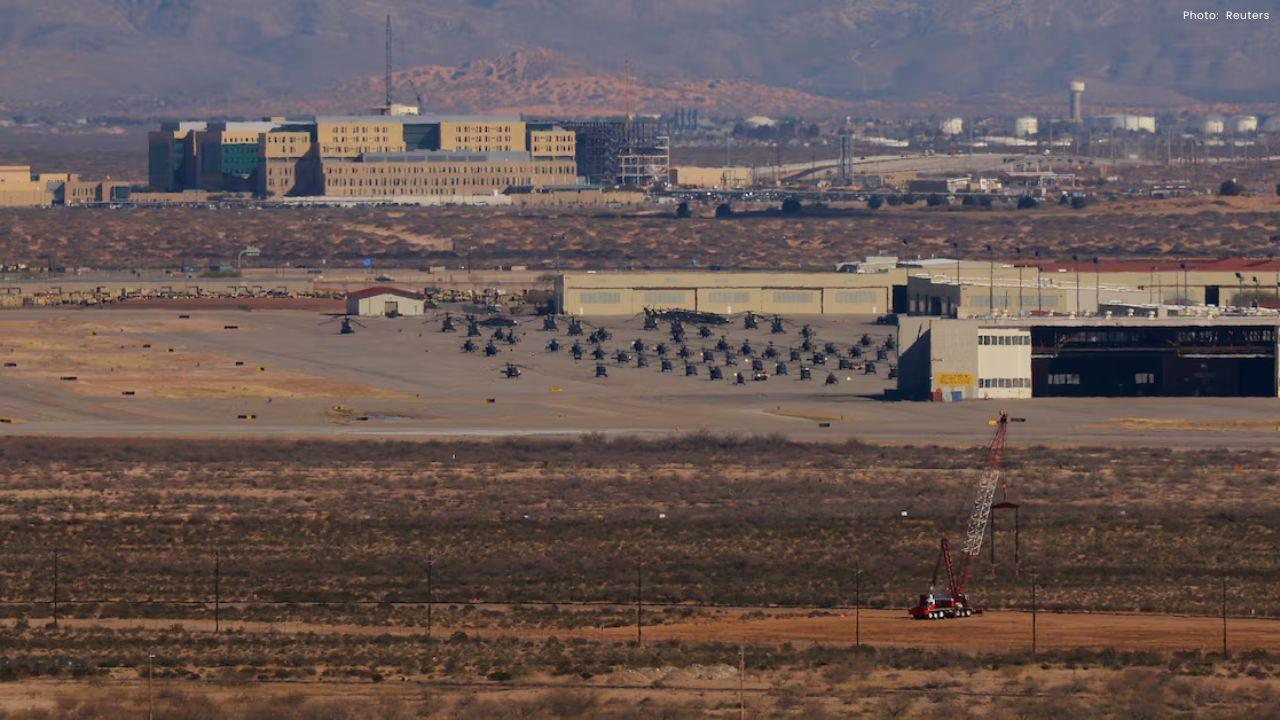
According to officials briefed on the matter, the Army deployed a system known as the LOCUST laser counter-drone weapon near Fort Bliss, which sits next to the El Paso airport. The system is made by AeroVironment Inc. and uses a high-energy laser to disable or destroy drones. It is designed to stop flying threats at a much lower cost than using missiles.
The Federal Aviation Administration temporarily halted air traffic after raising safety concerns. Flights in and out of El Paso were stopped for more than seven hours. Later, the FAA lifted the shutdown and said there was no ongoing threat to commercial aviation. Still, the long pause affected travelers and airlines and drew attention to how military testing is coordinated with civilian flight operations.
Laser counter-drone systems are part of a new generation of defense technology. Instead of firing bullets or missiles, they use focused energy beams to damage or disable targets. Supporters say these systems are faster, cheaper per shot, and better suited for stopping small drones. Drones are becoming more common in border areas, around large events, and near sensitive facilities.
The Pentagon has reported more than 1,000 drone sightings each month along the U.S.–Mexico border. Officials worry that some drones are used for smuggling, spying, or even attacks on infrastructure. Because of this, the military is racing to build better defenses that can react quickly and operate at lower cost.
The LOCUST system is rated at about 20 kilowatts and is part of a newer group of directed-energy weapons. The Army received early units in 2024 and tested them at proving grounds before training units to use them. The deployment near El Paso appears to be one of the first real-world uses near an active airport zone.
But this event also highlights a serious policy issue. Civilian airspace is tightly controlled for safety. Even small risks — such as interference, glare, or system malfunction — can have major results when passenger aircraft are involved. When advanced weapons are tested or deployed near airports, the margin for error becomes very small.
Good coordination between the military and aviation authorities is essential. In this case, the FAA acted cautiously and shut down flights. That decision likely reduced risk, but it also shows that planning and communication may not have been strong enough beforehand. Ideally, such deployments should be scheduled, mapped, and reviewed in advance with clear safety buffers.
There is also a transparency question. When new defense systems are used near public infrastructure, the public deserves timely and clear information. Silence or delayed answers can create fear and confusion. Even when details must remain classified, general safety explanations should be shared quickly.
The United States is preparing for several large public events in the coming months, including major sports tournaments and national celebrations. Security planners expect drone threats to grow. That makes counter-drone tools more important than ever. However, speed should not replace safety rules.
Strong defense and safe skies must go together. Testing powerful new tools near civilian airports should follow strict procedures, open coordination, and careful risk checks. New technology can protect people — but only when it is used with discipline and oversight.
#trending #latest #CounterDrone #USArmy #LaserDefense #AviationSafety #ElPaso #MilitaryTechnology #DroneThreat #AirspaceSecurity #armustnews



Advances in Aerospace Technology and Commercial Aviation Recovery
Insights into breakthrough aerospace technologies and commercial aviation’s recovery amid 2025 chall

Defense Modernization and Strategic Spending Trends
Explore key trends in global defense modernization and strategic military spending shaping 2025 secu

Tens of Thousands Protest in Serbia on Anniversary of Deadly Roof Collapse
Tens of thousands in Novi Sad mark a year since a deadly station roof collapse that killed 16, prote

Canada PM Carney Apologizes to Trump Over Controversial Reagan Anti-Tariff Ad
Canadian PM Mark Carney apologized to President Trump over an Ontario anti-tariff ad quoting Reagan,

The ad that stirred a hornets nest, and made Canadian PM Carney say sorry to Trump
Canadian PM Mark Carney apologizes to US President Trump after a tariff-related ad causes diplomatic

Bengaluru-Mumbai Superfast Train Approved After 30-Year Wait
Railways approves new superfast train connecting Bengaluru and Mumbai, ending a 30-year demand, easi




