Post by : Saif
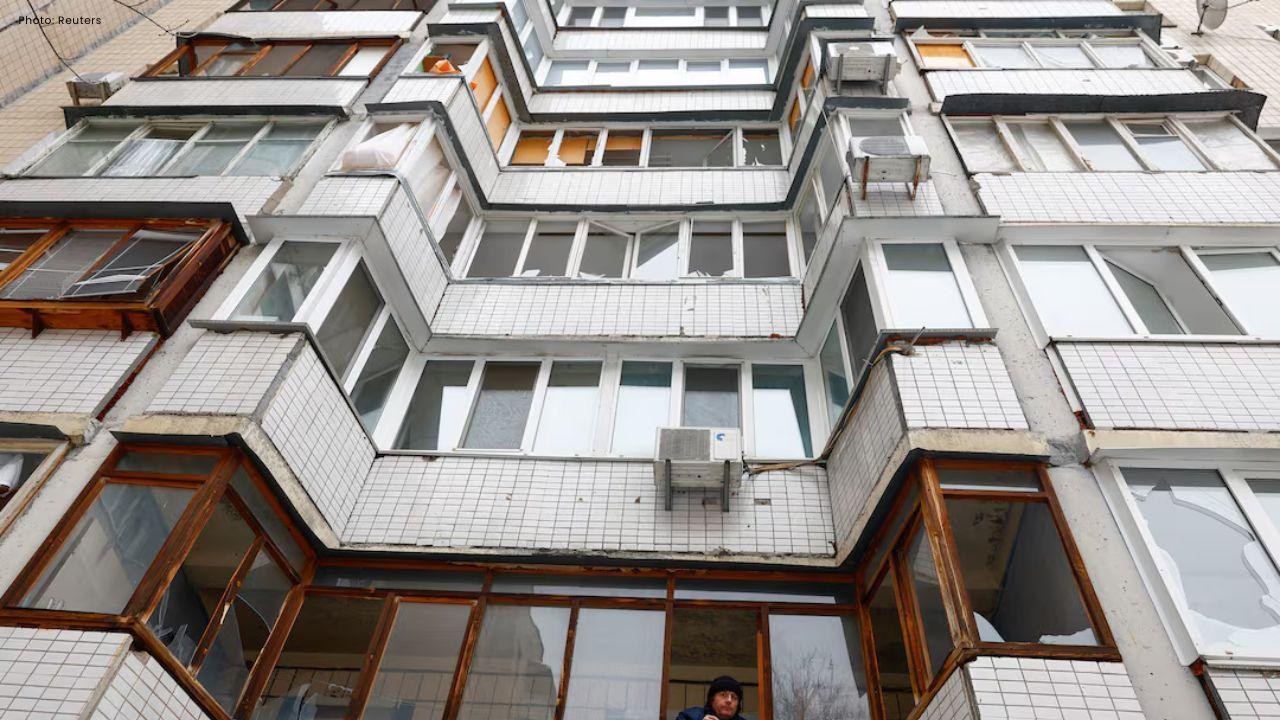
A new wave of Russian drone and missile strikes has again hit Ukraine’s cities and energy systems, cutting power, heat, and water for large numbers of civilians. The attacks came overnight and affected major urban areas including Kyiv, Odesa, and Dnipro. While air defenses stopped many incoming weapons, enough got through to damage buildings and vital infrastructure.
These strikes show how the war is not only fought on the battlefield. It is also being fought through power grids, heating plants, and city services that millions of people depend on every day. When these systems are hit, the people who suffer most are not soldiers, but families at home.
City officials in Kyiv said thousands of apartment buildings lost heating after the latest strikes damaged supply networks. Energy companies reported that over 100,000 households were without electricity. In winter conditions, this is more than an inconvenience. It can quickly turn into a health risk, especially for children, the sick, and older residents.
In Odesa, power failures also disrupted water supply. Authorities said hundreds of thousands of people were left without running water for a period of time. Heating systems in many buildings also stopped working. In Dnipro, regional leaders reported that several civilians were injured, including very young children, after missile and drone impacts damaged residential areas.
Emergency crews moved quickly to control fires and begin repairs. However, fixing damaged energy systems is complex. It often requires special equipment and safe conditions, which are hard to guarantee during continued attacks. Workers must sometimes repair lines while knowing another strike could follow.
Russia has long argued that it targets military and strategic facilities. Ukrainian officials say energy systems are being deliberately hit to weaken daily life and pressure the country from within. No matter the intent, the result is clear: civilians are left in cold and dark homes.
Energy infrastructure is one of the most sensitive parts of modern life. Electricity supports hospitals, water pumps, phone networks, traffic systems, and food storage. When power goes down, many other services fail at the same time. A single successful strike can create problems across an entire city.
These attacks also arrive at a time when diplomatic efforts are trying to reduce the conflict. There have been renewed pushes for talks and possible settlement plans. Ukrainian leaders say that large strikes on cities damage the chance of trust and make negotiations harder. When civilians suffer, public anger grows, and leaders face more pressure not to compromise.
War experts say this pattern has become common in long conflicts. Each side tries to gain leverage before talks. That often leads to more, not fewer, attacks. The risk is that escalation replaces dialogue.
There is also a wider global concern. Around the world, wars are increasingly aimed at systems that support civilian life. Power grids and water networks are now seen as strategic targets. This raises serious moral and legal questions. Many international groups argue that basic civilian infrastructure should be better protected under global rules.
Ukraine’s repair teams continue to work under pressure, restoring lines and restarting services where possible. Their work keeps cities running, even after repeated damage. But temporary repairs are not enough to solve the deeper problem. As long as strikes continue, outages will return.
For ordinary Ukrainians, the reality is simple and harsh. Another winter day means checking if the lights work, if the radiators are warm, and if water still flows from the tap. This daily uncertainty is now part of life in a war that shows no clear end yet.
#trending #latest #Ukraine #RussiaUkraineWar #AirStrikes #EnergyGrid #WinterCrisis #CivilianSafety #PowerCuts #Kyiv #Odesa #Dnipro #armustnews



Advances in Aerospace Technology and Commercial Aviation Recovery
Insights into breakthrough aerospace technologies and commercial aviation’s recovery amid 2025 chall

Defense Modernization and Strategic Spending Trends
Explore key trends in global defense modernization and strategic military spending shaping 2025 secu

Tens of Thousands Protest in Serbia on Anniversary of Deadly Roof Collapse
Tens of thousands in Novi Sad mark a year since a deadly station roof collapse that killed 16, prote

Canada PM Carney Apologizes to Trump Over Controversial Reagan Anti-Tariff Ad
Canadian PM Mark Carney apologized to President Trump over an Ontario anti-tariff ad quoting Reagan,

The ad that stirred a hornets nest, and made Canadian PM Carney say sorry to Trump
Canadian PM Mark Carney apologizes to US President Trump after a tariff-related ad causes diplomatic

Bengaluru-Mumbai Superfast Train Approved After 30-Year Wait
Railways approves new superfast train connecting Bengaluru and Mumbai, ending a 30-year demand, easi




