Post by : Saif
The North Atlantic Treaty Organization, better known as NATO, is facing a new debate about how its members should share responsibility for security and defense. A senior U.S. defense official has said the alliance should move away from dependency and grow into a stronger partnership where all members carry more equal weight.
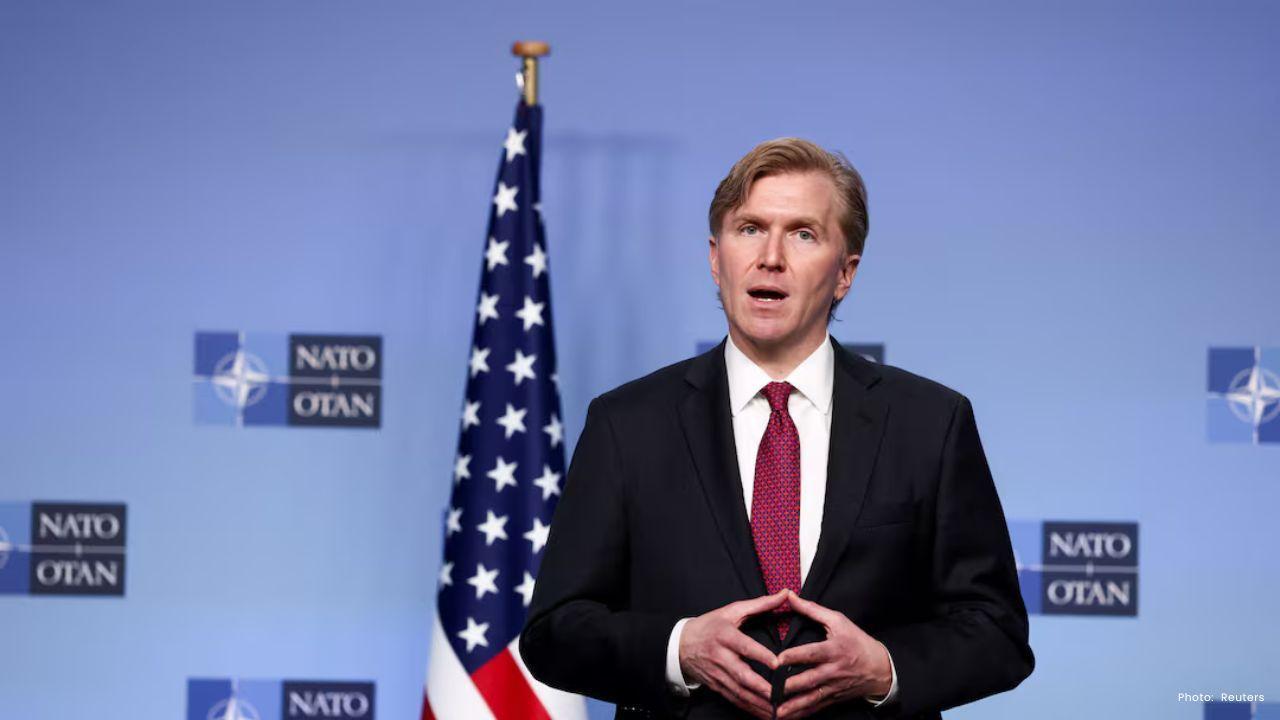
Speaking before a meeting of NATO defense ministers in Brussels, U.S. Under Secretary of Defense for Policy Elbridge Colby said that higher military spending by European countries and Canada can help create a more balanced alliance. His message was simple: NATO works best when members act as partners, not when some depend too heavily on others.
NATO was created as a collective defense alliance. Its core idea is that an attack on one member is treated as an attack on all. Over the years, the United States has often provided the largest share of military power, funding, and equipment within the group. Many American leaders, from different political parties, have argued that other members should invest more in their own defense.
Colby said that in the past year there has been a real shift. According to him, 2025 showed a serious commitment by European members to take the lead in NATO’s conventional defense. That means building stronger armies, improving equipment, and being more ready to respond to threats close to their region.
He described this change as a return to NATO’s original purpose. In its early years, NATO was designed as a joint effort where members worked side by side. Over time, critics have said the balance shifted too much toward U.S. leadership and support. The new comments suggest Washington wants to rebalance responsibilities without weakening the alliance.
The call for partnership instead of dependency is not about breaking NATO apart. Instead, it is about making it stronger and more durable. When more countries invest seriously in defense, planning and operations can be shared more fairly. This can also make decision-making smoother, because members feel more equally involved.
From an editorial point of view, this approach has both benefits and challenges. On the positive side, shared responsibility can build trust and confidence. If European and Canadian forces are better funded and prepared, NATO becomes less vulnerable if one country faces limits at home. It also spreads risk and reduces pressure on any single member.
At the same time, raising military spending is not easy for every country. Governments must balance defense budgets with public needs like health care, education, and infrastructure. Voters often question higher military costs, especially during times of economic stress. Leaders must explain clearly why defense investment matters and how it supports long-term stability.
Another important point is coordination. Spending more money alone is not enough. NATO members must also make sure their systems, training, and strategies work well together. Partnership means planning jointly, sharing intelligence, and running combined exercises so forces can act quickly and effectively when needed.
Colby also stressed the need to be practical and realistic. Modern security threats are complex. They include not only traditional military risks but also cyber attacks, space security, and hybrid warfare. A partnership-based NATO would require members to contribute in many ways, not just with soldiers and weapons.
The discussion about NATO’s future comes at a time when global tensions remain high in several regions. That makes alliance unity especially important. A more equal partnership model could help keep members engaged and committed for the long term.
In the end, NATO’s strength has always come from cooperation. Whether large or small, each member has a role. Moving from dependency toward partnership may be difficult, but it could also make the alliance more balanced, more prepared, and more resilient in the years ahead.
#trending #latest #NATO #DefensePolicy #Pentagon #GlobalSecurity #MilitarySpending #EuropeDefense #Allies #Partnership #armustnews



Advances in Aerospace Technology and Commercial Aviation Recovery
Insights into breakthrough aerospace technologies and commercial aviation’s recovery amid 2025 chall

Defense Modernization and Strategic Spending Trends
Explore key trends in global defense modernization and strategic military spending shaping 2025 secu

Tens of Thousands Protest in Serbia on Anniversary of Deadly Roof Collapse
Tens of thousands in Novi Sad mark a year since a deadly station roof collapse that killed 16, prote

Canada PM Carney Apologizes to Trump Over Controversial Reagan Anti-Tariff Ad
Canadian PM Mark Carney apologized to President Trump over an Ontario anti-tariff ad quoting Reagan,

The ad that stirred a hornets nest, and made Canadian PM Carney say sorry to Trump
Canadian PM Mark Carney apologizes to US President Trump after a tariff-related ad causes diplomatic

Bengaluru-Mumbai Superfast Train Approved After 30-Year Wait
Railways approves new superfast train connecting Bengaluru and Mumbai, ending a 30-year demand, easi




