Post by : Saif
Air safety depends on trust, timing, and clear communication. When any part of that system fails, even for a short time, the risks grow quickly. New details about U.S. government counter-drone testing in 2025 show how sensitive the aviation system really is. According to officials and sources, certain anti-drone tests interfered with flight operations near major airports, including Reagan Washington National Airport and El Paso International Airport.
These events did not lead to a major crash, but they did cause serious disruption. Some pilots received false warnings of nearby aircraft. Others had to cancel landings and circle back into the air. The incidents have now started a wider debate about how new defense technology should be tested near civilian airspace.
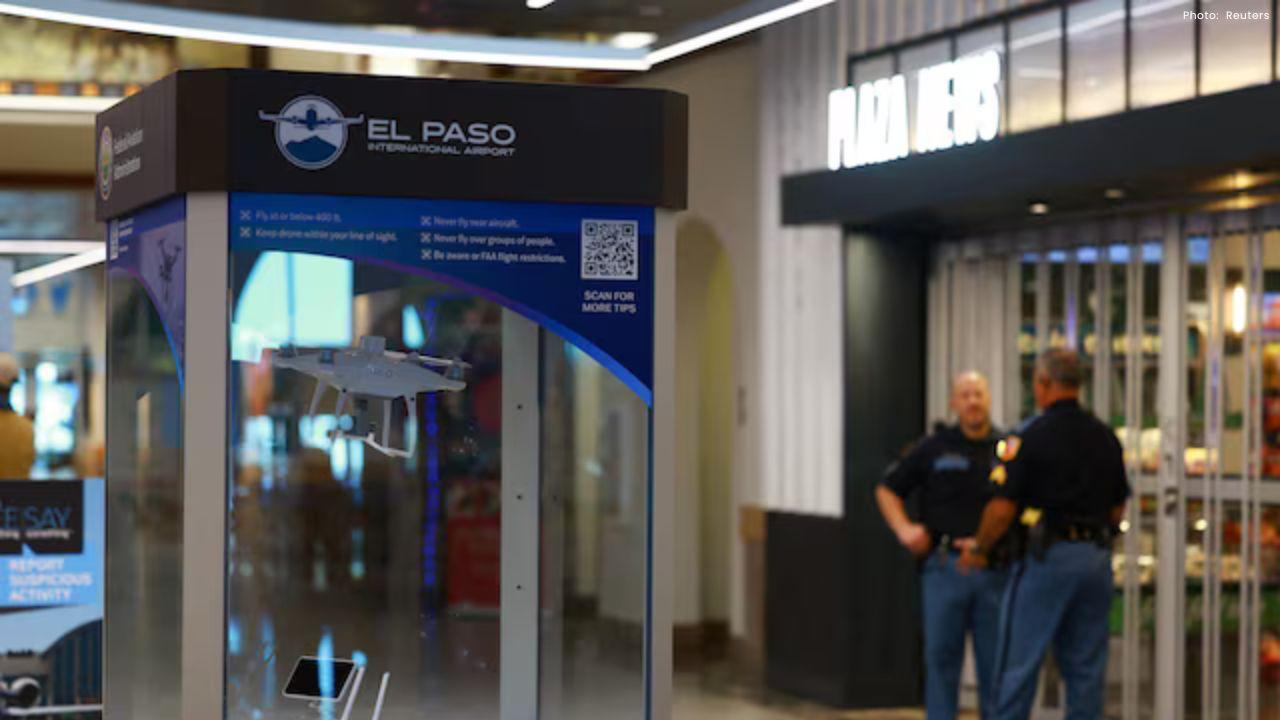
The Federal Aviation Administration (FAA) briefly closed the airspace around El Paso International Airport after safety concerns linked to testing at the nearby U.S. Army base, Fort Bliss. Sources said the testing involved a laser-based counter-drone system. Officials feared the system could affect aircraft operations, so flights were paused as a precaution. Later, the closure was lifted and flights resumed.
This was not an isolated case. Earlier in March 2025, counter-drone testing near Reagan National Airport in the Washington, D.C., area also caused problems. That testing involved government agencies, including the Secret Service and the Navy, according to statements made at a Senate hearing. During those tests, some pilots received incorrect cockpit alerts warning them about aircraft that were not actually a threat.
These warnings came from onboard safety tools known as Traffic Alert and Collision Avoidance Systems, or TCAS. These systems are designed to prevent midair crashes. They work by detecting nearby aircraft and warning pilots if another plane is too close. TCAS is independent from ground air traffic control and is one of the most important last-line safety systems in aviation.
When counter-drone testing used the same radio spectrum band as these warning systems, interference occurred. That overlap created false alerts in cockpits. At least a dozen flights were affected, and several pilots aborted their landings or performed go-arounds to stay safe.
Senator Ted Cruz, who chairs the Senate Commerce Committee, criticized the testing after learning about the interference. He said the FAA had already warned agencies not to use that specific spectrum band because of the risk. He called the decision to continue testing in that range inappropriate and disturbing, especially after a deadly air collision earlier in 2025 that killed 67 people in a separate incident.
The Secret Service later said it did not conduct drone system testing that caused interference and stated it has worked closely with the FAA to avoid using protected aviation frequencies. The FAA said that once the source of the interference was identified, steps were taken to fix the problem and prevent more disruptions.
From an editorial point of view, this issue highlights a growing challenge. Governments around the world are racing to build better tools to detect and stop hostile drones. Drones can threaten airports, military bases, and public events. Testing counter-drone technology is necessary. But how and where that testing happens matters just as much as the technology itself.
Airspace around major airports is one of the most sensitive zones in any country. Even small signal interference can trigger warnings, confusion, and sudden pilot decisions. Modern aviation is built on layers of safety. If one layer sends the wrong signal, the entire chain reacts.
Better coordination between defense agencies and civilian aviation authorities is essential. Testing should happen in controlled areas, with full technical checks and strong communication between all sides. Advance notice, shared frequency planning, and live monitoring should be standard rules, not optional steps.
There is also a public trust issue. Passengers assume that flight safety systems are protected from outside interference. When reports show that government testing itself may have caused cockpit warnings, people begin to worry. Transparency and clear reporting help maintain confidence.
Technology will keep advancing. Counter-drone systems will become more common as drone use increases. That makes it even more important to build strict testing rules now. Safety systems that protect the skies must never compete with each other for signal space.
The lesson is simple: security tools should not weaken safety tools. Both goals — stopping drone threats and protecting aircraft — must work together. Careful planning, shared oversight, and respect for aviation safeguards are the only way to achieve that balance.
#trending #latest #AviationSafety #CounterDrone #FAA #FlightSafety #AirTraffic #DroneDefense #USAirspace #AirportSecurity #TechAndSafety #armustnews



Advances in Aerospace Technology and Commercial Aviation Recovery
Insights into breakthrough aerospace technologies and commercial aviation’s recovery amid 2025 chall

Defense Modernization and Strategic Spending Trends
Explore key trends in global defense modernization and strategic military spending shaping 2025 secu

Tens of Thousands Protest in Serbia on Anniversary of Deadly Roof Collapse
Tens of thousands in Novi Sad mark a year since a deadly station roof collapse that killed 16, prote

Canada PM Carney Apologizes to Trump Over Controversial Reagan Anti-Tariff Ad
Canadian PM Mark Carney apologized to President Trump over an Ontario anti-tariff ad quoting Reagan,

The ad that stirred a hornets nest, and made Canadian PM Carney say sorry to Trump
Canadian PM Mark Carney apologizes to US President Trump after a tariff-related ad causes diplomatic

Bengaluru-Mumbai Superfast Train Approved After 30-Year Wait
Railways approves new superfast train connecting Bengaluru and Mumbai, ending a 30-year demand, easi




