Post by : Shivani
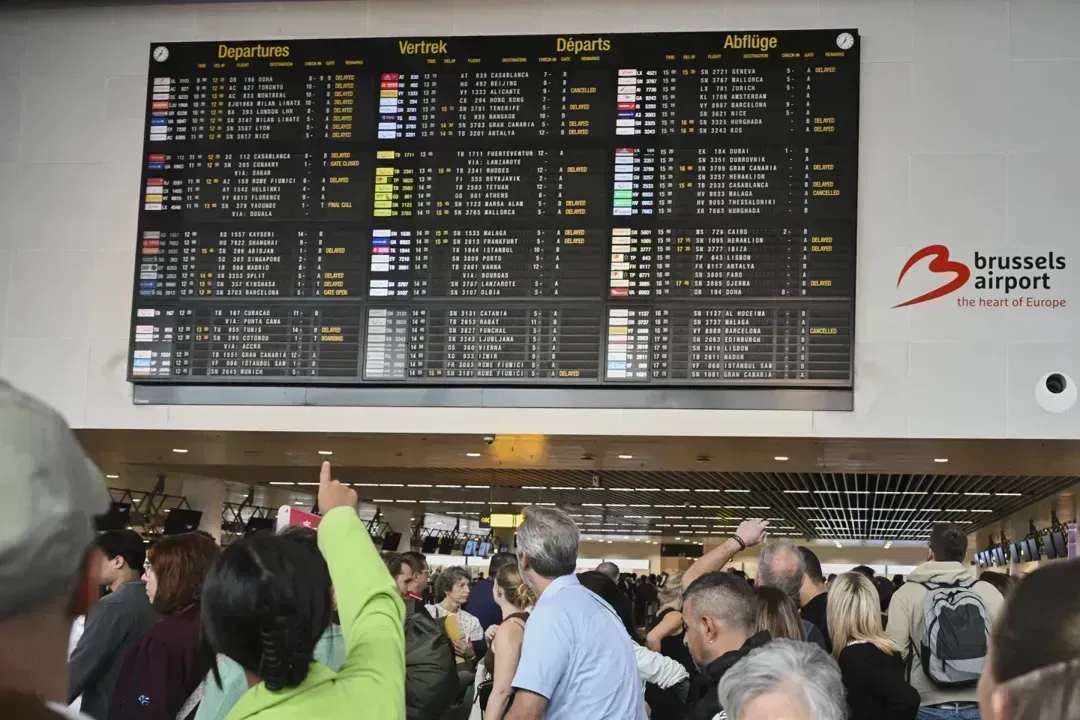
A cyberattack on September 20, 2025, caused chaos across several of Europe’s busiest airports, including Brussels, Berlin Brandenburg, and London Heathrow. The breach targeted Collins Aerospace’s MUSE software, a critical system used for electronic check-ins, baggage drop, and self-service kiosks.
According to airport officials, Brussels faced the most severe disruption, with nine flights canceled, four flights diverted, and at least 15 flights delayed by over an hour. Berlin Brandenburg Airport cut off system connections to limit further risk, while Heathrow confirmed some disturbances but reported minimal impact on flight operations.
Investigations revealed that the Collins Aerospace MUSE software disruption was the root cause. The issue did not originate from airlines but rather from this third-party provider, a division of RTX Corp. Airports stressed that passenger data and safety were not compromised, though the check-in system hack severely hampered operations.
To continue serving passengers, airports switched to manual check-in backup procedures, allowing boarding passes and baggage tags to be processed manually. Though slower and less efficient, these measures helped airlines control passenger queues and keep flights moving. Passengers were urged to check their flight status before heading to airports.
The cyberattack temporarily disabled many kiosks that print boarding passes and baggage tags—technologies vital for streamlining check-in. The disruption demonstrated how airport boarding disruptions caused by software dependency can ripple across multiple hubs at once.
Collins Aerospace confirmed the breach, describing it as a “cyber-related disruption.” The company said its teams were working round-the-clock to restore normal functionality. While manual workarounds reduced the blow, the outage highlighted how aviation cybersecurity in Europe has become a major vulnerability.
Authorities at Brussels and Berlin quickly issued passenger advisories, urging travelers to arrive earlier to account for extended processing times. Heathrow, though less impacted, also reminded passengers to confirm travel details in advance.
The European airports cyberattack triggered delays, diversions, and cancellations, but most delays were limited to an hour. Security experts said the event underlined risks in depending on centralized systems like MUSE. A single breach at a provider level could paralyze multiple airports simultaneously.
Industry analysts stressed that the incident adds to a growing pattern of cyber threats targeting aviation. Airlines, airports, and service providers are being pushed to invest more heavily in cybersecurity measures, conduct regular audits, and establish robust failover systems. Governments across Europe may also be compelled to tighten regulatory standards for aviation IT providers.
The Heathrow, Brussels, and Berlin incidents illustrate the delicate balance between digital efficiency and digital risk. While modern systems speed up passenger processing, they also introduce critical points of failure. This weekend’s crisis showed that manual backup procedures and quick response strategies remain essential for operational continuity.
For deeper insights into aviation cybersecurity, transport disruptions, and global infrastructure risks, readers can visit Armust News. The platform regularly covers high-impact cyber incidents, infrastructure vulnerabilities, and the evolving global response to digital threats.
European airports cyberattack, Collins Aerospace, MUSE software outage, flight delays Europe, aviation cybersecurity



Advances in Aerospace Technology and Commercial Aviation Recovery
Insights into breakthrough aerospace technologies and commercial aviation’s recovery amid 2025 chall

Defense Modernization and Strategic Spending Trends
Explore key trends in global defense modernization and strategic military spending shaping 2025 secu

Tens of Thousands Protest in Serbia on Anniversary of Deadly Roof Collapse
Tens of thousands in Novi Sad mark a year since a deadly station roof collapse that killed 16, prote

Canada PM Carney Apologizes to Trump Over Controversial Reagan Anti-Tariff Ad
Canadian PM Mark Carney apologized to President Trump over an Ontario anti-tariff ad quoting Reagan,

The ad that stirred a hornets nest, and made Canadian PM Carney say sorry to Trump
Canadian PM Mark Carney apologizes to US President Trump after a tariff-related ad causes diplomatic

Bengaluru-Mumbai Superfast Train Approved After 30-Year Wait
Railways approves new superfast train connecting Bengaluru and Mumbai, ending a 30-year demand, easi




