Post by : Saif
The United States has taken a major step in testing a new kind of portable nuclear energy system. For the first time, the government transported a nuclear microreactor by military cargo aircraft to show that this technology can be moved quickly and used where power is urgently needed. Supporters call it a breakthrough for both defense and energy supply, while critics say many questions still remain.
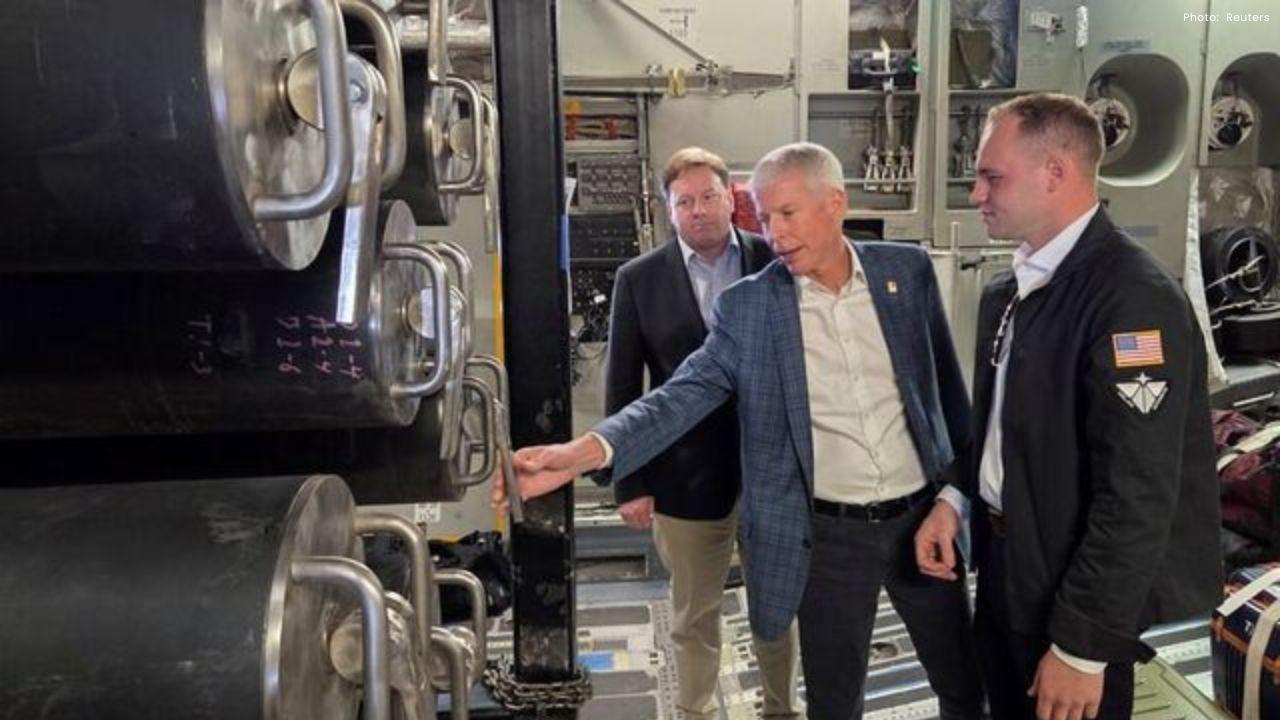
The operation was carried out by the United States Department of Energy and the United States Department of Defense. The small reactor unit was flown from California to Utah aboard a C-17 military cargo plane. Officials described the flight as a proof test to show that compact nuclear systems can be deployed faster than traditional power plants. The unit was transported without nuclear fuel, which reduced safety risks during the trip.
The reactor was developed by Valar Atomics, a private company working on very small nuclear systems. Its model, called Ward, is about the size of a large vehicle. Company leaders say it can eventually produce up to 5 megawatts of electricity, enough to power several thousand homes or a large military base. Early test operation will begin at lower output before scaling up.
Chris Wright, the U.S. Energy Secretary, traveled on the same aircraft as the reactor parts. Defense acquisition official Michael Duffey also joined the mission. Both described the event as an important signal that the country is serious about new nuclear technology. They say small reactors could help power remote bases, emergency zones, and isolated communities where fuel delivery is costly and difficult.
Microreactors are designed to solve a specific problem. Many remote military and civilian sites depend on diesel generators. These require regular fuel shipments, which are expensive and sometimes dangerous in conflict areas. A small nuclear reactor, once installed, could run for a long time without frequent refueling. That reduces supply risks and transport needs.
The current U.S. administration under Donald Trump has strongly supported expanding nuclear energy. Officials argue that rising electricity demand — including from data centers and advanced computing — requires more steady, high-output power sources. Small reactors are seen as one way to add reliable energy without building very large plants that take many years to complete.
However, not everyone is convinced. Some nuclear safety experts warn that microreactors may produce electricity at a higher cost than large nuclear plants or renewable energy like wind and solar. They argue that while the reactors are smaller, they still require strict safety systems, trained operators, and secure fuel handling. These factors can raise the final price of each unit of electricity produced.
Another concern is nuclear waste. Even very small reactors create radioactive waste that must be stored and managed safely for many years. The U.S. still does not have a fully settled long-term waste disposal system. Federal officials say they are in talks with several states about future storage or fuel reprocessing sites, but no final plan has been approved yet. Critics say waste planning should be completed before large-scale rollout begins.
There are also regulatory and public acceptance challenges. Communities may resist having nuclear systems nearby, even small ones, due to fear of accidents or contamination. Government agencies will likely need clear safety rules, public transparency, and emergency plans before microreactors are widely deployed.
Still, the successful air transport test marks a symbolic moment. It shows that the hardware can be moved quickly using existing military logistics. That feature is central to the promise of microreactors — power that can travel where it is needed instead of staying fixed in one place.
The next stage will be operational testing. Officials say several microreactors are expected to reach active nuclear reaction stages in the coming months. If those tests succeed, limited commercial power sales could begin later in the decade.
The larger debate is just beginning. Microreactors could become a useful tool for energy security and disaster response. But cost, safety, and waste disposal will decide whether they remain a niche technology or grow into a common power source. Good policy and careful oversight will matter as much as engineering success.
#trending #latest #NuclearEnergy #Microreactor #USDefense #EnergyTechnology #PortablePower #CleanEnergyDebate #MilitaryLogistics #armustnews



Advances in Aerospace Technology and Commercial Aviation Recovery
Insights into breakthrough aerospace technologies and commercial aviation’s recovery amid 2025 chall

Defense Modernization and Strategic Spending Trends
Explore key trends in global defense modernization and strategic military spending shaping 2025 secu

Tens of Thousands Protest in Serbia on Anniversary of Deadly Roof Collapse
Tens of thousands in Novi Sad mark a year since a deadly station roof collapse that killed 16, prote

Canada PM Carney Apologizes to Trump Over Controversial Reagan Anti-Tariff Ad
Canadian PM Mark Carney apologized to President Trump over an Ontario anti-tariff ad quoting Reagan,

The ad that stirred a hornets nest, and made Canadian PM Carney say sorry to Trump
Canadian PM Mark Carney apologizes to US President Trump after a tariff-related ad causes diplomatic

Bengaluru-Mumbai Superfast Train Approved After 30-Year Wait
Railways approves new superfast train connecting Bengaluru and Mumbai, ending a 30-year demand, easi




