Post by : Saif
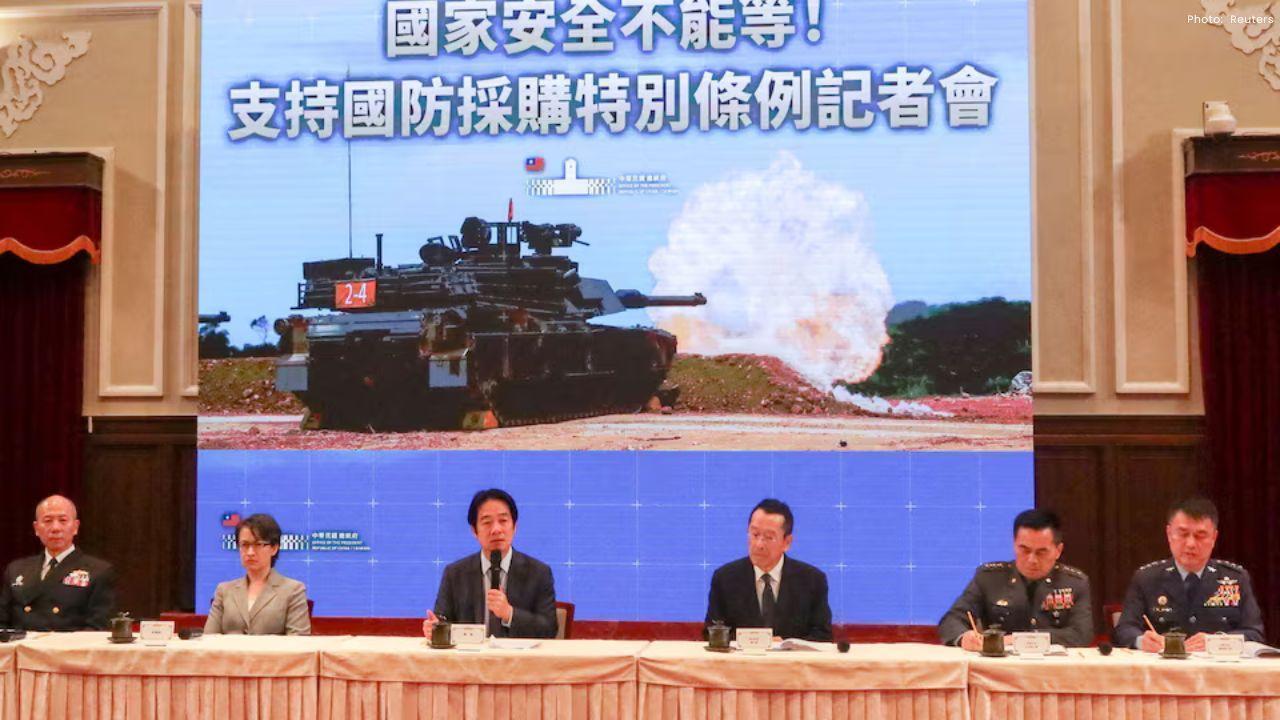
Taiwan’s parliament is preparing to review a large special defence budget after the Lunar New Year holiday, reopening a debate that goes to the heart of the island’s security and political divisions. The proposed package, worth about $40 billion, aims to strengthen Taiwan’s military at a time of rising pressure from China and growing expectations from the United States. The delay in reviewing the plan has already drawn attention from American lawmakers, showing how closely the issue is being watched abroad.
President Lai Ching-te first proposed the extra defence spending last year. His government says the money is needed to modernize weapons systems, improve readiness, and make Taiwan more able to defend itself if a crisis happens. Officials argue that threats around the region are increasing and that defence planning cannot wait. They say faster action now could prevent bigger risks later.
But the plan has faced strong resistance inside the legislature. Opposition parties, led by the Kuomintang, hold a majority of seats and have refused to move forward with the full proposal so far. Instead, they have supported smaller, more limited spending bills that cover only part of the weapons purchases requested by the government. Opposition leaders say they are not against defence, but want tighter control over how money is spent and more careful review of each item.
Parliament Speaker Han Kuo-yu has now said the defence budget review will be treated as a top priority when lawmakers return to work. He and other senior legislators promised cross-party talks to break the deadlock. Their message suggests that political leaders understand the pressure to show progress and avoid the image of paralysis on national security.
Concern from Washington has added urgency. Members of the United States Congress recently wrote to senior Taiwanese politicians to express worry that the defence package has been stalled for too long. The United States is Taiwan’s main arms supplier and most important international supporter, even though there are no formal diplomatic ties. When U.S. lawmakers speak publicly about Taiwan’s defence budget, it sends a signal that security cooperation is closely linked to Taiwan’s own spending efforts.
This debate is not just about numbers. It reflects a deeper question about how Taiwan should prepare for the future. China considers Taiwan part of its territory and has never ruled out the use of force to take control. Chinese military activity around Taiwan has increased in recent years, including air and naval patrols. Taiwan’s government says this makes stronger defence investment necessary. Opposition groups answer that smart strategy and stable relations are just as important as large budgets.
Markets and military planners both understand that defence spending takes time to turn into real strength. Buying advanced systems, training troops, and building support networks cannot be done overnight. Delays in approval can push back delivery schedules and raise costs. On the other hand, rushed approval without careful checks can lead to waste or poor choices. A healthy democracy must balance speed with oversight.
The current situation also shows how domestic politics can affect international security. When parliaments are divided, even urgent proposals can get stuck. That is not unique to Taiwan. Many democracies struggle to pass defence budgets when parties disagree. Still, when outside threats are visible, voters often expect leaders to find compromise.
Another key point is public trust. Defence budgets are large and complex. Citizens need clear explanations of what the money will buy and how it will improve safety. Governments that explain plans in simple terms often gain more support. Secretive or unclear plans create doubt and resistance.
As lawmakers return from the holiday, they face a serious test. If they can debate the plan openly, adjust it where needed, and pass a workable package, Taiwan will send a message of unity and readiness. If the fight continues without progress, it may raise more questions from partners and more concern at home.
Security is not only about weapons. It is also about political stability, public confidence, and strong alliances. The coming parliamentary session will show whether Taiwan’s leaders can line up these three elements at a critical moment.
#trending #latest #Taiwan #DefenceBudget #IndoPacific #SecurityPolicy #Parliament #Geopolitics #MilitarySpending #USAsiaPolicy #ChinaTensions #armustnews



Advances in Aerospace Technology and Commercial Aviation Recovery
Insights into breakthrough aerospace technologies and commercial aviation’s recovery amid 2025 chall

Defense Modernization and Strategic Spending Trends
Explore key trends in global defense modernization and strategic military spending shaping 2025 secu

Tens of Thousands Protest in Serbia on Anniversary of Deadly Roof Collapse
Tens of thousands in Novi Sad mark a year since a deadly station roof collapse that killed 16, prote

Canada PM Carney Apologizes to Trump Over Controversial Reagan Anti-Tariff Ad
Canadian PM Mark Carney apologized to President Trump over an Ontario anti-tariff ad quoting Reagan,

The ad that stirred a hornets nest, and made Canadian PM Carney say sorry to Trump
Canadian PM Mark Carney apologizes to US President Trump after a tariff-related ad causes diplomatic

Bengaluru-Mumbai Superfast Train Approved After 30-Year Wait
Railways approves new superfast train connecting Bengaluru and Mumbai, ending a 30-year demand, easi




