Post by : Saif
A powerful storm that swept across New Zealand has once again shown how quickly extreme weather can bring modern systems to a halt. Heavy rain and strong winds hit large parts of the North Island, damaging roads, stopping flights, cutting electricity, and forcing many families to stay indoors. More than 30,000 properties lost power, transport services were disrupted, and emergency teams worked through the night to respond to hundreds of calls for help.
The storm caused major trouble for air travel. Air New Zealand paused operations at several airports, including those serving the capital region. Flights were delayed or cancelled as wind speeds rose and visibility dropped. By afternoon, a few flights began moving again, but the schedule remained unstable. Passengers were left waiting and unsure, showing how sensitive air travel is to sudden weather shifts.
The capital city, Wellington, was among the worst affected areas. Emergency services there received hundreds of calls overnight. Crews dealt with fallen trees, damaged roofs, flooded streets, and broken power lines. Officials urged people to stay off the roads unless absolutely necessary. Several schools closed for safety reasons, and public transport services were reduced or stopped.
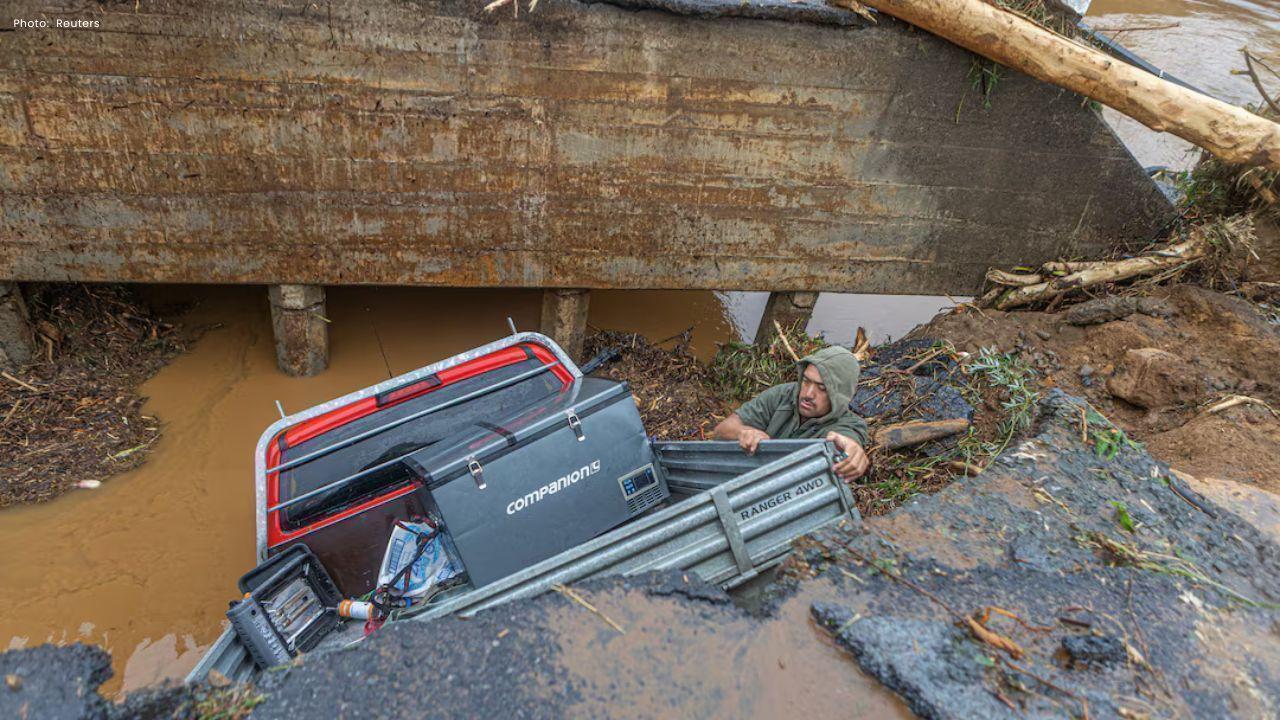
Images shared by residents showed how serious the damage was. Some roads collapsed after the ground beneath them was washed away. Vehicles were stranded or pushed off damaged sections. In semi-rural areas, floodwater entered homes and fields. Large trees were uprooted and thrown onto cars and buildings. People described the wind as frightening and louder than anything they had heard before.
Power cuts added to the hardship. With tens of thousands of homes and businesses without electricity, daily life became difficult. Traffic lights stopped working in some places. Shops had to close early. Families faced cold, dark homes while waiting for repair crews to restore lines. Utility workers continued repairs despite bad weather, but officials warned that full restoration would take time.
Weather experts said the storm system developed from a strong low-pressure zone and gathered force over several days. It is expected to move toward the South Island next, bringing more heavy rain. Authorities have warned that already wet ground could increase the risk of flooding and landslides. This warning is taken seriously because last month heavy rain triggered a deadly landslide in another coastal area, killing several people.
Another worrying issue came from wastewater problems. After an earlier treatment plant failure, waste material had already entered coastal waters. The latest storm washed polluted water back onto parts of the shoreline. Some residents used dark humor online to describe the situation, but the health risk is real. It shows how infrastructure failures can combine with bad weather to create larger public safety problems.
Events like this are no longer rare. Stronger storms, heavier rainfall, and sudden floods are being reported more often. This raises an important question: are cities and towns prepared for the new pattern of extreme weather? Airports, roads, drainage systems, and power networks were built for older climate conditions. Many may now be under too much stress.
Governments and local councils may need to invest more in stronger roads, better drainage, buried power lines, and faster warning systems. Early alerts, clear public messaging, and community shelters can reduce harm. Regular safety drills and better land planning can also help keep people away from high-risk zones.
Citizens also have a role. Families can prepare emergency kits, keep backup lights and batteries, and follow official weather advice. Community groups can check on elderly neighbors and share resources during outages. Prepared communities recover faster.
The New Zealand storm is a reminder that nature can still overpower technology and planning. Transport networks, electricity grids, and public services must be built not just for normal days, but for the worst days. The cost of preparation may be high, but the cost of being unprepared is often much higher.
#trending #latest #NewZealandStorm #ExtremeWeather #PowerOutage #FlightDisruption #ClimateRisk #DisasterPreparedness #InfrastructureSafety #armustnews



Advances in Aerospace Technology and Commercial Aviation Recovery
Insights into breakthrough aerospace technologies and commercial aviation’s recovery amid 2025 chall

Defense Modernization and Strategic Spending Trends
Explore key trends in global defense modernization and strategic military spending shaping 2025 secu

Tens of Thousands Protest in Serbia on Anniversary of Deadly Roof Collapse
Tens of thousands in Novi Sad mark a year since a deadly station roof collapse that killed 16, prote

Canada PM Carney Apologizes to Trump Over Controversial Reagan Anti-Tariff Ad
Canadian PM Mark Carney apologized to President Trump over an Ontario anti-tariff ad quoting Reagan,

The ad that stirred a hornets nest, and made Canadian PM Carney say sorry to Trump
Canadian PM Mark Carney apologizes to US President Trump after a tariff-related ad causes diplomatic

Bengaluru-Mumbai Superfast Train Approved After 30-Year Wait
Railways approves new superfast train connecting Bengaluru and Mumbai, ending a 30-year demand, easi




