Post by : Saif
The United States military has boarded an oil tanker in the Indian Ocean that was suspected of carrying Venezuelan oil in violation of sanctions. The move is part of a wider campaign by Washington to enforce oil restrictions and track ships that try to avoid blockade measures. The action has again raised questions about international law, energy security, and the growing use of military power to enforce economic rules at sea.
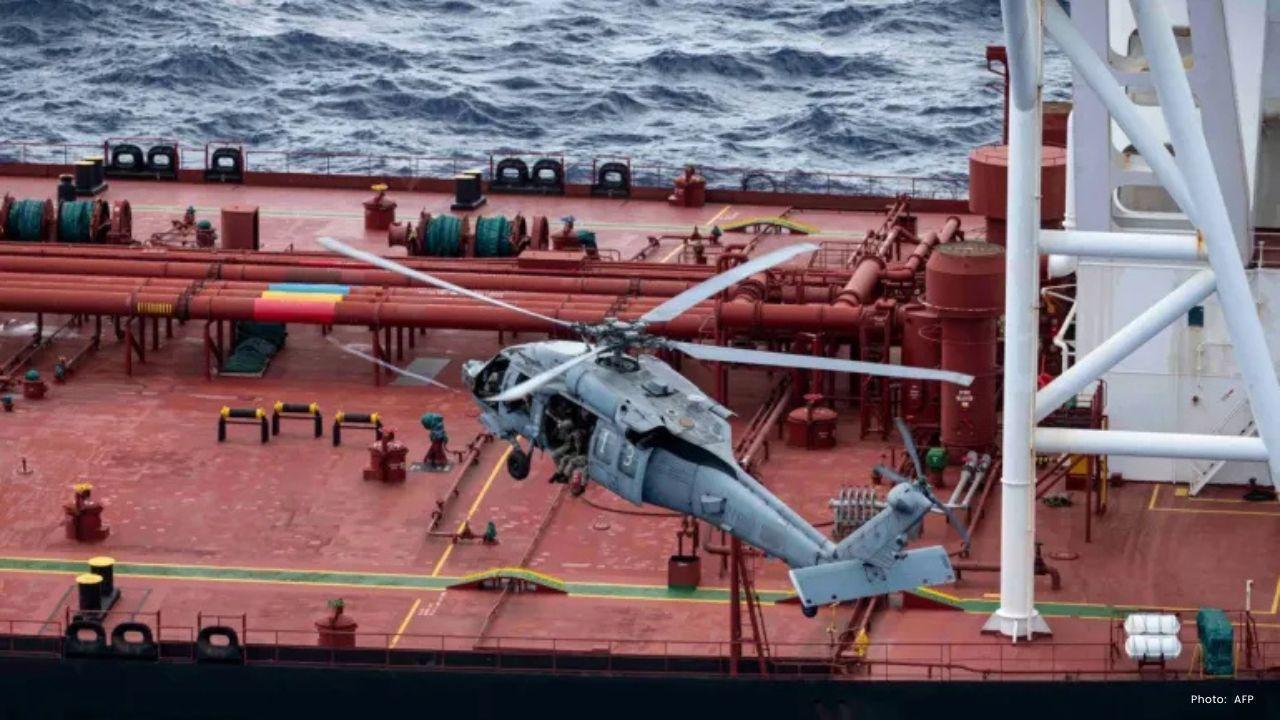
According to official statements, the tanker was tracked over a long distance after leaving the Caribbean region. US authorities believe the vessel was connected to oil shipments restricted under sanctions placed on Venezuela. After monitoring the ship’s movement, naval forces stopped and boarded it in international waters. The boarding was described as a lawful inspection operation under maritime enforcement rules.
This event matters because it shows how sanctions today are not just financial tools on paper. They are being enforced physically across oceans. When a country places sanctions on oil exports, it must also decide how far it is willing to go to stop shipments. In this case, the answer appears to be direct naval action far from US shores.
Supporters of the operation argue that sanctions lose their value if they are not enforced. They say some oil traders and shipping networks have created complex routes and secret deals to move restricted oil. Tankers may change flags, switch tracking systems off, or transfer cargo at sea to hide origin. From this point of view, boarding suspect ships is presented as necessary to keep the rules meaningful.
Critics see danger in this approach. They warn that stopping and boarding ships in international waters can increase tension and risk conflict. Global trade depends on open sea lanes. If more countries begin intercepting vessels based on their own sanction rules, shipping routes could become more dangerous and uncertain. Smaller nations may also worry about powerful states using naval force to control trade beyond their borders.
There is also the legal side. Maritime law allows certain types of inspections, but each case is judged carefully. Disputes can arise over whether a boarding was justified, whether enough proof existed, and which courts have authority over the cargo and crew. These legal battles can last for years and affect future enforcement actions.
The tanker case also connects to the bigger energy picture. Oil markets remain sensitive to political conflict and supply limits. When shipments are blocked or delayed, prices can react. Countries that depend on imported fuel watch these operations closely because transport risk can quickly turn into higher costs.
Another important point is diplomacy. Sanctions are meant to pressure governments into policy change without war. But when enforcement starts to look like military confrontation, the line between economic pressure and security action becomes thin. That can make negotiations harder and mistrust deeper.
The boarding of this tanker shows a new phase in how sanctions are carried out. It is no longer only about banks and contracts. It is also about ships, crews, and sea control. Whether this strategy succeeds will depend on law, cooperation with allies, and how other nations respond in the months ahead.
#trending #latest #Venezuela #OilSanctions #IndianOcean #USMilitary #EnergySecurity #MaritimeLaw #GlobalTrade #Geopolitics #armustnews



Advances in Aerospace Technology and Commercial Aviation Recovery
Insights into breakthrough aerospace technologies and commercial aviation’s recovery amid 2025 chall

Defense Modernization and Strategic Spending Trends
Explore key trends in global defense modernization and strategic military spending shaping 2025 secu

Tens of Thousands Protest in Serbia on Anniversary of Deadly Roof Collapse
Tens of thousands in Novi Sad mark a year since a deadly station roof collapse that killed 16, prote

Canada PM Carney Apologizes to Trump Over Controversial Reagan Anti-Tariff Ad
Canadian PM Mark Carney apologized to President Trump over an Ontario anti-tariff ad quoting Reagan,

The ad that stirred a hornets nest, and made Canadian PM Carney say sorry to Trump
Canadian PM Mark Carney apologizes to US President Trump after a tariff-related ad causes diplomatic

Bengaluru-Mumbai Superfast Train Approved After 30-Year Wait
Railways approves new superfast train connecting Bengaluru and Mumbai, ending a 30-year demand, easi




