Post by : Saif
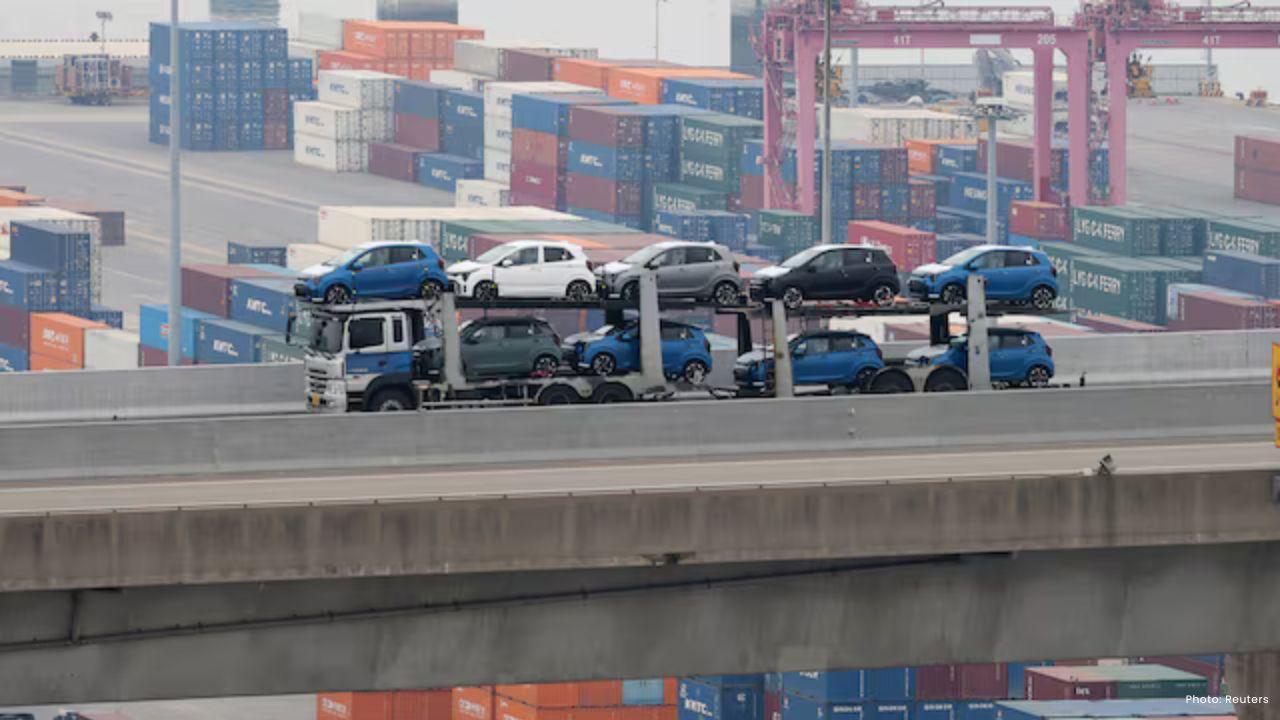
The United States and South Korea are once again facing trade tension after President Donald Trump threatened to raise tariffs on South Korean cars and other goods to 25%. The warning has caused concern in Seoul, as it could hurt one of the country’s most important export sectors and strain ties between two long-time allies.
At the heart of the dispute is a trade deal agreed last year. During President Trump’s visit to South Korea in October 2025, both sides reached an understanding that US tariffs on key South Korean exports would be capped at 15%. In return, South Korea promised to invest about 350 billion dollars in strategic industries in the United States. However, the agreement has not yet been fully put into action, and this delay appears to have angered the US president.
South Korean officials say the problem is not a lack of commitment, but practical and legal challenges. Finance Minister Koo Yun-cheol has explained that the large investment plan cannot move forward quickly because of administrative steps, legal reviews, and unstable currency conditions. He has said it is unlikely that major investments can begin in the first half of this year.
Currency issues are a major concern for South Korea. The won has fallen nearly 7% against the US dollar over the past six months. Officials fear that sending such a huge amount of money overseas could weaken the currency even more. The central bank has warned that it would not support large investment outflows if the foreign exchange market becomes unstable.
Another major reason for the delay is South Korea’s parliament. To carry out the trade deal, the government needs to create a special investment fund. This requires a new law, which must be approved by the National Assembly. While the ruling Democratic Party holds a majority, disagreements between lawmakers have slowed progress. The bill has been stuck in a parliamentary committee for weeks, partly because the committee is led by the opposition party.
The United States has grown impatient, especially when compared to Japan. Tokyo signed a similar trade framework with Washington last year but moved much faster. Japan’s parliament approved its deal in early December, and the first investment discussions were held before the end of the year. This contrast has added pressure on South Korea.
Trade tensions have also been fueled by other issues. US officials have raised concerns about how American technology companies are treated in South Korea. A recent data breach involving Coupang, a US-listed e-commerce company, led to criticism and regulatory action by South Korean authorities. Coupang claims it was unfairly targeted, causing losses for US investors. Although South Korean leaders deny any discrimination, the issue has added strain to trade talks.
President Trump’s tariff threat appears to be a warning shot. By raising the possibility of higher tariffs, he is signaling frustration with delays and unresolved disputes. For South Korea, the challenge is to balance its economic stability, legal process, and political debate at home while meeting US expectations.
If tariffs are raised, South Korean exporters, especially carmakers, could face serious losses. At the same time, higher tariffs could also affect US consumers and companies that rely on South Korean products. Both sides have strong reasons to avoid escalation.
The situation now depends on whether South Korea’s parliament can move faster and whether both governments can address their concerns through dialogue. The dispute shows how trade agreements are not just about signatures, but also about trust, timing, and follow-through.
#trending #latest #USTrade #SouthKorea #TrumpTariffs #GlobalEconomy #InternationalTrade #AutoIndustry #USKoreaRelations



Advances in Aerospace Technology and Commercial Aviation Recovery
Insights into breakthrough aerospace technologies and commercial aviation’s recovery amid 2025 chall

Defense Modernization and Strategic Spending Trends
Explore key trends in global defense modernization and strategic military spending shaping 2025 secu

Tens of Thousands Protest in Serbia on Anniversary of Deadly Roof Collapse
Tens of thousands in Novi Sad mark a year since a deadly station roof collapse that killed 16, prote

Canada PM Carney Apologizes to Trump Over Controversial Reagan Anti-Tariff Ad
Canadian PM Mark Carney apologized to President Trump over an Ontario anti-tariff ad quoting Reagan,

The ad that stirred a hornets nest, and made Canadian PM Carney say sorry to Trump
Canadian PM Mark Carney apologizes to US President Trump after a tariff-related ad causes diplomatic

Bengaluru-Mumbai Superfast Train Approved After 30-Year Wait
Railways approves new superfast train connecting Bengaluru and Mumbai, ending a 30-year demand, easi




