Post by : Saif
Security for India’s fast-growing urban transport network is entering a new phase. After managing safety for the Delhi Metro system, the Central Industrial Security Force will now also take charge of security for the Rapid Rail network operating in the National Capital Region. This move is seen as an important step to make high-speed regional travel safer and more organized.
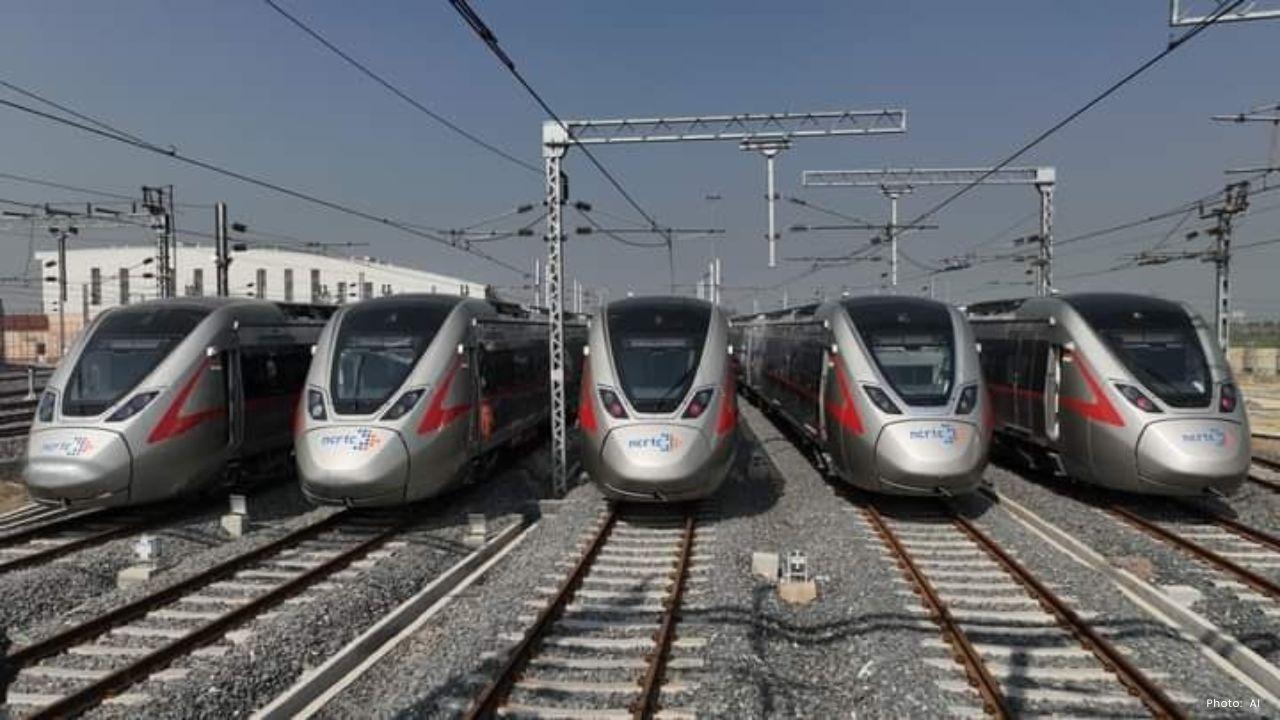
Rapid Rail, also known as the Regional Rapid Transit System (RRTS), is designed to connect Delhi with nearby cities through fast, modern trains. These trains run at higher speeds than regular metro systems and are meant to reduce road traffic while saving travel time for daily passengers. As more sections open and passenger numbers rise, the need for a strong and professional security setup has become more urgent.
The Rapid Rail project is being developed by the National Capital Region Transport Corporation. Officials believe that bringing in an experienced central force will help create uniform safety standards across stations and trains. The same force has already been handling airport and metro security across many Indian cities, so it has experience with high passenger volumes and sensitive infrastructure.
Under the new arrangement, trained security personnel will be deployed at Rapid Rail stations, platforms, entry and exit gates, and control areas. Their duties will include passenger screening, baggage checks, crowd management, and response to emergencies. Surveillance systems such as CCTV cameras and access control points will work closely with on-ground teams.
Some key stations in the Delhi region will receive special attention. These are stations expected to see heavy footfall or important interchanges with other transport systems. At such locations, layered security will be used. This means more checkpoints, closer monitoring, and quicker response teams on standby.
This decision is not only about stopping crime. It is also about prevention and confidence. When passengers see uniformed and alert security staff, they feel safer using public transport. That confidence helps increase ridership and supports the long-term success of large transport projects.
Urban transport systems today face many kinds of risks. These include theft, vandalism, trespassing, and possible terror threats. Fast rail systems also bring technical risks because of their speed and advanced equipment. A trained central force understands how to protect both passengers and critical systems like signaling rooms, power supply units, and communication centers.
Another benefit of central security management is standard procedure. When one trained force handles multiple major transport systems, rules and response methods become similar. This reduces confusion and improves coordination during incidents. It also makes training, drills, and audits more effective.
However, security alone is not enough. Experts say passenger awareness is equally important. Travelers should follow rules, report unattended items, cooperate during checks, and avoid restricted zones. Public safety works best when authorities and citizens both stay alert.
There is also a need to balance safety with convenience. Rapid Rail was created to provide fast and smooth travel. Security checks must therefore be strong but also efficient, so that long queues and delays do not reduce the benefit of high-speed service. Smart scanning systems and better passenger flow design can help achieve this balance.
As Rapid Rail corridors expand in the coming years, security planning will become even more important. Early integration of trained forces, technology, and clear rules can prevent problems instead of reacting after they happen. That approach saves cost and protects lives.
The decision to place Rapid Rail security under an experienced central force shows that transport safety is being treated as a national priority. For daily commuters, it means safer stations, better monitoring, and quicker help in case of trouble — all essential parts of a modern public transport network.
#trending #latest #RapidRail #RRTS #DelhiNCR #TransportSecurity #PublicSafety #UrbanMobility #MetroSecurity #CISF #armustnews



Advances in Aerospace Technology and Commercial Aviation Recovery
Insights into breakthrough aerospace technologies and commercial aviation’s recovery amid 2025 chall

Defense Modernization and Strategic Spending Trends
Explore key trends in global defense modernization and strategic military spending shaping 2025 secu

Tens of Thousands Protest in Serbia on Anniversary of Deadly Roof Collapse
Tens of thousands in Novi Sad mark a year since a deadly station roof collapse that killed 16, prote

Canada PM Carney Apologizes to Trump Over Controversial Reagan Anti-Tariff Ad
Canadian PM Mark Carney apologized to President Trump over an Ontario anti-tariff ad quoting Reagan,

The ad that stirred a hornets nest, and made Canadian PM Carney say sorry to Trump
Canadian PM Mark Carney apologizes to US President Trump after a tariff-related ad causes diplomatic

Bengaluru-Mumbai Superfast Train Approved After 30-Year Wait
Railways approves new superfast train connecting Bengaluru and Mumbai, ending a 30-year demand, easi




